

Marie Fridberg enters policy rooms that were never intended for discussions about kids playing in the mud. She speaks on behalf of OMEP, the World Organization for Early Childhood Education, and as time has gone on, she has started to feel a little awkward in government talks about early childhood development. It’s not because she is combative, but rather because the information she carries is difficult to dispute and even more difficult to act upon.
She makes a straightforward argument. Youngsters, especially those under eight, require unstructured outdoor time. Not planned, not supervised, and not optimized. Just outdoors, exploring, moving, and sometimes tripping. This is the result of decades of research. However, outdoor play continues to be subtly curtailed by governments in both developed and developing nations due to standardized learning objectives, liability concerns, poor urban planning, and cultural concerns about what kids might do when no one is watching.
Fridberg, whose work lies at the nexus of international advocacy and early childhood research, has devoted a great deal of effort to bridging the gap between the evidence and the actions of policymakers. To be honest, it’s a frustrating position to be in. Decision-makers seem to grasp the argument intellectually and then file it somewhere between “noted” and “not urgent.”
However, she continues to return. Her framing of the problem contributes to her strategy’s effectiveness, or at least persistence. This isn’t a gentle discussion about how having more fresh air makes kids happier. Outdoor play is positioned by Fridberg and OMEP as a developmental necessity, more akin to sleep or nutrition than recreation. Children’s motor development, emotional control, social learning, and cognitive flexibility all suffer when they don’t have regular access to outdoor, self-directed play. If you miss that window, you’re not just making childhood less fun. You’re molding a less competent adult.
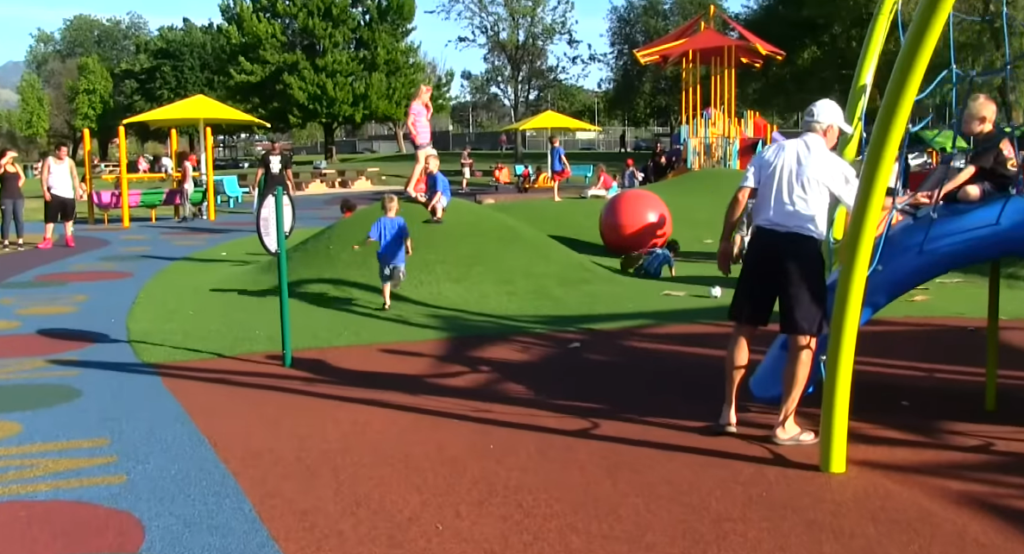
It’s difficult to ignore the fact that this argument has only lately gained significant support at the political level. The right to play is formally protected by the UN Convention on the Rights of the Child, which celebrated its 30th anniversary a few years ago. However, actual access to a functional playground in a crowded urban area differs greatly from rights on paper. Fridberg seems well aware of this gap, and it appears to fuel much of her urgency.
The “developmental emergency” framing is deliberate. It’s the kind of language that makes bureaucrats shift in their chairs. Emergency implies timeline. It suggests a result. It implies that waiting another budget cycle to address this is not a neutral decision — it’s a choice with a cost. Whether that framing will be enough to move governments from acknowledgment to structural change is still genuinely unclear.
What Fridberg and OMEP are really asking for is harder than it sounds: a reimagining of early childhood environments, of urban planning, of teacher training, of how risk is understood in the context of children’s physical freedom. Some Scandinavian nations have made significant progress in this area, where outdoor kindergarten models have been in place for decades and kids are expected to be outside in conditions that would normally close a school playground. That model hasn’t been as popular as one might think.
The work she’s doing has a subtle urgency to it; it’s steady, evidence-based, and persistent rather than ostentatious or viral. It remains to be seen if that will be sufficient to change policy on a large scale. However, it is becoming more difficult to maintain a straight face while arguing that outdoor play is optional, a luxury, or an addition to actual education. It appears that Fridberg plans to maintain it that way.
