

The way JD Vance‘s education developed has an almost cinematic quality, not because it was easy or inevitable, but rather because it wasn’t. A young man from Middletown, Ohio, who was mostly raised by grandparents while his mother struggled with addiction, enlisted in the Marines right out of high school, and somehow found himself debating constitutional law at Yale. When discussing who succeeds in America, it’s the kind of narrative that doesn’t quite fit the typical models.
The fact that Vance received an honors diploma from Middletown High School in 2003 is an important detail that is sometimes overlooked in favor of the more dramatic parts of his biography. It implies that something was holding even within a household characterized by instability and financial hardship. He wrote about his grandmother, “Mamaw,” who made sure he had a graphing calculator at a time when the family was struggling to make ends meet. little things. The kind of investment that influences everything but is not mentioned in policy papers.
Vance did not immediately enroll in college after high school. He joined the U.S. Marine Corps and was sent to fight in Iraq as a public affairs marine. More than any seminar room later, this time may have shaped the foundation of his ability to deal with pressure and make decisions. That type of service fosters a discipline and a perspective on issues that is seldom imparted by college alone. After returning from Iraq, he enrolled at Ohio State University and graduated in 2009 with a bachelor’s degree in philosophy and political science. A useful combination. One topic asks whether power should exist, while the other asks how it operates.
He relocated east from Columbus, attending Yale Law School and New Haven, Connecticut. Walking into Yale carries a certain kind of cognitive dissonance for someone from a working-class Rust Belt background, and Vance has never pretended otherwise. He has talked about feeling alienated in a world full of unwritten rules and presumptions about ambition and class. Vance met tech investor and PayPal co-founder Peter Thiel at Yale, and it is said that Thiel’s speech about ambition and meaning affected him more than the majority of his coursework. Perhaps more than his law degree, that one encounter changed the course of his career.
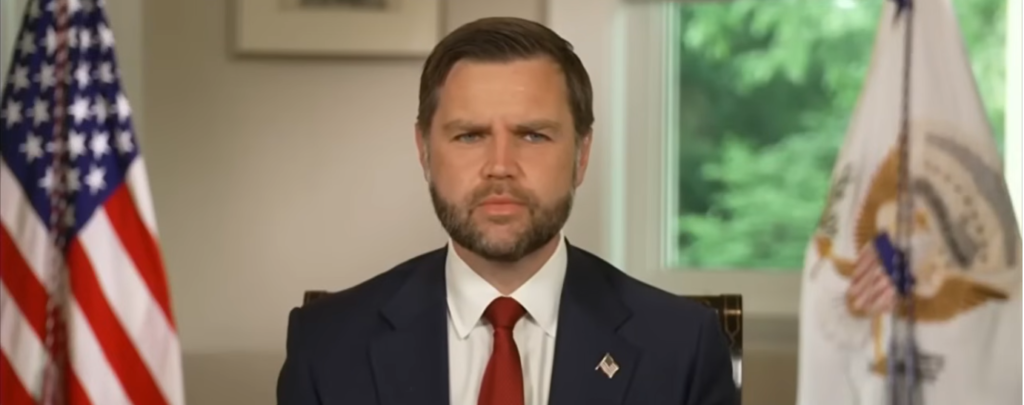
His legal career appeared certain for a while after he graduated from Yale Law in 2013. brief jobs as a clerk and at a law firm. Looking back, though, it’s still unclear if he ever really desired the life of a traditional lawyer. After being drawn west by Silicon Valley, he worked in biotech and venture capital, interacting with individuals such as Steve Case and Elon Musk. His formal and informal education continued to build.
Vance’s academic journey is notable for how much of it took place outside of the classroom. The Marines. the years spent observing the decline of neighborhoods like Middletown. The Yale talks that caused him to doubt his own motivation. For millions of readers attempting to comprehend a political moment that had caught them off guard, his 2016 memoir, Hillbilly Elegy, became a kind of education in and of itself.
There’s a feeling that Vance’s journey—from Ohio State to Yale to the Marines—is more of a series of encounters with various worlds, each of which reshaped what he believed to be true about the previous. He is currently the United States’ 50th vice president. Somewhere at the start of it all is the graphing calculator Mamaw scraped together for him.
