

The way this occurred seems almost archaic. There was no national rollout, no press conference, just a school board meeting in Casper, Wyoming, where trustees considered public input before voting to approve a $55,000 contract that most people outside the district would never learn about. The Child Development Center and Natrona County School District 1 inked a contract for the screening of preschoolers, ages three to five, for developmental delays. It sounds humble. Most likely it isn’t.
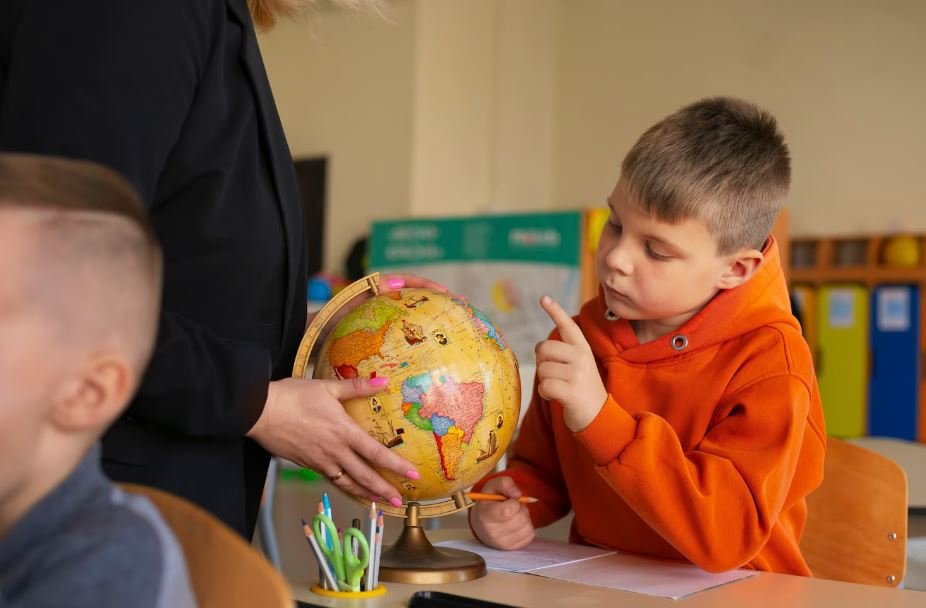
The screenings cover the fundamentals that are frequently overlooked until it’s too late, such as vision, hearing, motor skills, communication, and the kind of reasoning that is difficult to assess in a four-year-old who prefers to play with blocks. District officials framed it around a federal mandate known as “Child Find,” which requires schools to identify children who may require special education before they ever enter a kindergarten classroom. Child Find has been a part of the law for many years. Who is actually conducting the research has changed.
Sitting with the timing here is worthwhile. The majority of school districts view early screening as something that takes place informally, if at all, frequently after a kindergarten teacher identifies a student who is having difficulties months into the academic year. Intervention is playing catch-up by that point. The strategy used by NCSD1 reverses that. In order to determine the precise level of support a child requires, the Child Development Center performs the evaluation prior to enrollment, provides copies of completed screenings to the district, and conducts additional assessments if something appears abnormal. This makes sense when you see it in writing, but it also raises the unsettling question, “Why isn’t every district doing this already?”
Money and geography both play a role in the solution. Wyoming’s population density makes innovative collaborations necessary rather than desirable. Take a look at Evanston, a few hundred miles to the southwest, where the Evanston Child Development Center has spent years creating something similar. It serves nearly 500 children who are at or below the poverty line and doubles as a center for parenting classes, job placement assistance, and housing referrals. Stable childcare is economic development, according to Kendra West, the center’s director in Evanston. If their children are not safe somewhere, parents are unable to work. It’s a straightforward statement with a lot of weight, and it’s difficult to ignore how frequently that reasoning is disregarded in policy discussions that view childcare as a private family issue rather than a public infrastructure one.
The stakes are made more evident by Wyoming’s own statistics. The average annual cost of childcare is close to $13,000, despite the fact that about two-thirds of the state’s children live in households where every parent is employed. Less than 25% of qualifying families receive federal block grant subsidies. An estimated $344 million in productivity and earnings are lost by the state each year as a direct result of childcare gaps. In light of this, a $55,000 screening contract appears more like triage than a line item.
The lack of fanfare is what sets Casper’s move apart from a standard grant announcement. Trustees Kyla Alvey and Thea True-Wells attended the meeting, heard what the public had to say, and decided to approve something that would not make headlines in most states. There is a perception that this is precisely how significant policy tends to proliferate—not through broad federal mandates, but rather through small districts discreetly resolving an issue and other districts eventually taking notice.
It remains to be seen if this develops into a true national model or merely a well-managed local initiative. The fundamental idea that early screening and intervention significantly increase a child’s chances of academic success is supported by research from Wyoming’s own health department. There is proof. It’s unclear if enough states have the financial resources or political will to duplicate it before a new generation of children passes through gaps that could have been identified by a straightforward screening.
