

Everybody who has worked in an early childhood setting tends to recall one particular moment. With their hands still and their eyes elsewhere, a child sits a little apart from the group, neither quite present nor distressed. A knowledgeable instructor observes. Not because it’s outlined in a lesson plan, but rather because the task is to observe. OMEP Aotearoa has been arguing for years that education and well-being are not two distinct things that coexist during a child’s first five years of life. This quiet act of observation, reading a child before teaching one, is at the heart of this argument. They are identical.
This argument has been made by OMEP, the World Organization for Early Childhood Education, since its founding in Prague in 1948 with the explicit goal of serving children under the age of eight worldwide. Today, it collaborates with UNICEF, UNESCO, and the Council of Europe in over 70 countries. OMEP Aotearoa, its national chapter in New Zealand, has taken that global mission and firmly anchored it in the unique cultural and educational landscape of this nation, which is shaped by Te Whāriki, biculturalism, and a long tradition of treating early childhood education as a serious professional field rather than a glorified babysitting arrangement.
There is now pressure on that seriousness. OMEP Aotearoa has responded sharply to the Productivity Commission’s review of postsecondary education, raising concerns not only about funding arrangements but also about something more basic: what early childhood educators truly need to know and how they learn it. The Commission’s framework appears to treat teacher education similarly to a software certification, at least on the surface, with its emphasis on “unbundling” qualifications, nano-degrees, and cost-cutting through disaggregated assessments. modular. Measurable and effective.
However, the process of teaching three-year-olds is not modular. It’s likely that anyone who thinks otherwise hasn’t spent much time with them.
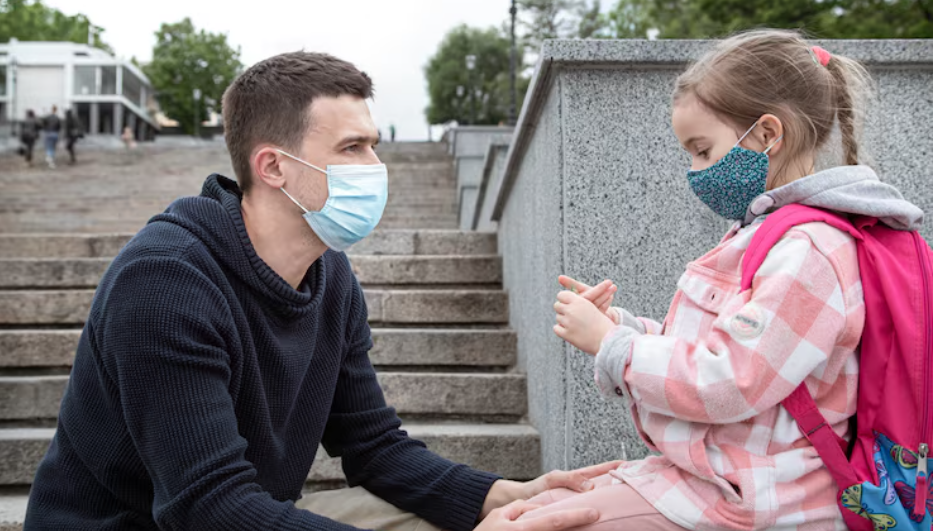
Te Whāriki, the early childhood curriculum in New Zealand, was never intended to be a checklist. Loosely translated as a “woven flax mat,” it views wellbeing, or mana atua, as one of five interconnected strands that are inextricably linked to communication, exploration, belonging, and contribution. The metaphor is intentional. The entire thing shifts when you pull one thread. Graduating early childhood educators are expected to gain a thorough understanding of this philosophical framework rather than merely skimming it in a brief course taught by faculty members who might never interact with the same student twice.
The submission from OMEP Aotearoa carefully but firmly states that mentoring is important. Fragmented delivery models cannot replicate the type of mentoring that develops a teacher over time through a long-term relationship with lecturing staff who are aware of their strengths and weaknesses. An online module does not teach a student teacher how to read a quiet, slightly absent child in a corner, including when to approach and when to wait. Practice, introspection, and witnessing someone try, fail, and then try again are the sources of it.
This is supported by the research. Pupils who are genuinely happy in their learning environments are more resilient and perform better. If that applies to kids, it’s probably worthwhile to find out if it applies to the adults who are being trained to assist them as well. It looks plausible. That has a circular and possibly instructive quality.
New Zealand has spent decades developing an internationally recognized body of research on early childhood education. It has been noted by the OECD. It has been the foundation of careers for researchers. Reading between the lines of their submission, OMEP Aotearoa is worried that a review that prioritizes economic efficiency could subtly destroy what took a generation to build—not by making a single, drastic decision, but rather by gradually diluting the professional standards that give the industry its integrity.
It’s unclear if the Productivity Commission will take up that issue. However, it appears that OMEP Aotearoa is not requesting preferential treatment. It’s a request for acknowledgment of a reality that competent early childhood educators have long understood: a child who is ill cannot learn effectively, and a teacher who is unaware of this connection is most likely not prepared to be in the classroom.
