

Approximately 250 preschoolers in this nation are expelled every day, which is a statistic that should make people stop cold. not put on hold for an afternoon. banished. sent home permanently, sometimes from a classroom they had only been in for a few weeks. When researchers examine the identities of those kids, a pattern emerges that is difficult to ignore: Black kids, particularly Black boys, are expelled from preschool at a rate that is almost five times higher than that of their white and Asian-American peers.
Considering how young these children really are, it’s worthwhile. We are referring to kids between the ages of three and four who still require assistance zipping their coats and napping on mats. Prekindergartners were being expelled at three times the rate of K–12 students, according to Walter Gilliam, the Yale researcher whose work exposed this problem back in 2005.
This is an odd and unsettling fact, since four-year-olds typically aren’t capable of the kind of behavior that gets older kids suspended. Compared to girls, boys were expelled 4.5 times more frequently. Compared to three-year-olds, four-year-olds were expelled 50% more frequently. There appears to be more going on here than just typical misbehavior.
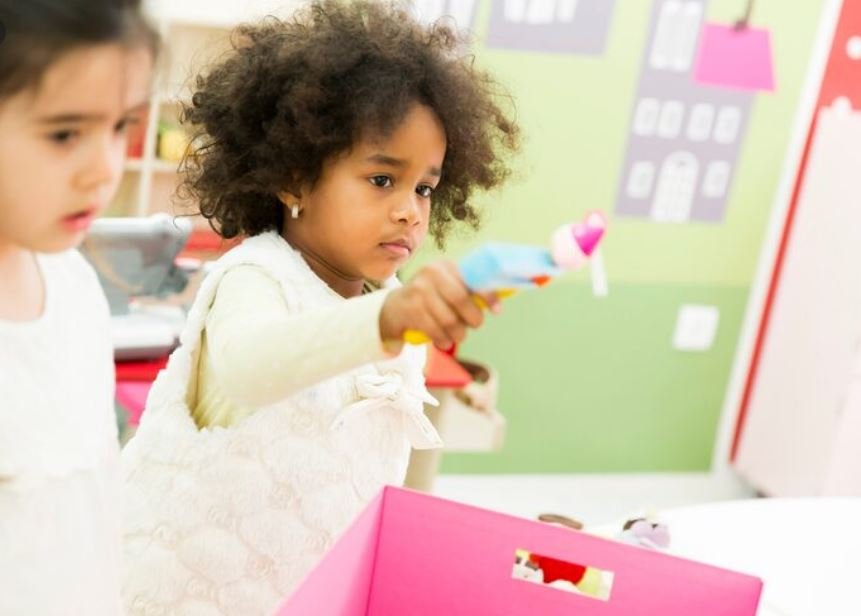
Gilliam’s subsequent research indicates that something resembles implicit bias. In a startling study, his team employed eye-tracking technology on preschool teachers who watched videos of children playing and doing nothing wrong. Teachers were instructed to anticipate disruptive behavior, and the cameras captured their actual eye movements. The majority of them kept a closer eye on Black kids, and especially on Black boys. Regardless of the teacher’s race, this occurred. Bias operating subconsciously, influencing who is watched, who is flagged, and who is sent to the office before anything has even happened, is an odd thing to deal with.
Additionally, there is a less discussed but more useful aspect to this. Higher student-to-teacher ratios, longer daycare hours, and staff burnout are all associated with higher expulsion rates. Compared to a teacher with a smaller class and access to a mental health consultant, a stressed teacher with eighteen students and no behavioral support will make calls more quickly and harshly. Several states, including Oregon, have begun experimenting with precisely that kind of assistance—training and consultation rather than zero-tolerance dismissal. Perhaps it’s a small solution, but it highlights a crucial point: much of this isn’t actually about the kids at all. It’s an adult choice that was made under duress and filtered through presumptions that no one acknowledges having.
The timing is what makes this difficult to change. A four-year-old who is expelled loses more than just a few months of finger painting. Researchers have begun referring to it as the “preschool-to-prison pipeline,” a term that sounds dramatic until you look at the data supporting it. Early expulsion tends to predict later suspension, and later suspension tends to predict dropout and worse outcomes down the line. The Department of Education has monitored some of this in public programs, but private preschools, where a lot of this appears to occur anecdotally, are largely unmeasured. As a result, the problem’s overall scope is likely greater than anyone has formally calculated.
This does not imply that specific teachers are bad people. The majority are underpaid, overworked, and working hard with little assistance. However, it does imply that the system is subtly classifying kids according to race before they have mastered the art of writing their own names, and it is difficult to describe this as anything other than what it is.
