

It’s not very big in here. One wall is full of crayon drawings. There is a woman named Ms. Denise kneeling next to a three-year-old who just threw a block across the room. This is something she has done for eleven years. She’s not yelling. As she talks softly and slowly, she pulls the child back from the edge of a meltdown. This is the job. Not flashy, quiet, or important in a big way.
Early care and education providers are, in a real sense, the first people young children meet who work in systems that are meant to help them grow. They can tell when a child isn’t talking like other kids their age. They are the ones who notice odd behaviors, sporadic attendance due to an unstable home life, or other small signs that something is wrong at home. Dr. Phil sees kids a few times a year. They are seen every day by people who work with young children.
Even so, the job is still one of the worst paid and least well-equipped in the country. A teacher in a public school makes more than twice as much as an early childhood educator, who makes about $30,210 a year. Many of them can get the same kinds of public assistance programs that they help families with. A disproportionate number of them are women of color. If that picture doesn’t make the evening news very often, there’s something very wrong with it.
It’s not always clear that this work has a public health aspect to it, but it does. Children who grow up in stable, caring environments are better able to control their emotions, handle stress, and generally live healthier lives. The first five years are very important because they set the tone for the rest of a person’s life. Things like the quality of attachment, the level of stimulation, and the consistency of care have effects that researchers have been trying to measure for decades. Early childhood educators shape those outcomes in rooms with crayon drawings on the walls and with supplies that they often bought themselves.
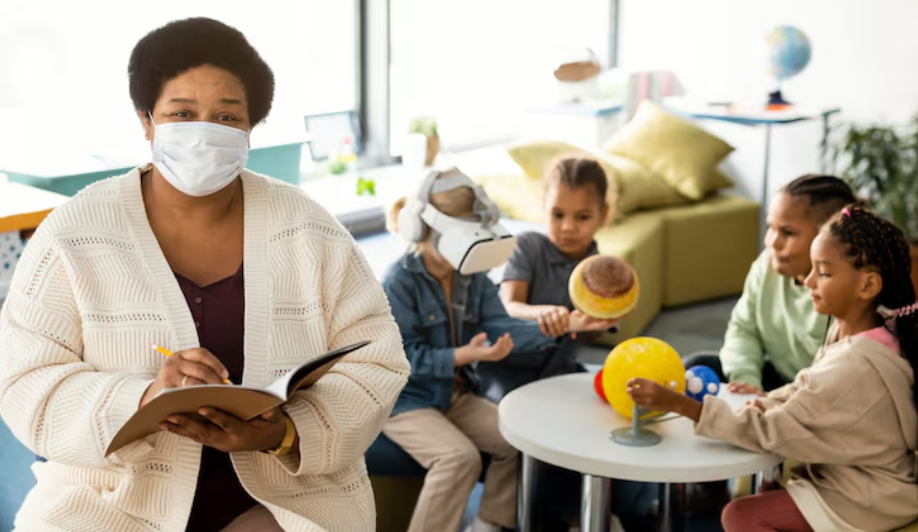
In this job market, burnout is not a small issue. Teaching Strategies says that almost half of all preschool teachers say they are very stressed out and burned out. The pandemic made things worse in ways that haven’t been fully fixed yet, like adding more emotional stress, COVID protocols, and grief to staffing levels that were already low. During that time, the number of depressed preschool teachers rose, and for many, the weight didn’t go away when school started again. When a teacher leaves, it changes more than just the staffing chart for the program. Children who have grown to trust that adult—sometimes the only adult who is always there for them—are upset. Next come missed milestones. You can’t learn everything. The costs of public health keep going up over years.
The situation with professional development is a problem in and of itself. What do seven out of ten early childhood teachers say makes them happier with their jobs? Having access to good, ongoing training. But most of what’s out there still looks like a workshop in the afternoon followed by a certificate of attendance. It’s worth wondering if that’s enough to keep a business going that’s supposed to help some of the most needy kids in America.
When policymakers talk about early childhood education, they often talk about it in terms of social services rather than public health infrastructure. How you frame it matters. We pay for bridges because we know that infrastructure is what keeps things together. The same is true for the case for early care—it just takes longer to see what falls apart when the structure isn’t kept up. It’s likely that Ms. Denise, who is still on her knees next to the three-year-old, doesn’t see herself as a public health worker. It’s hard to see her as anything else, though, when you see what she does.
