

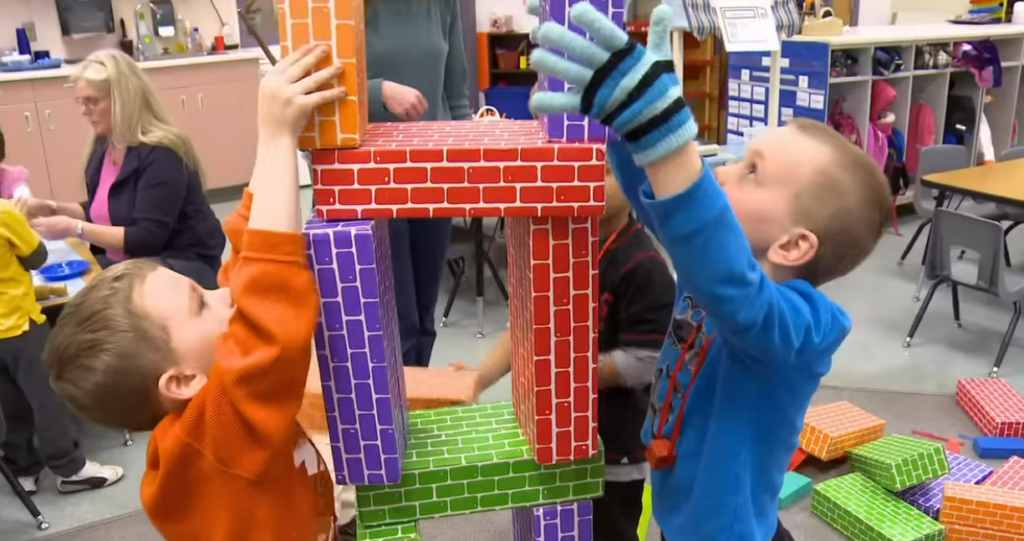
The alphabet posters on the walls and the crayon drawings taped above the cubbies are not the first things you notice when you walk through a Head Start classroom on a Tuesday morning in a low-income neighborhood in rural Appalachia or Baltimore. It’s the noise, the focused, slightly chaotic energy of kids learning about the world at a speed that adults have largely forgotten. In a way, every game, question, and disagreement over a shared block is a neural event. During those early years, a child’s brain makes over a million new connections every second. When people hear that number, they usually stop. Policymakers should be deterred by it as well, and much more frequently than they are.
The argument for significant, ongoing funding for early childhood education is not new. For decades, researchers have been making this claim, and the evidence has only strengthened over time. The political framing is still obstinately opposed to change. Instead of being viewed as the fundamental economic and public health issue that it truly is, early childhood policy in the United States has long been viewed as a niche concern, something for pediatricians, preschool teachers, and a particular type of nonprofit advocate. It is getting more difficult to ignore the effects of that framing as they quietly accumulate over generations.
In its series on the social determinants of health throughout early childhood development, the Center for American Progress presented a picture that is both unsettling and illuminating. The claim that kids need quality education and frequent medical care is not the only one. It’s because economic security, health care, and education are so closely related in the early years of life that treating them as distinct policy categories is a mistake in and of itself. In addition to being hungry, a child whose family experiences food insecurity is also dealing with a level of ongoing stress that has been connected by researchers to poorer long-term health outcomes, impaired self-regulation, and disturbed brain development. A toddler living in precarious housing is not merely constantly on the move. His nervous system is currently extremely sensitive to the instability he is absorbing.
Observing how federal funding is distributed and discussed gives the impression that the decision-makers primarily view child poverty as an income issue. When a household has enough money, the issue will go away on its own. That might be partially accurate. Child poverty did significantly decline as a result of the expansion of the child tax credit during the COVID-19 pandemic; however, the percentage of families with children experiencing food insecurity increased by 25% in just six months after Congress allowed those payments to lapse. That’s a direct, excruciating example of how quickly the floor can collapse. However, although important, a child’s early years are shaped by a variety of factors. Prenatal care, neighborhood safety, paid family leave, access to mental health services for caregivers, and high-quality infant child care all have an impact and interact in ways that are beyond the scope of simple income transfers.
The perinatal period alone, which roughly spans from 20 weeks of pregnancy to four weeks after delivery, is a window of opportunity and vulnerability that is hardly mentioned in most policy discussions. A pregnant woman’s diet, access to quality prenatal care, and untreated stress or depression all have an impact on the developing child that will last into childhood and beyond. However, the availability of maternal mental health screenings is still uneven, the United States’ paid leave laws still lag behind those of most peer countries, and the social safety net breaks down right where families with young children most need it to.
The irony that permeates this nation’s discussions of future economic competitiveness—the STEM pipelines, the workforce development programs, the hand-wringing over educational gaps—while continuously underfunding the years when the real architecture of learning is being constructed is difficult to ignore. By the age of three, the brain has grown to about 80% of its adult size. Ninety percent of the basic neural structure is formed by the time a child is five years old. In rooms that policymakers seldom visit and budgets that are consistently underfunded, the scaffolding that underpins everything that follows—language, attention, self-regulation, the ability to build relationships and tolerate frustration—is being put together.
Over decades of research, programs like Head Start, Medicaid, WIC, and SNAP have shown tangible, quantifiable benefits. It’s not that these programs aren’t functional. The issue is that they continue to be underfunded, have a limited scope, and are politically vulnerable in ways that lead to precisely the kind of instability they are intended to prevent. No new task force or acronym is required. It’s a consistent, comprehensive policy commitment that funds the first five years of a child’s life in accordance with the nation’s stated commitment to the future.
