

When you read about Hilton College, you’ll notice right away that it has its own declared nature reserve, which distinguishes it from almost every other school in South Africa. Not a garden. There isn’t even a tiny green area behind the science block. Teenagers are studying for exams somewhere nearby in this 650-hectare wilderness where giraffes, zebras, servals, and caracals roam freely and about 300 species of birds go about their daily lives. It’s a peculiar combination. It also provides some crucial information about the nature of this institution.
Located close to the small town of Hilton in the KwaZulu-Natal Midlands, Hilton College is situated on a vast 1,762-hectare estate that has been home to South African boys for generations since 1872. It was started by two unlikely partners: William Orde Newnham, a reverend who had first traveled to Natal at Bishop Colenso’s request, and Gould Arthur Lucas, a former British army lieutenant who had survived the sinking of HMS Birkenhead. Their first Ladysmith school was a failure. The weather was too severe and the circumstances too challenging. They relocated, and what they created in its place has subtly outlived empires, conflicts, and a century and a half of social transformation.
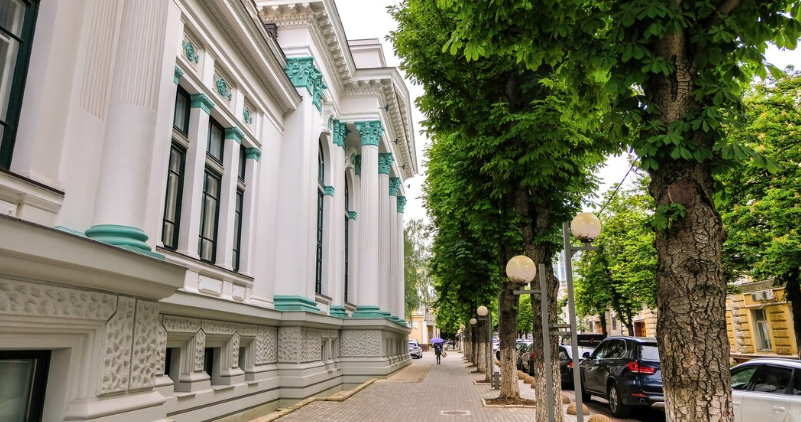
The school is a full boarding school, with all 590 students living on campus, in keeping with the English public school tradition. It is one of just two single-sex boys’ boarding schools in South Africa that continue to run in this manner; the other is Michaelhouse, a longtime rival located nearby. It’s worth stopping to consider that rivalry. In 1904, the two schools played their first rugby match, which Hilton won 11-0. The match remains KwaZulu-Natal’s oldest continuous rugby match over a century later. There’s a feeling that both schools subtly set themselves apart from one another—not out of animosity, but rather out of the unique respect that rivals acquire after closely observing one another for an extended period of time.
Hilton has established a reputation in academia that goes well beyond the boundaries of South Africa. More than twenty Rhodes Scholars for Oxford and two Elsie Ballot Scholars for Cambridge have graduated from the school. Its graduates have attended Brown, Princeton, Harvard, and the University of Pennsylvania. It’s important to note that every student has access to a customized academic plan and a personal tutor, which is uncommon for any size school. It’s reasonable to wonder if the results are explained by that degree of individual attention or if the school just draws families who place a high value on education. Most likely, both statements are true simultaneously.
It is difficult to replicate the campus’s sense of layers of history. Henry Vaughan Ellis modeled the school after the renowned English institution Rugby when he took over in 1878, and many of those customs are still in place today, including the house system, the uniform, and the pace of school life. The names of seven houses—Churchill, Ellis, Falcon, Lucas, McKenzie, Newnham, and Pearce—read like a roll call of the school’s founding figures. Boys come knowing they are members of one of these houses, and they depart understanding the implications of that affiliation.
Hilton College’s fees are substantial. It has been at the top of South Africa’s fee tables for a while, with annual school fees of about R397,000. It’s still unclear if the school’s sincere commitment to diversity of culture, creed, and nationality offsets that price point or if it creates a certain homogeneity among its intake. There is no reason to question the school’s sincerity when it discusses inclusivity. However, the economics are what they are.
Returning to the starting point, what sticks in your mind is the picture of an adolescent venturing into six square kilometers of African wilderness behind the school buildings. Hilton College appears to be doing something its founders probably didn’t fully anticipate, somewhere between the academic plan, the rugby pitch, and the giraffe grazing in the late afternoon light: teaching boys, perhaps more than anything else, that the world is richer and stranger than they initially imagined.
