

The fact that Rob Reiner, the director of When Harry Met Sally, Stand by Me, and A Few Good Men, never completed his college education has a subtle allure. He built one of the most prestigious directing careers in American film on instinct, observation, and a willingness to stay in rooms where learning was taking place—even if no diplomas were being given out—in an industry that was fixated on credentials and connections.
Although Reiner was born in the Bronx in 1947, his early years were spent in Los Angeles after the family moved there when he was a young boy. He was a student at Beverly Hills High School, which has produced more performers than its fair share. It’s the kind of school where aspirations abound, and it makes sense to assume that his perception of what a creative career could entail was influenced, albeit indirectly, by being surrounded by kids from the industry.
Reiner attended UCLA’s film school for two years, from 1964 to 1966, after graduating from high school. He attended the UCLA Department of Theater Arts, which subsequently evolved into the School of Theater, Film, and Television. Just the names of his classmates reveal something about the setting: Ray Manzarek and Jim Morrison attended two years prior to founding The Doors. Francis Ford Coppola had recently earned his master’s degree. There was also Richard Dreyfuss. The company was undoubtedly transformative, regardless of whether the coursework itself was.
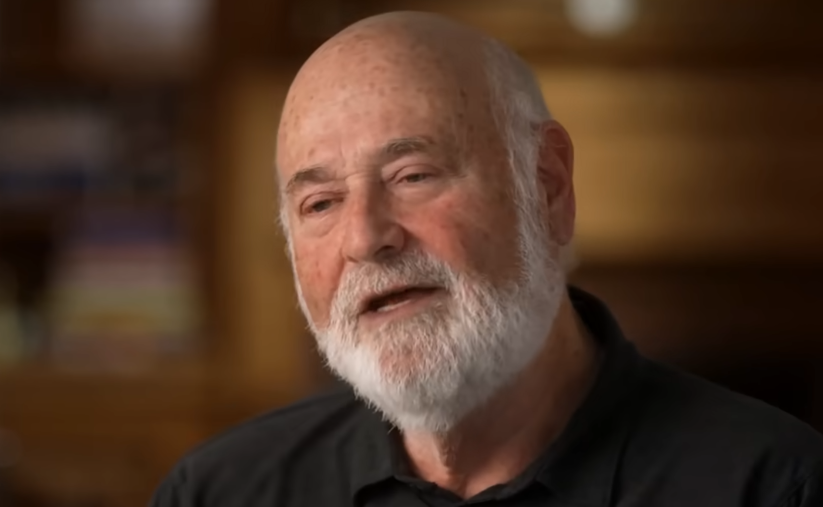
At UCLA, Reiner appeared to pick up more of a sense of creative collaboration than formal technique. He and Dreyfuss co-founded The Session, an improv group that practiced in Royce Hall’s basement, albeit somewhat illegally. Reiner later recalled, “Until the cops found us,” with the kind of humor that indicates the memory had held up over time. Eventually, they were expelled. Although it’s difficult to determine whether that kind of informal, somewhat disorganized education was more beneficial than a structured curriculum, it’s hard to argue that it harmed Reiner given what he went on to do.
In 1966, he left UCLA before receiving his degree. Reiner appeared to view formal education as one tool among many, rather than as a diversion. Before enrolling at UCLA, he had previously worked as an apprentice at the Bucks County Playhouse in Pennsylvania, where he learned by doing and observing real stage work. After graduating from UCLA, learning persisted through employment. Before landing the part of Michael Stivic on All in the Family, where Carroll O’Connor allegedly helped him understand direction from the inside of a production, he wrote for The Smothers Brothers Comedy Hour, where he shared a writers’ room with Steve Martin.
Reiner appears to have recognized early on that only the industry itself can offer a certain type of education. He didn’t wait for a degree to feel prepared, but he wasn’t contemptuous of formal training—he obviously appreciated what UCLA offered. His body of work probably spans so many genres without feeling disorganized because of his willingness to learn sideways, to draw knowledge from experiences and collaborators rather than just from classrooms.
Reiner’s educational values spread throughout his later years. He worked with researchers at the UCLA Center for Healthier Children, Families, and Communities and chaired the campaign behind the 1998 First 5 initiative as part of his deep involvement in early childhood education advocacy in California. It was work based on a belief that he seemed to hold personally: that early learning experiences influence all subsequent learning. That belief had a certain lived weight for someone who used unorthodox methods to establish his own foundation.
In the end, Rob Reiner’s education was constructed over the course of two decades in classrooms, basements, playhouses, and television sets. The degree never materialized. The corpus of work did.
