

The beaver is practically the local religion in Beavercreek, Ohio, where it is more than just a mascot. The Beavers are the name of the high school squad. On street corners, statues of the animal appear. Because the name of the city appears in the explanation, businesses throughout the suburb embrace it with joy and without apology. Therefore, there was no confusion when a family-run corner store on a peaceful Beavercreek street was the target of a federal trademark lawsuit brought by a Texas travel center empire with more than 40 years of highway dominance. It was rage.
In late July, Buc-ee’s filed a lawsuit against Beaver’s Mini Mart, arguing that the store’s red coloring and smiling cartoon beaver logo closely resembled the well-known Texas chain’s trademarked branding and might confuse customers. The lawsuit was submitted to the Dayton U.S. District Court on July 28. With multiple federal trademark registrations and more than 40 years of use of its happy buck-toothed mascot, Buc-ee’s has legal standing to pursue cases such as this one. It’s not really up for debate. Whether any of this makes sense practically is up for debate.
According to the family of Beaver’s Mini Mart owner Vik Boparai, the business has been in operation since 2017, long before Buc-ee’s opened its first Ohio location in neighboring Huber Heights earlier this year. The Buc-ee’s travel center is roughly 16 miles away from the store. There are no gas pumps on it. It’s not on the interstate. Boparai told reporters that he didn’t understand why he would be targeted by such a large company. “I have two kids,” he stated, “and this store is how I feed them.” Even taking into consideration the fact that family situations are rarely taken into consideration in lawsuits, it is difficult to avoid feeling the weight of that sentence.
Buc-ee’s claims that it first learned about the mini-mart in October 2025 when Boparai registered a trade name in Ohio, which the chain claims is in conflict with one of its federally registered trademarks. Before filing a lawsuit, Buc-ee’s claims it sent letters in March and April 2026, got no response, and made one last in-person attempt to deliver documents to the store in June. The business presents this as a calculated, last-resort legal action. The Beavercreek community presents it in a very different way.
A nearby bakery sold solidarity cookies with proceeds going to Boparai’s legal defense, local businesses organized “cash mob” shopping days at the mini-mart, and the fundraising total exceeded $40,000 in a matter of days. The Beavercreek City Council started debating a formal resolution that would acknowledge the beaver as a historic civic symbol. This was a bold move that none of the council members bothered to make subtly.
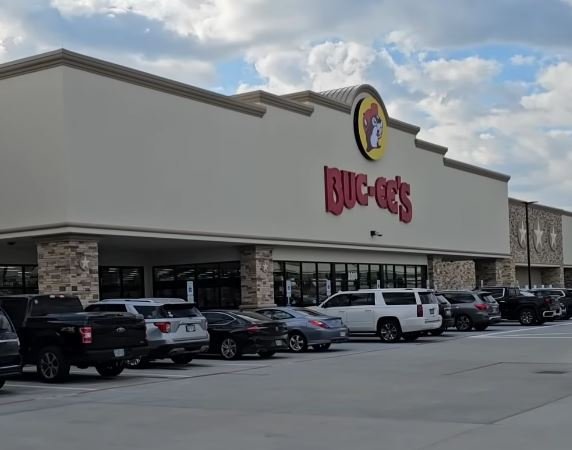
Governor Mike DeWine of Ohio also commented, stating in public that he didn’t think the logos were all that similar and speculating that the lawsuit might damage the state’s perception of a recently established business. This is an odd hill to die on for a company that spent decades cultivating cult-like devotion thru renowned clean restrooms and impressive brisket.
Everything was made worse by the timing. Comedian John Oliver discussed the chain’s history of aggressive trademark enforcement against small businesses with animal mascots in a segment on “Last Week Tonight” just two days prior to Buc-ee’s filing the Ohio lawsuit.
Oliver noted that Buc-ee’s has filed over a dozen of these lawsuits, winning almost all of them because smaller businesses usually settle or don’t have the means to defend themselves. He introduced Mr. Nutter Butter, a parody squirrel mascot, and challenged Buc-ee’s to compete against someone their own size. A corner store owner with two children and no gas pumps was sued by Buc-ee’s two days later. Oliver declared that his “Buc-Off” merchandise store would remain open indefinitely.
This is not a singular instance. Additionally, Buc-ee’s filed a separate lawsuit in Ohio against Coles IP Holdings, the company that owns the Mickey’s convenience store chain, regarding a red hexagon with a smiling cartoon moose logo. The company has filed trademark lawsuits in several states against companies that use animal-themed branding, claiming that any cartoon animal that is close to red could confuse customers. It will be interesting to see if courts will continue to concur, particularly as the company’s reputation suffers. There’s a feeling that Buc-ee’s legal strategy, which may have operated covertly for years when no one was watching, is now taking place in a very different kind of spotlight.
Somewhere in the Beavercreek case, the company may have a legitimate trademark concern. Trade name registrations are important, and it takes a lot of legal work to protect a brand across the country.
However, the obvious question of proportion is raised when a company with travel centers the size of small airports pursues a corner store that has been open since 2017 in a city named after the very animal in question. Residents of Beavercreek put it simply: because the name of the city requires it, beavers can be found everyplace in this city, from street-level statues to the high school mascot. Although a trademark case is not eliminated by that context, Buc-ee’s appears to have stopped reading the room somewhere in Huber Heights.
