

The address from Princeton University seems to go against common sense. Nobel laureates, Supreme Court justices, and two U.S. presidents have all attended one of the most important universities in the world. It is not in New York, Boston, or Washington, D.C.; it is in a quiet borough in central New Jersey. It’s in Princeton, NJ. About 30,000 people live there. If not for those clear Gothic spires rising above the trees, it’s the kind of place you might drive by without stopping.
Princeton University is in the town of Princeton, New Jersey, which is in Mercer County and 50 miles southwest of New York City. It is also about 45 miles northeast of Philadelphia. About 600 acres make up the campus itself, which is a surprisingly self-contained world of stone buildings, open courtyards, and paths that feel purposely slow. At first glance, it seems like the place was made to make people move more slowly and think more than hurry.
It’s simple to forget that Princeton did not begin here. The school was started in 1746, first in Elizabeth, New Jersey, and then for a short time in Newark. In 1756, it finally moved to Princeton. Part of the reason for moving to Princeton was good sense. People thought that Newark was too close to New York. Princeton, which is in the middle of New Jersey, was seen as a kind of neutral ground by Governor Jonathan Belcher at the time. Maybe the university would have moved somewhere else if that quiet recommendation hadn’t been given. The place might have become very different as a result.
When Nassau Hall was finished in 1756, it was the first permanent home for the university on the Princeton campus. It is still standing and being used. It is also still one of the most historically important buildings in the country. British soldiers lived there during the American Revolution. It was taken back by George Washington’s army. For a short time in 1783, Princeton was the capital of the United States when the Continental Congress met inside its walls. You wouldn’t think that a small borough in New Jersey would have that much history, but it does.
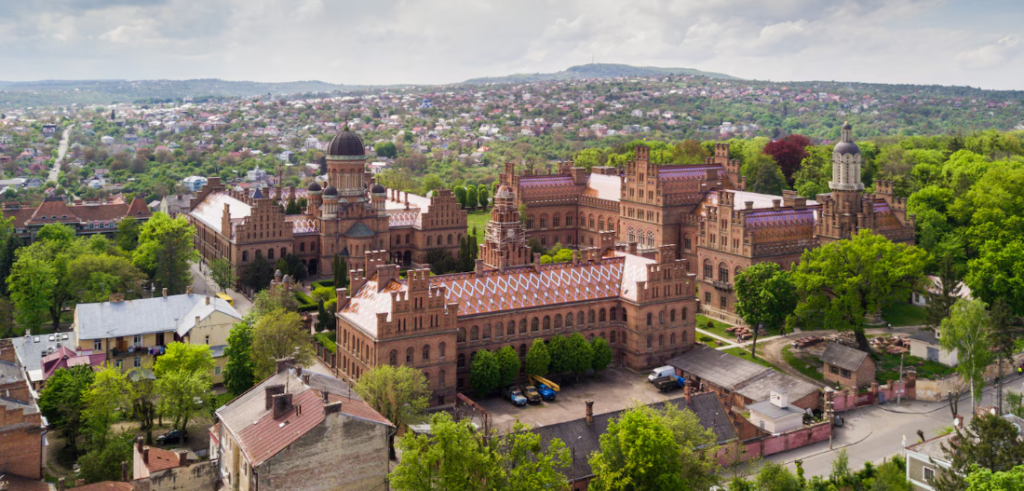
The campus now goes through the borough of Princeton, which, in New Jersey terms, only became its own municipality not long ago (2013), when the old township and borough were merged into one. The university is the most important building in town, like how a cathedral might be the most important building in a medieval European village. The two are linked in ways that are sometimes helpful and sometimes confusing. Everything in the area revolves around the university: property values, the local economy, and cultural life.
Princeton has the biggest endowment per student in the US, at $37.7 billion, so they don’t have to worry about money. About 9,000 students in undergraduate and graduate programs in the social sciences, engineering, the humanities, and the sciences attend classes on its main campus. Students go to the Princeton School of Public and International Affairs, which used to be called the Woodrow Wilson School. Some of them go on to change foreign policy and global institutions. The university also runs the Princeton Plasma Physics Laboratory for the Department of Energy. This means that scientists are working on nuclear fusion in the quiet suburbs of central New Jersey.
The setting is an important part of what makes Princeton unique. It’s hard to explain, but you can feel it when you’re on campus. Being far from a big city makes it feel like you’re on your own, which goes both ways. It brings together intellectual energy. It also means that students and teachers need to create a world on campus. There are more than 500 student groups, the residential college system, and famous eating clubs for juniors and seniors. These and other activities fill the social and cultural gaps that being close to a city might otherwise create.
Princeton is still a bit of an outlier, both in terms of its location and its people. It’s not quite a city and not quite a small college town either. It’s an Ivy League school that opened in central New Jersey almost 280 years ago and is still in the same quiet borough where the Continental Congress met. It still turns out Nobel laureates and sends athletes to the Olympics. It’s still not clear if it could have been formed in the same way in any other place. But the address has become linked to the institution, which may have been the point all along.
