

Almost all American schools have parks close by. In the majority of them, kids spend twenty minutes outside each day; depending on the district, the time of year, and whether a standardized test is coming up, they may spend less or none at all. There is grass. There is the sky. There are trees. The American educational system has quietly decided that outdoor time is a reward for productivity rather than a developmental need in and of itself, so for a large portion of the school day, the kids are not. It turns out that this policy decision places the United States at odds with a growing consensus among developmental scientists and early childhood educators worldwide, as well as increasingly at odds with formal international resolutions that the majority of the world has been willing to sign.
The World Organization for Early Childhood Education has been advocating for children’s “right to nature” for decades. This is not a nebulous goal. OMEP’s framework, which was developed through its Education for Sustainable Development project and is based on the educational traditions of Froebel, Montessori, and the Reggio Emilia approach, views access to nature as a fundamental developmental need rather than an enrichment activity. According to OMEP’s assessment framework, outdoor settings are referred to as “an additional teacher.”” Place-based learning, direct interaction with nature, and biodiversity are all essential elements of high-quality early childhood education, not extras. The organization operates in over 80 countries, and it is noteworthy in and of itself that this position is consistent across cultural contexts. It’s done in Finland. It’s done in New Zealand. It’s done in Kenya. There is no cultural bias in the underlying science.
OMEP Resolution — Children’s Right to Nature: Key Facts & U.S. Policy Context
World Organisation for Early Childhood Education | UN Convention on the Rights of the Child | U.S. Ratification History | 2023–2026
| OMEP’s position on nature | Children from birth to age 8 have a fundamental right to play in, connect with, and learn through nature; outdoor, nature-based early childhood education is central to OMEP’s educational framework, rooted in traditions of Froebel, Montessori, and Reggio Emilia pedagogy |
| UN Convention on the Rights of the Child (UNCRC) | Adopted by the UN General Assembly on November 20, 1989; the most rapidly ratified human rights treaty in history; covers rights to education, play, health, and a safe environment |
| Global ratification status | 195+ countries have ratified the UNCRC — every UN member state except the United States |
| U.S. status | Signed the UNCRC but never ratified it; the only UN member state in this position; signing indicates intent to ratify, which the U.S. has never fulfilled across multiple administrations |
| U.S. stated reasons for non-ratification | Concerns about parental rights and family autonomy; sovereignty concerns (fear of international bodies dictating domestic law); opposition to mandatory international standards on juvenile justice and government intervention in family life |
| General Comment No. 26 | UN Committee on the Rights of the Child guidance explicitly recognizing children’s right to a clean, healthy, and sustainable environment; directly relevant to the right to nature in early childhood |
| UN digital rights resolution (Nov. 2023) | 193 countries adopted by consensus a UN General Assembly resolution on children’s rights in the digital environment — another example of near-universal international commitment to child rights frameworks that the U.S. engages with inconsistently |
| OMEP ESD framework and nature | OMEP’s Education for Sustainable Development project explicitly includes environmental sustainability pillar — experiences with nature, place-based education, biodiversity, children as active participants in outdoor learning — as core to quality ECCE |
| Science supporting nature access | Extensive research confirms outdoor and nature-based play in early childhood improves cognitive development, emotional regulation, physical health, and long-term environmental stewardship behaviors |
| OMEP founded | 1948; operates in 80+ countries; World President: Mercedes Mayol Lassalle; headquarters: Buenos Aires, Argentina |
| Broader pattern | The U.S. has also not ratified several other key international human rights treaties, including CEDAW (Convention on the Elimination of All Forms of Discrimination Against Women) and the Convention on the Rights of Persons with Disabilities — reflecting a consistent pattern of signing without ratifying |
| What endorsement would require | Senate ratification by two-thirds majority — a threshold that has consistently failed to gain traction in the U.S. Senate across Republican and Democratic administrations alike since 1995 |
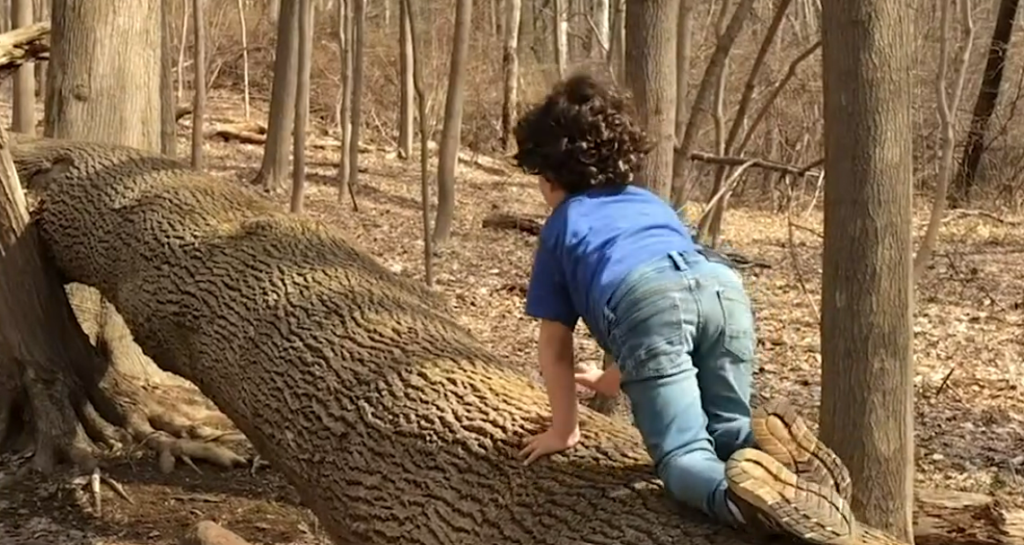
With the exception of the United States, every UN member state has ratified the United Nations Convention on the Rights of the Child, which was made available for signature in 1989. All of them. That treaty has been ratified by more nations than any other human rights document in history. It addresses children’s rights to play, education, health, and a safe environment, the latter of which has been construed to include the right to a clean and healthy natural environment under General Comment No. 26. In 1995, the United States signaled its intention to ratify the convention. Thirty years have passed since then. Since then, the Senate has not taken any action to ratify it. Concerns about parental rights, sovereignty, and worries that domestic policy might be constrained by international standards have all been cited as reasons over the years. The Milwaukee Independent described America’s refusal to ratify as an indication of how much the nation truly values children when it must be held legally responsible for that value.
The pattern repeatedly appears. A historic UN General Assembly resolution on children’s rights in the digital sphere was unanimously adopted by 193 nations in November 2023. As with any international framework that veers toward binding accountability, the U.S. involvement in that process was challenging. In an analysis published in April 2025, the Journal of Political Inquiry stated unequivocally that America’s persistent refusal to ratify the UNCRC raises legitimate concerns about the country’s perspective on children’s rights, not as a theoretical issue but as a practical one with quantifiable policy ramifications.
The clarity of the underlying science is what makes OMEP’s stance on nature especially worth investigating. Direct outdoor experience in early childhood improves cognitive development, emotional regulation, physical health, and the kinds of environmental values that shape adult behavior decades later, according to research in developmental psychology, pediatrics, and environmental education. This is not disputed territory. Variations of this have been stated by the American Academy of Pediatrics. The body of research is strong. However, the political framework that would convert it into a rights-based commitment—the kind of commitment that more than 60 countries have been willing to make through international frameworks—remains unbuilt in the United States due to a combination of partisan politics, concerns about sovereignty, and a peculiar American opposition to the notion that children’s rights can be codified in ways that limit parental and governmental behavior.
Observing this unfold over decades and administrations gives one the impression that the US is not genuinely making a case for children. It concerns who has the authority to determine what children are entitled to. Since 1948, OMEP has consistently responded to that question by saying that children deserve a lot and that the state has a duty to provide it. Even after all these years, the American response—signed but never ratified, acknowledged but never implemented—remains unfinished.
