

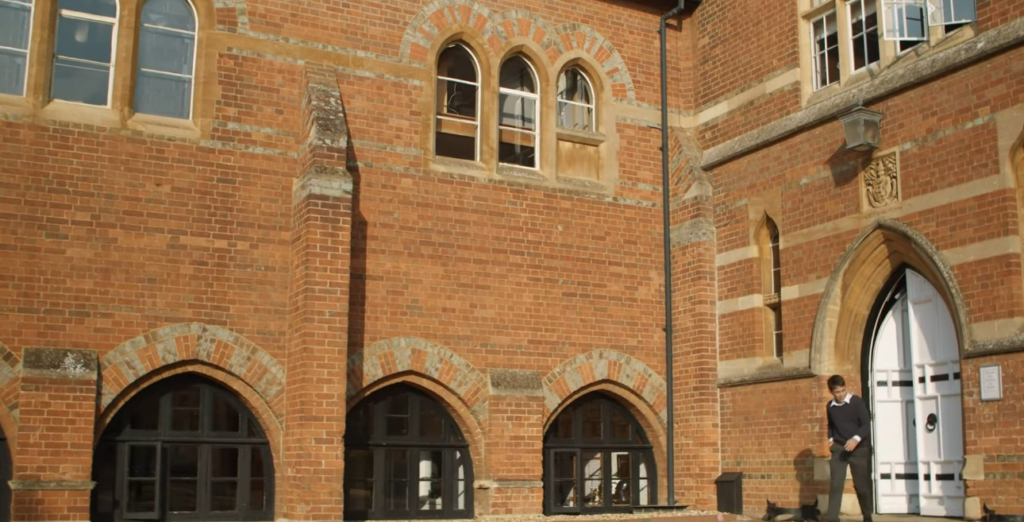
On a weekday morning in Abingdon, you might not notice any difference if you stroll along Faringdon Road. The same gates, the same well-kept grounds, and the stone buildings remain in their familiar locations. However, there has been a formal, subtle change that has far-reaching effects outside of this area of Oxfordshire. With effect from the beginning of the new school year, Abingdon School, one of the best boys’ schools in the nation, has partnered with Abingdon Prep School and The Manor Prep to form the Abingdon Schools Group.
The May announcement was presented in an ambitious manner. Abingdon School chair of governors James Sporle discussed joining “from a position of strength” and building something “robust and sustainable.” It’s worth stopping to consider that phrase. Generally speaking, schools don’t feel the need to identify as strong unless there is some underlying pressure that needs to be acknowledged. And that pressure is very real right now throughout the independent sector in England.
The timing is important. This merger comes after Abingdon School made the independent decision to become coeducational and begin accepting girls in Year 7 and the Sixth Form in September. In one breath, two major structural changes. It’s possible that the school is actually taking advantage of a chance to increase its resources, reach a wider audience, and create something that will endure for another century. It’s also possible that this is how you adapt when your financial situation begins to change.
Due to the ground’s movement. Many schools nationwide have cited the recent government policy that imposed VAT on private school fees as a major burden. Enrollment rolls are being trimmed due to declining birth rates. The price of energy has increased. Due to financial difficulties, Our Lady’s Abingdon, which is close to the schools in this new group, closed last year. In this context, terms like “resilience,” which are frequently used by educators discussing the merger wave, begin to take on new significance.
In this regard, Abingdon is not alone. Eight schools were combined into the Radley Schools Group when Radley College and the Prep Schools Trust merged in 2025. Near Chipping Norton, Kingham Hill School became a member of the Dean Close Foundation. Headington Rye Oxford was created by the merger of two girls’ schools in Headington. Days after the Abingdon announcement, it was revealed that St. Mary’s Prep School in Henley, which had been teaching local kids for almost a century, would close at the end of the summer term and its pupils would be integrated into nearby Rupert House. The head teacher at St. Mary’s was straightforward: continuing was not feasible due to falling birth rates, rising energy costs, and VAT on fees.
Observing all of this, it seems as though the independent school sector is subtly restructuring itself in ways that won’t be fully apparent until the dust has settled. The “distinctive educational experience and sense of belonging,” as Sporle described it, is what the Abingdon Schools Group is adamant about each school maintaining. The Manor Prep’s Peter Dickson described it as a significant event that “celebrates and protects the unique heritage” of the participating schools. These are deliberate words chosen by those who are aware that reassurance is a component of the product and that parents pay high fees in part for that heritage.
It remains to be seen if the group model fulfills that promise. Teachers may actually be able to teach more effectively if back-office tasks are shared and expertise is pooled. Consolidation may also eventually erase the very distinctions that families were paying to maintain. For the time being, Abingdon’s response to a challenging situation appears to be to grow together rather than run the risk of shrinking alone. The Oxfordshire countryside isn’t revealing much about whether that proves to be wisdom or necessity.
