

A May snowstorm in Colorado has an almost humorous quality until it becomes unfunny. Something changed on the evening of May 5, 2026, when temperatures throughout the Front Range had hovered around a pleasant and warm 75 degrees the day before. By the time the majority of households woke up, school districts along the corridor had already issued closure alerts due to the darkening skies and the moisture rolling in from the mountains. The phones began to buzz before the coffee had finished brewing.
Local meteorologists dubbed the storm “Miracle May,” but depending on who you ask, it may have been merciless or miraculous. Local meteorologist Kenley Bonner, who couldn’t help but laugh, said, “We were kind of joking earlier in the season that winter’s not going to come until spring — and it did exactly that.” Nearly two feet of snow fell in some foothill locations. Even more damage was done to the mountains. In early May, an accumulation that would have seemed dramatic in January seemed almost unreal.
Throughout the day, the National Weather Service maintained winter storm warnings, highlighting a particular aspect of spring snowstorms that is often disregarded: moisture content. Dry powder does not hang on tree branches like heavy, wet snow does. They are bent by it. Occasionally, it completely breaks them. Additionally, power lines frequently fall with branches. The trees along the Front Range were in full late-spring leaf, transforming every branch into something more akin to a sail than a twig and catching the weight of the snow like a net. Officials issued a direct warning about this, and it felt like an immediate warning.
Key Information
| Detail | Information |
|---|---|
| Event | Colorado ‘Miracle May’ Snowstorm |
| Date of Closures | Wednesday, May 6, 2026 |
| Districts Closed | 17+ school districts statewide |
| Major Districts | Denver Public Schools, Jeffco, Aurora, Boulder Valley, Douglas County, Poudre, Thompson |
| Universities Closed | Colorado State University, University of Denver, CU Boulder |
| Snow Accumulation | Up to 2 feet in mountain/foothill areas |
| Previous Day Temperature | 75°F on Monday — a 50°F+ swing in under 24 hours |
| Primary Safety Concern | Wet snow on tree branches and power lines; hazardous roads |
| Remote Learning Required | No — most K-12 districts declared full closure days |
| Expected Recovery | Warmer temperatures returning Thursday, May 7 |
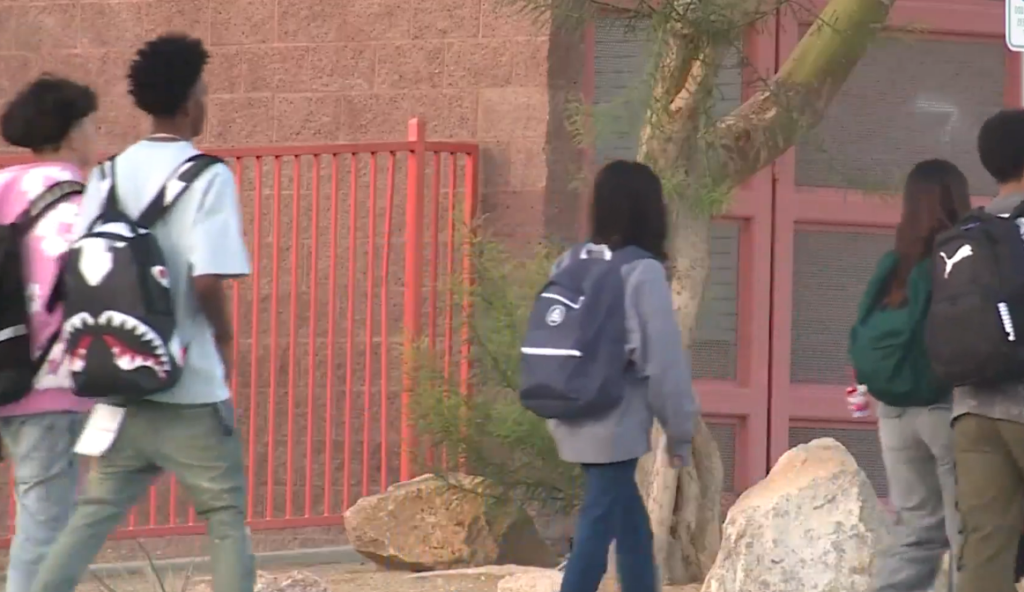
Northern Colorado’s Poudre School District was one of the first to relocate. Parents seemed to appreciate their announcement’s clarity—no hedging, no “we’ll monitor conditions and update you”—that all schools would be closed on Wednesday and that it would not be a day for remote learning. The final detail was important. A closure that still requires kids to be online by 8 a.m. seems exhausting. That wasn’t what Poudre did. Others swiftly followed. The list, which included Aurora, Boulder Valley, Douglas County, Jeffco, Denver Public Schools, Greeley Evans, Littleton, Sheridan, Thompson, and several more, had significantly expanded by late Tuesday night. There are seventeen districts in all, which include some of the state’s densest educational corridors.
Three of Colorado’s biggest systems are represented by Denver Public Schools, Aurora, and Jeffco. When all three go dark on the same day, hundreds of thousands of students, families, and staff are impacted; it’s not just a weather-related inconvenience. All school-related events were canceled, according to DPS, with the exception of competitions that were approved by CHSSA. Once competitive seasons start, they are difficult to stop, which is always a little strange when a real emergency arises.
There was something subtly poignant about the timing of Colorado State University’s announcement of its closure before 8 p.m. on May 5, as that Friday was the last day of spring semester classes. The storm cut off whatever energy had been building on campus over the previous week. Earlier that evening, the Oval, the expansive grassy center of the Fort Collins campus bordered by elm trees, had already been closed. It’s simple to imagine the scene: students mowing the lawn in the afternoon, unaware that by dusk those same elm branches would be bending under the weight of something that no one had quite anticipated.
Both CU Boulder and the University of Denver announced closures, though Boulder pointed out that final exams had already ended the week before. A slightly different strategy was used by Front Range Community College, which canceled in-person classes but continued to offer online and remote courses. It’s a useful distinction that illustrates how a closure day is handled differently in K–12 and higher education. A college student can use a couch to log in. In general, a third-grader cannot.
The precise number of working parents who were forced to find childcare on short notice is still unknown, but it must have been high. There are a lot of households recalibrating on a Tuesday night in seventeen districts that stretch from the Denver metro area north to Fort Collins. There is a version of this story that focuses only on logistics and the weather. The human version, on the other hand, has a parent with an early meeting, an unavailable babysitter, and a decision made in the dark while snow was piling up outside.
Warmer temperatures are expected to return by Thursday after the storm subsided on Wednesday night. The weather in Colorado follows its own schedule and is completely unaffected by the academic calendar. It would melt the snow. The educational institutions would reopen. However, on one peculiar spring day, almost all of the state’s major districts fell silent, and the mountains, as usual, had the final say.
