

A four-year-old being able to correctly identify a song thrush is quietly impressive. Not because kids don’t notice birds all the time, but because knowing the bird’s name is important in this case. You get a sticker for it. The sticker is put in a passport. And that passport, which was given out as part of an early childhood program run by a British NGO, used to get people into wildlife conservation parks across the UK at a discount.
This is being run by OMEP-UK, which is the British branch of the World Organization for Early Childhood Education. It’s not a big business. It’s not dripping with corporate money or government grants in a way that makes the news. Still, it managed to make something that changed how wildlife parks worked, which isn’t usually the case when they change their prices for educational experiments.
The Early Childhood Education for Sustainable Citizenship Award is the name of the program, and it has been around for a longer time than most people think. An Environmental Rating Scale for Sustainable Development in Early Childhood was created through collaborative research in ten countries between 2010 and 2014. These countries were Chile, China, Kenya, Korea, Norway, Portugal, Sweden, Turkey, the UK, and the US. That piece came out in 2016. The research was serious, reviewed by experts in the field, and coordinated across borders. The kind of thing that is usually mentioned in policy papers and then forgotten about. OMEP-UK did something different with it: they made a passport for kids out of it.
An “ESC Passport” is given to every child enrolled in a preschool that is part of the program. There is a physical copy of it that kids can hold and feel like their own. It talks about the UN Convention on the Rights of the Child, what it means to be a sustainable citizen, and how it changes over a person’s lifetime. Inside, there is room for up to fifteen Bronze, Silver, or Gold award stickers. Stickers are earned by doing activities that are firmly grounded in the real world, like finding wildlife habitats, recycling trash, recognizing cultural and linguistic diversity, and counting and naming things that can be seen outside the classroom window. There’s nothing abstract about writing down the names of three wild birds you see.
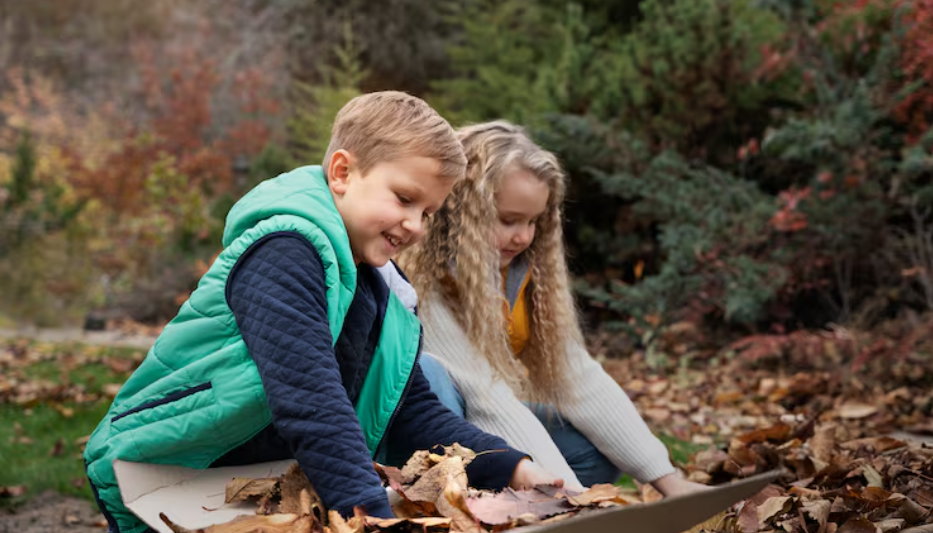
It’s harder to explain, but maybe more interesting, how this framework got wildlife parks to take part in a business sense. In the real world, the passport was useful because it gave people cheaper access to nature preserves and other community resources. It’s possible that the parks thought it would be good for their image or because it fit with their message of protecting wildlife. However, it’s also possible that a well-organized program linked to UNESCO and backed by international research just made it easier to say yes than no. In any case, the partnership made the program real for the kids. It felt different to go to a wildlife park with your passport than to just go.
Fifteen “I-care” booklets are used in the program. These cover a range of topics, such as economics, environmental awareness, early literacy, and numeracy. Each booklet is related to the UN’s Sustainable Development Goals and has activities that a three- or four-year-old can understand. Parents and people who work in preschool do them together on purpose. To be clear, OMEP-UK has always thought that teaching kids about sustainable development doesn’t work if it treats them like passive recipients instead of active participants. The design really does have a democratic feel to it. Kids should feel like they’re building something instead of just learning about it.
There have been breaks in the program. The passport discount program was put on hold during the pandemic, and it’s still not clear how much it has been fully restored. However, the framework stays in place and is now also connected to UNESCO’s Greening Schools Accreditation Initiative. At this point, it seems like OMEP-UK is still adding to it.
As I’ve watched this project grow over more than a decade, I can’t help but think that its most underrated quality is its patience. This was never meant to be used during just one news cycle. That it was meant to follow a kid from preschool to a life that, hopefully, cares a little more about the Earth.
