

When you walk into a modern classroom and see thirty kids staring at thirty different screens, each one supposedly on their own personalized learning journey, it’s a little unsettling. It looks like the next day. It might not work like one.
Over the past few years, there has been a slow but clear change in how people feel about educational technology. Parents have been antsy. The teachers have been angry. People in the public eye, lawmakers, and researchers have all come to the same unsettling conclusion: the digital tools that schools have spent tens of billions of dollars on may not be making kids smarter. There are times when the evidence points in the opposite direction.
It’s not often that you hear the names Hugh Grant, Ted Cruz, and Oprah Winfrey together, let alone on the same side of a policy debate. Still, all three have spoken out against screens in schools. Grant backs a nonprofit that wants to stop the whole rollout of ed tech in K–12 schools. Cruz called a Senate hearing with well-known people who are against using technology in schools. On Winfrey’s podcast, she had guests who made strong arguments about how technology is destroying education from the inside. You can ignore any of these voices. It is more difficult to get rid of all of them at once.
It’s not really new that people are angry. In 1992, a parent in California said that her children’s school district was forcing computers down their throats. That phrase stuck out because it really did describe a feeling that technology was being embraced with gusto, but not enough honest thought was put into whether it helped people learn. The scale has changed since then. Almost all American public school students now have a device that their school gives them. One-to-one computer programs became almost universal after the pandemic, when the government provided extra money to support them. The test grew very big very quickly.
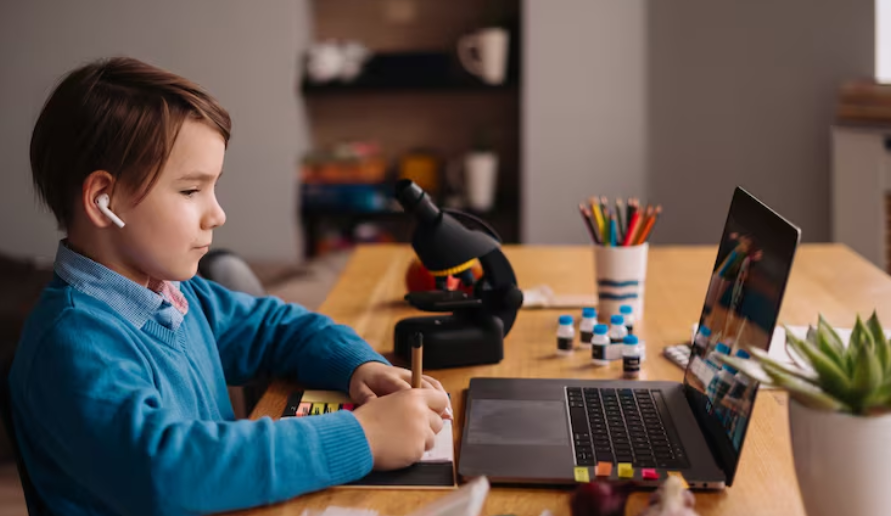
During the same time that ed tech grew the fastest, student outcomes have stayed the same or gone down in most of the developed world. There are too many other factors at play for that comparison to prove a cause and effect link. However, it does bring up a question that needs a more honest response than what the industry has given so far. A poll by the EdWeek Research Center not long ago found that 61 percent of school and district leaders think most parents think there is too much technology in schools. That’s not a crazy idea. That’s most of them.
In hindsight, the early failures were pretty easy to see coming. Engagement was sold as a stand-in for learning. Schools rushed to get these tools without giving teachers enough training or learning about how the brain works. They also didn’t give much thought to what it means for a child to stare at a screen for six hours a day. Some of it is different now. The better ed tech products on the market today have been carefully tested by teachers. These days, the best teachers use technology in the classroom as an extra character, not as the main character.
But generative AI is changing the story all over again, and it’s happening faster than anyone is ready. There is no such thing as a learning aid in a tool that can finish a student’s homework essay in thirty seconds. Even just the effects on privacy are big. Any teacher who has graded a suddenly beautiful paragraph from a student who had trouble writing a sentence the week before can see that the question is about cheating.
A lot of teachers think that the conversation has finally grown up and is no longer just full of excitement. The real question isn’t whether or not to get rid of technology in schools. That would be a mistake in and of itself, given the world that students will be entering. What really needs to be asked is if the business and the school districts that worked with it were ever as careful as they should have been.
