

The water around Corfu behaves differently from other Mediterranean regions for some reason. It changes color more quickly than you might think; in the course of an afternoon, it goes from a deep navy off the Albanian straits to that unlikely glassy turquoise close to Paxos. It has to do with the limestone seabed and the way the Adriatic currents fold in, according to sailors who have worked these waters for decades. The effect is evident whether or not that is the complete explanation.
Compared to other places, this sea has a stronger sense of history. According to Thucydides, Korkyra was one of Greece’s three major naval powers, along with Corinth and Athens, and the Battle of Sybota happened in these exact locations. It’s difficult not to feel that the water remembers more than the land when you stand at the old harbor today and watch ferries from Igoumenitsa glide past the medieval fortifications. The sea was always the contested area and the route by which everything arrived, and the island was so heavily fortified by the Venetians that it became known as a bulwark of Europe against the Ottomans.
Corfu is situated at an odd seam in terms of geography. The island essentially belongs to two seas at once because the International Hydrographic Organization draws its border between the Adriatic and Ionian seas directly along the northern tip. This is not a topic that locals discuss much. However, it explains why the southern coast around Lefkimmi remains warm and gentle until October, while the weather off Kassiopi can feel brisk and northern.
For good reason, the majority of yacht charters focus on the northern coastline. After leaving Gouvia, you can sail past the Venetian walls of the Old Town and head north toward Nisaki and Barbati, where the beaches are surrounded by centuries-old olive groves. The Durrells’ white house is still in Kalami’s possession, and looking at it from the water gives the impression that not much has really changed. Higher up, Kassiopi’s harbor remains bustling throughout the season, its tavernas drawing crews who have spent the day anchored in coves whose names are hardly ever listed in travel guides.
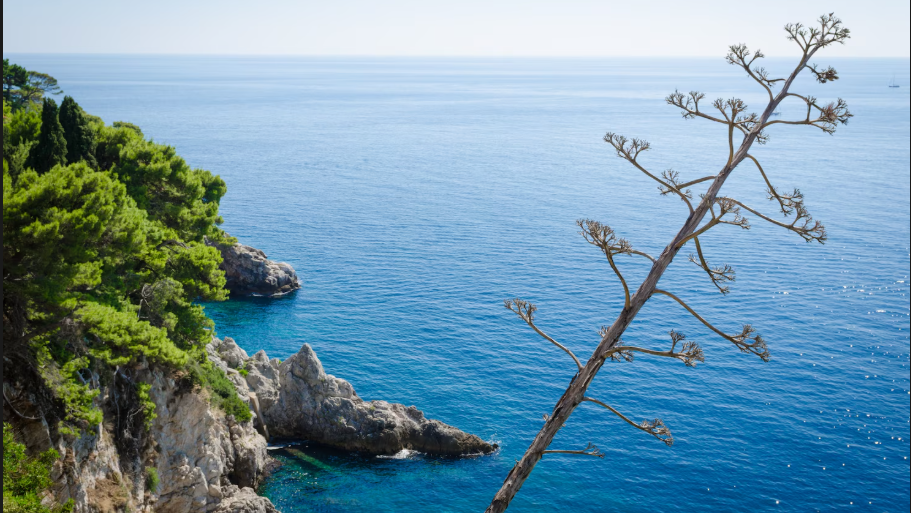
It feels like a different nation in the southern part of the island. Petriti’s fishing fleet continues to function largely in the same manner as it did fifty years ago. Lefkimmi’s harbor is appealing because it is practical rather than scenic. The water then clears to an almost theatrical aquarium blue that snorkelers chase across the Ionian, and the journey to Paxos and Antipaxos takes several hours.
Some of this may eventually be flattened by mass tourism. There are already indications, with day-tripper boats packing the smaller bays and the larger marinas filling earlier every year. However, the place also has a stubbornness. The Romans, Venetians, Ottomans, and British have all been surpassed by the sea surrounding Corfu. It will most likely outlive Instagram as well. You get the impression that some things here just won’t be hurried when you watch a small caïque cruise the headland at dusk, sails slack, engine cut.
