

While most English schools carry out their regular midweek schedules on June 11, a loose coalition of educators, childcare providers, and play advocates will attempt something small but intentional: allowing kids an additional 31 minutes of unstructured play. No educational apps, no tablets, and no carefully chosen screen content. Just play, in whatever unstructured, messy way kids come up with when adults take a step back. It’s not a random number. It is derived from Article 31 of the United Nations Convention on the Rights of the Child, which acknowledges the right to play, relaxation, and rest for all children. The World Organization for Early Childhood Education’s British branch, OMEP UK, has used the International Day of Play as its yearly focal point and transformed that article number into a campaign name, the Play 31 Challenge.
The urgency of the situation seems to be growing. Children under five should not spend more than an hour a day on screens, according to UK public health guidelines. However, anyone who has seen a toddler in a restaurant or waiting room can attest to how far reality has deviated from that standard. Young children’s screen saturation is now the norm rather than an isolated issue. Thirty-one minutes won’t change that, according to OMEP UK’s campaign. However, it does ask parents and schools to do something specific and doable, which is more than most awareness campaigns do.
The Play 31 Challenge’s intentional partnership structure is what makes it intriguing and a little out of the ordinary for an advocacy initiative. OMEP UK hasn’t attempted to construct this on its own. Schools in the UK and Ireland are being pushed by Play England, Play Scotland, and Play Wales to incorporate unstructured outdoor activities into the school day or to extend break times. Toolkits for “screen swaps,” in which gadgets are traded for practical, hands-on activities, are among the resources they provide. Compared to the more general discussions about screen time, which frequently alternate between alarm and resignation, there’s something refreshingly pragmatic about it.
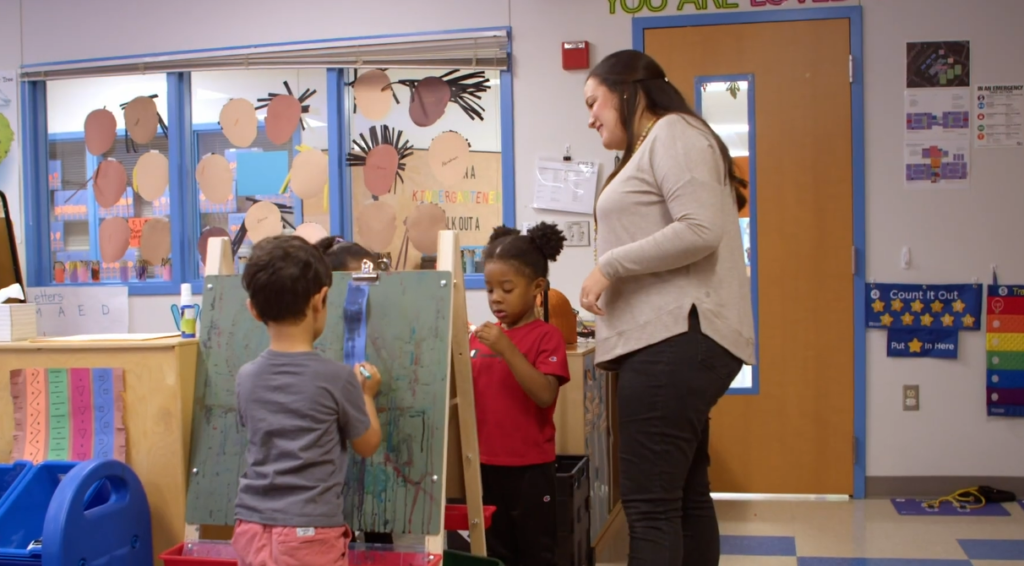
However, there is still tension in those discussions. Framing outdoor play and digital play as mutually exclusive is problematic, according to a World Economic Forum article published around last year’s International Day of Play. The article noted that games like Pokémon GO and apps like Seek by iNaturalist combine the two in ways that actually encourage children to move outside. On the other hand, French medical professionals have adopted a more assertive stance, maintaining that children can only benefit from unstructured play when there are no screens at all. OMEP UK falls somewhere in the middle, concentrating more on recovering time—physical minutes in the day—that screens have covertly taken up than on outright condemnation.
It’s important to take note of the larger institutional context. The Center for Young Lives specifically urged the government to break the “addictive grip of digital devices” on young children when it called for a new National Play Strategy for England last year. Nearly 5,000 children used the word “play” in their responses to the Children’s Commissioner’s Big Ambition survey. The children themselves requested better facilities and more time spent outside. The majority of children learn best through play, according to an eleven-year-old girl who wrote that her school didn’t care “even though it has been scientifically proven.” It’s difficult to ignore the fact that kids are expressing issues that policy has been reluctant to address.
It is genuinely unclear if the Play 31 Challenge can maintain momentum for more than one day every June. Annual date-based campaigns have a tendency to peak and then fade. However, OMEP UK’s strategy—focusing on a particular legal right, forming international alliances, and making the request modest enough to be fulfilled—suggests that the organization is considering durability rather than just visibility. The significance of thirty-one minutes is not the question. By July, the question is whether anyone will still be counting.
