

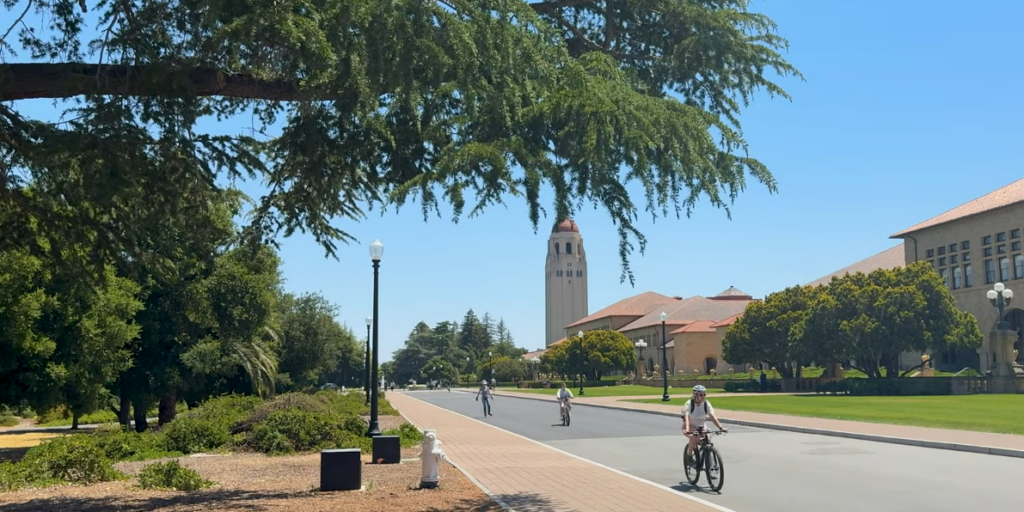
In the middle of the sandstone buildings and eucalyptus trees on the Stanford campus in Palo Alto on a summer afternoon, about 140 high school students are engaging in an activity that most of them have never done in a classroom: openly discussing how their brains function and being taken seriously for it. The number that sticks in your mind long after you’ve read about the program itself is how they got here—roughly 400 applications were submitted for those 140 spots.
Three times as many teenagers applied for admission as were admitted. Demand for a summer program is not the only reason. That is proof of something that American education has been reluctant to address.
In its sixth year, the Stanford Neurodiversity Project: Research, Education, and Advocacy Camp for High Schoolers, or SNP-REACH camp, has developed into a learning environment that also serves as a covert indictment. Neurodiversity advocacy, strengths-based learning strategies, universal design principles, and the science underlying how various brains process information are all covered in the curriculum. Students hear from researchers, clinicians, and neurodivergent advocates who have successfully navigated college. They develop advocacy projects in small groups using design thinking, which the majority of them then return to their own high schools. By most accounts, it is effective. The oversubscription raises the question of why this type of setting must be a summer camp with limited enrollment at a prestigious university instead of being accessible to neurodivergent students year-round in the schools they actually attend.
This has clear numbers. An estimated fifteen to twenty percent of people are neurodivergent, meaning they have autism spectrum disorder, ADHD, dyslexia, dyspraxia, and related conditions. One in five Americans. These students attend schools that were primarily created for the other four. The typical classroom structure, the typical pace of instruction, and the typical expectations regarding focus, organization, written communication, and social interaction were all based on a neurotypical model that has never adequately represented the entire spectrum of students seated in those classrooms.
| Field | Details |
|---|---|
| Program Name | SNP-REACH — Stanford Neurodiversity Project: Research, Education, and Advocacy Camp for High Schoolers |
| Host Institution | Stanford University, Palo Alto, California |
| Program Duration | Two weeks (summer) |
| Format | Hybrid (Zoom and in-person on Stanford’s campus) |
| 2026 Cohort 1 | July 6–17, 2026 (Hybrid) |
| 2026 Cohort 2 | July 20–31, 2026 (In-Person) |
| Applications vs. Acceptances | ~400 applications → 136–140 students selected |
| Acceptance Rate | Approximately 34–35% |
| Years Running | 6th year (as of 2026) |
| New Program | SNP-BRIDGE — for college-bound/early college students (pilot 2026) |
| Financial Aid | Needs-based scholarships available by application |
| Curriculum Themes | Neurodiversity advocacy, strengths-based model, universal design, design thinking, employment, mental health |
| Neurodivergent Population | Estimated 15–20% of the global population; 1 in 5 Americans |
| Conditions Addressed | ASD, ADHD, dyslexia, dyspraxia, dysgraphia, dyscalculia, NVLD, executive dysfunction, sensory processing disorders |
| Post-Camp Outcome | Most students continue neurodiversity advocacy projects in their own high schools |
It’s not subtle what happens to neurodivergent students who don’t receive enough support. Inadequate support for neurodivergent students has been repeatedly linked in studies to increased rates of anxiety, depression, low self-esteem, and disengagement from school. Many go undiagnosed into adulthood and spend years attempting to function in settings that view their cognitive differences as variations to be worked with rather than deficits to be managed. Results greatly improve when students are diagnosed and given the necessary accommodations. However, access to quality support varies greatly depending on a number of factors, including geography, parental advocacy ability, wealth, and the attitudes of individual educators and school administrators.
Every year, about 140 students attend a two-week camp at Stanford to address this. That is not insignificant. Many of the students who attend leave with the vocabulary and self-assurance to speak up for their own needs back in their regular schools, and they report that it alters how they understand themselves. Additionally, SNP has introduced a new pilot program this year called SNP-BRIDGE, which is targeted at college-bound students making the transition from high school. This suggests that SNP is attempting to reach more of the developmental timeline.
However, the problem’s size makes the solution’s size appear relatively small. Between 15 and 20 percent of people do not fit into a niche. This is not an edge case. It’s a significant part of every classroom in every school in the nation, even the ones where no one has ever brought up neurodiversity. At parent-teacher conferences, the child who reads differently, can’t sit still, or interprets social cues in unexpected ways is still referred to as “a disruption” or “not working to his potential.”
Observing programs like SNP-REACH being oversubscribed year after year gives one the impression that the demand signal is sufficiently clear. Instead of treating neurodivergent students as a specialized subgroup in need of specialized settings, the institutional will to treat them as a normal part of the population to be educated is lacking. A workaround is the summer camp. It’s a good one. It’s still a workaround, though.
