

Early childhood facilities throughout Aotearoa New Zealand are undergoing a subtle but noticeable change. From the outside, it doesn’t appear dramatic—no grand policy announcements, no ostentatious rebranding. It appears more like a teacher sitting at a low table with a Māori grandmother, inquiring about the family’s beliefs rather than the child’s needs. In practice, whanaungatanga resembles that silent moment repeated in hundreds of settings.
Māori ways of being have always revolved around whanaungatanga, which is broadly defined as the web of relationships that bind people together through shared identity, kinship, and belonging. However, that value was marginal to mainstream practice for a large portion of New Zealand’s early educational history. Acknowledged in policy documents, respected in language, and mainly ignored where it was most important—in the day-to-day interactions between educators and Māori families selecting centers outside of kōhanga reo.
The World Organization for Early Childhood Education’s national committee, OMEP Aotearoa, has been attempting to bridge that gap. Te Whāriki, New Zealand’s bicultural early childhood curriculum, which frames the larger world of family and community as active curriculum rather than background context, is a major influence on their methodology. That distinction is more important than it may seem. When family becomes part of the curriculum, teachers begin to view parent involvement as necessary knowledge rather than as a courtesy.
The stakes are now more apparent thanks to research from the Teaching and Learning Research Initiative. Māori families consistently expressed expectations that their children’s language, culture, and identity would be genuinely supported in surveys, even if they chose mainstream centers over kōhanga reo. Not only acknowledged in a welcome booklet, but integrated into the center’s everyday operations. According to many accounts, there was a substantial discrepancy between what educators felt comfortable delivering and what families expected. According to earlier studies, mainstream teachers frequently lacked the competence and confidence to implement bicultural programs in accordance with Te Whāriki’s commitments. It’s an unsettling discovery. It implies that practice was the issue rather than values, since the majority of educators claimed to have the correct ones.
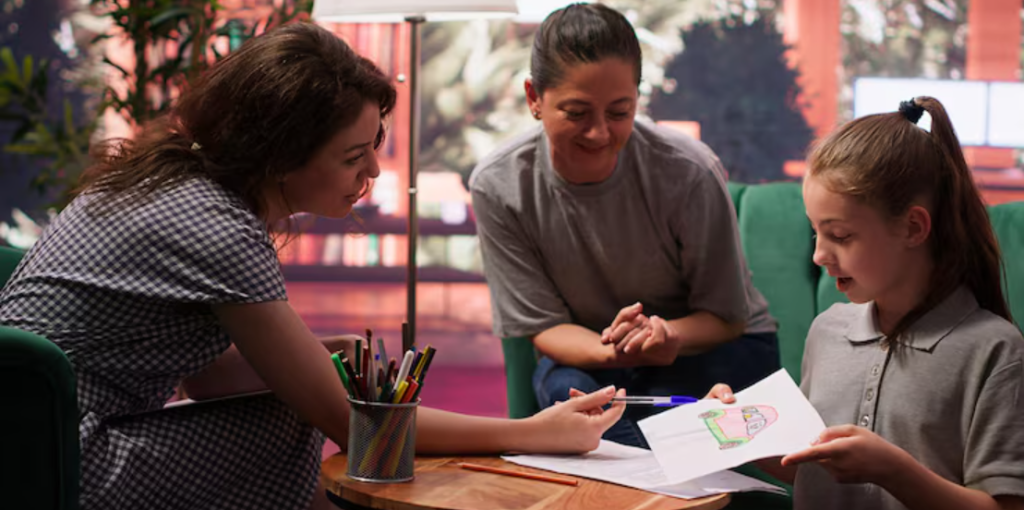
The whakawhānaungatanga approach offers a recentering of Māori ways of knowing and doing inside relationships that already exist between teachers and families, which OMEP Aotearoa has been assisting in translating into useful frameworks. It’s not a program that you run. It’s more akin to a stance you adopt, one that necessitates that teachers truly understand what each family values, hopes for, and brings to the center each morning. This may seem simple. Seldom is it.
According to the research, tension doesn’t always come through loudly when culture isn’t validated in early childhood settings. It manifests as quiet withdrawal, with families becoming less involved and kids switching between two worlds without the connections that make learning stick. Teachers can make connections between what happens in the center and what children experience at home when they have strong family ties. That bridge cannot be constructed without those connections.
A return to a single model is not what OMEP Aotearoa is aiming for. It’s more subtle—mainstream environments that can truly uphold the promises New Zealand made decades ago on paper. To be honest, it’s still unclear if the industry has the ability, know-how, and motivation to follow through. However, the discussion has shifted. And sometimes that’s where it all starts in early education.
