

Growing up, Patrick Mahomes lived in Whitehouse, Texas, a small town east of Tyler where high school football still takes place on Friday nights and everyone knows one another. It’s the type of place where an athlete gradually builds their reputation through practices, seasons, and little moments that don’t often make the highlight reel. For Mahomes, those years at Whitehouse High School were subtly pivotal, not only in terms of athletics but also in every aspect of a young person’s development prior to the public eye.
Mahomes was more than just a quarterback at Whitehouse. He also played basketball and baseball, devoting himself to three different sports with a restless energy that, looking back, reveals something about his mental processes. He has discussed how reading a basketball defense taught him to process movement and space more quickly than most people, and how pitching a baseball improved his arm mechanics. It’s likely that scouts and coaches who missed him early didn’t see a quarterback. They observed a child who was too multifaceted to excel in just one. In that regard, they were mistaken.
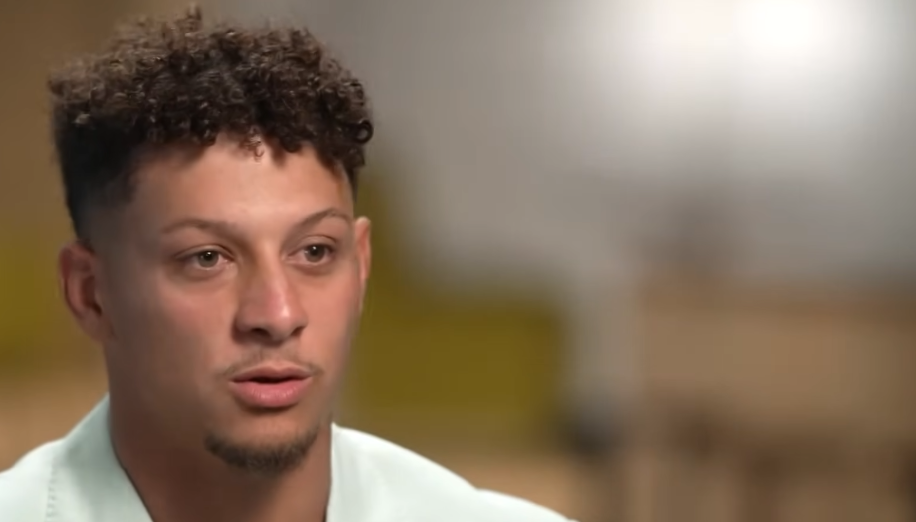
For a Texas high school student, his senior stats were truly astounding: more than 4,600 passing yards, 50 touchdowns, and almost 1,000 rushing yards. That same year, he struck out 16 batters in a no-hitter. He was selected by the Detroit Tigers in the 37th round of the 2014 MLB Draft, which was so late that it was more of an acknowledgement than a firm offer. Mahomes opted for college instead, which appears to have been one of the better choices made in White House that decade in light of everything that transpired.
Strangely, his recruiting profile did not align with his output. He was ranked 12th among dual-threat quarterbacks in his class by rivals, who gave him a three-star prospect rating. Houston, Rice, and Texas Tech made offers. He chose Texas Tech, and it’s possible that he benefited from the school’s comparatively low profile. When a young athlete arrives somewhere without high expectations, they have more time to figure things out without having to worry about being selected.
Mahomes majored in marketing at Texas Tech. It’s important to take a moment to consider that detail, which is often overlooked. If you watch Mahomes at the line of scrimmage, you can see that this translation isn’t totally metaphorical. Marketing is essentially about reading an audience and figuring out what people want before they realize they want it. He started out as Davis Webb’s backup, made his debut in the fourth game of his rookie campaign, and by the end of the year, he was throwing for 598 yards in a single game against Baylor. He was nineteen.
He also briefly played baseball at Texas Tech, serving as a relief pitcher in his freshman year before deciding to devote all of his attention to football. That quiet, sensible choice revealed where his priorities were changing. His usual dual-sport route was getting closer to a single lane.
With 5,052 passing yards in 12 games during his junior season, Mahomes was the nation’s top passer. He took home the Sammy Baugh Trophy, which is awarded to the top collegiate passer in the country each year. The Kansas City Chiefs selected him 10th overall in the 2017 NFL Draft after he left after that season, skipping his senior year.
In reality, Patrick Mahomes’ education at Texas Tech and Whitehouse produced something that doesn’t look good on any resume. It was flexibility, developed over years of participating in various sports. It was competitive intelligence, developed somewhere between a Big 12 game against a blitzing defense and a marketing classroom. After three Super Bowl rings, it’s difficult to deny that a small East Texas high school and a mid-tier college program provided him with just the right amount of room to develop.
