

It began with a courteous notice. Parents and guardians were asked to enter a Cape Town primary school “neatly and appropriately dressed at all times.”” Clothing with offensive language, dressing gowns, sleep bonnets, and pyjamas were all prohibited. The school even took the time to specify what constitutes appropriate clothing, including dresses, shirts, long pants, jeans, and clean shoes. The entire situation was presented in a delicate, almost contrite manner. However, in a matter of days, the notice sparked a discussion that extended far beyond the school’s boundaries in Cape Town.
The fact that a memo regarding adult clothing choices generated this much controversy is instructive. Social media was inundated with opinions from parents, ranging from genuine outrage to mild amusement. Some thought the school had gone too far. Others would not publicly express their agreement, but they did so in private. Some said it didn’t matter what they were wearing under a coat because they had no reason to get out of their car.
The underlying tension in this situation is difficult to ignore. Before eight in the morning, parents—typically mothers—manage breakfast, packed lunches, school bags, uniforms, and the unique chaos of three children with three different schedules. Many people find it truly unreasonable that anyone would have an opinion about their choice of waistband at that hour. Simply put, one online commenter said, “Look at the mom in pajamas.” She’s not being impolite. She’s making it.
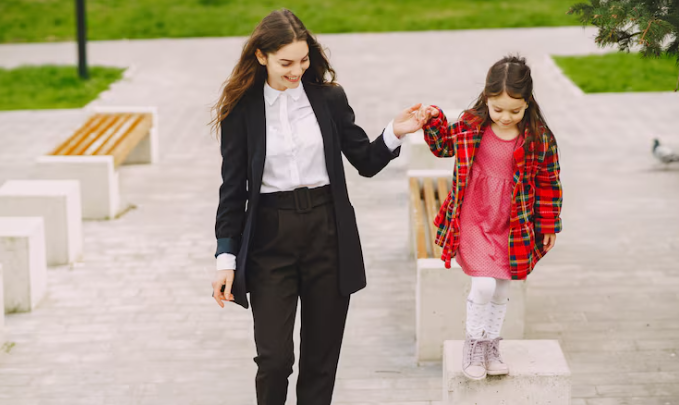
Conversely, there is a more subdued but enduring sense that school grounds are public areas. These are locations where kids make first impressions, where educators begin their workdays, and where the overall ambiance of a classroom is either subtly undermined or strengthened. It’s questionable if clothes have any real impact on any of that. However, there is some logic to the instinct that it might.
Even though this specific incident made it feel new, the parent-school run dress code issue is not new. Over the years, similar notices have been sent home by UK schools. Customers were once asked not to enter a Bradford Tesco wearing pajamas. There appears to be a persistent cultural anxiety about the boundaries between the bedroom and public life. This anxiety tends to manifest in settings where children are present, possibly due to adults feeling more scrutinized there.
The degree to which the answer depended on details is intriguing. Many parents who opposed the Cape Town notice were more concerned with protecting their right to remain anonymous than they were with defending pajamas. People were generally offended by the notion of a school enforcing an adult dress code. Schools are establishments that have power over children, not over the adults who drop them off. People care about that distinction, and it makes sense.
However, the notice from the school was not confrontational. In closing, it thanked parents for “maintaining a professional and respectful school environment for learners, staff and visitors.” Instead of being punitive, the language was cooperative. Nobody was being turned away. Fundamentally, it was a request. Depending on who you ask, it may or may not be considered acceptable.
Although it doesn’t mandate that everyone iron their pants before 7:30 AM, there is a middle-of-the-road viewpoint that acknowledges that showing up at a child’s school in full sleepwear, including a bonnet, makes a different kind of statement than just being casual. The majority of participants in this discussion aren’t genuinely debating pajamas. They are debating whether worn-out parents have done enough and who has the right to set expectations in communal areas.
It’s likely that no one will find a clean solution to this. Until the morning rush wins or loses, the parent-run dress code controversy will continue to surface, notice by notice, school by school. For the time being, a tracksuit appears to be the cautious middle ground—comfortable enough to feel like a compromise, yet fashionable enough to keep everyone silent.
