

When Stacey Solomon appears on television, most people don’t consider the teenager who hides in the school restroom, giggles with her friends, skips class, and doesn’t really care about her homework. A woman who would go on to pass 13 GCSEs, establish a fifteen-plus-year career in the media, and become one of the most recognizable faces on British television doesn’t fit that description. However, it is precisely this contradiction that makes her story compelling.
Solomon was raised in a home that practiced both Christian and Jewish customs in Dagenham, east London. Before starting her secondary education at Abbs Cross in Hornchurch, she attended a Christian elementary school. She claimed to be intelligent. In retrospect, that much seems obvious. However, intelligence and engagement are two very different things, and she wasn’t particularly present or engaged at Abbs Cross. She remembers spending most of her time laughing with friends in the school restroom, which probably felt more like being a teenager at the time than a crisis.
However, her parents had a different opinion. They found her a spot at King Solomon High School in Ilford after it became apparent that the setting wasn’t working and that the social pull was greater than anything a classroom could provide. According to her own account, the school had a more stringent policy. She claimed that it was more difficult to act foolishly there. It appears that this change in surroundings was the pivotal moment.
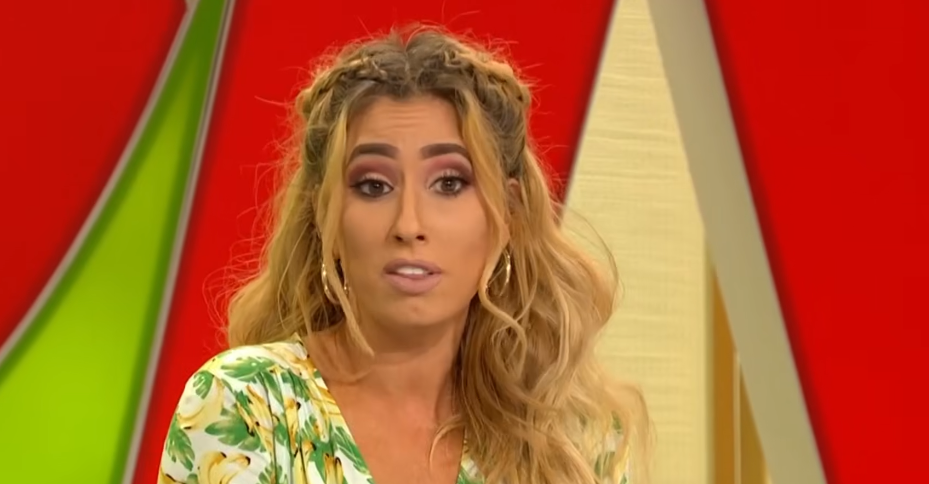
The part that is often forgotten is what transpired next. Solomon completed 13 GCSEs at King Solomon. That is not a modest outcome. To put things in perspective, the majority of GCSE students take eight to ten subjects. Passing all of them indicates someone who, under the correct conditions, had true ability and focus. Thirteen is a significant academic workload. Perhaps the more stringent structure just made it harder for her to vanish. Or perhaps she simply needed the proper environment, as is sometimes the case with intelligent students who struggle early.
She started her A Levels in English, biology, math, and law at what seems to have been another school after King Solomon, but she eventually transferred to Havering Sixth Form College when she made the decision to take performing arts more seriously. After that, she enrolled in a Performing Arts course at the Ardleigh Green campus of New City College. She entered The X Factor in 2009 during that period. From there, the rest, as they say, developed quite rapidly.
Before returning to the drama of talent shows, it is worth mentioning that there is a tendency in British media to treat performers as though their education is either irrelevant or purely decorative. Over time, however, Solomon has challenged that narrative. People undervalue her, she said to The Guardian in 2022, and it seems like she has been subtly demonstrating this for a while.
It’s important to remember that her career is not defined by her academic record. Clearly. It does, however, refute a rather lazy presumption that someone who rose to fame through a singing competition must have completely eschewed schooling in favor of rehearsal. Solomon carried out both. She attended classes, passed tests in a variety of subjects, switched schools when one wasn’t working, and still managed to find time to hone the performing skills that would eventually propel her to stardom.
There’s something refreshingly commonplace about the way her story develops. She wasn’t exceptionally talented. Nor was she a catastrophe. She was a bright youngster who initially ended up in the wrong setting before finding a better one and making the most of it. In the end, Stacey Solomon’s education served as a logical basis for everything that came after, whether on purpose or by accident.
