

Most people have a familiar picture of childhood: riding school buses, doing homework at the kitchen table, and having lunch with friends in the cafeteria. The story has been told differently by Malachi Barton. He was born in Virginia Beach, Virginia, on March 10, 2007, and by 2014, at a time when most children are only learning multiplication tables, he was already trying out for television roles. His educational journey wasn’t a straight line, but judging by where he is now, it seems to have worked out perfectly.
Barton was never exactly destined for a traditional upbringing, having grown up in a home influenced by music and performance (his father Loren is a guitarist and tour manager, and his mother Felicia is a singer-songwriter and former American Idol contestant). The way his early life laid the groundwork for what came next seems almost inevitable. The issue of education became a practical conundrum that many child actors and their families discreetly handle with little public notice after his family moved from Virginia Beach to Los Angeles to support his developing career.
What is known is that Barton went to Oak Park Independent School, or OPIS; his family’s behind-the-scenes content revealed this information. OPIS is a type of institution designed especially for families that don’t fit into the traditional school system, such as children who work professionally, travel frequently, or just learn better in a more flexible environment. A traditional school calendar might have been nearly impossible for someone like Barton, who was filming Disney Channel shows like Stuck in the Middle while still a young adolescent.
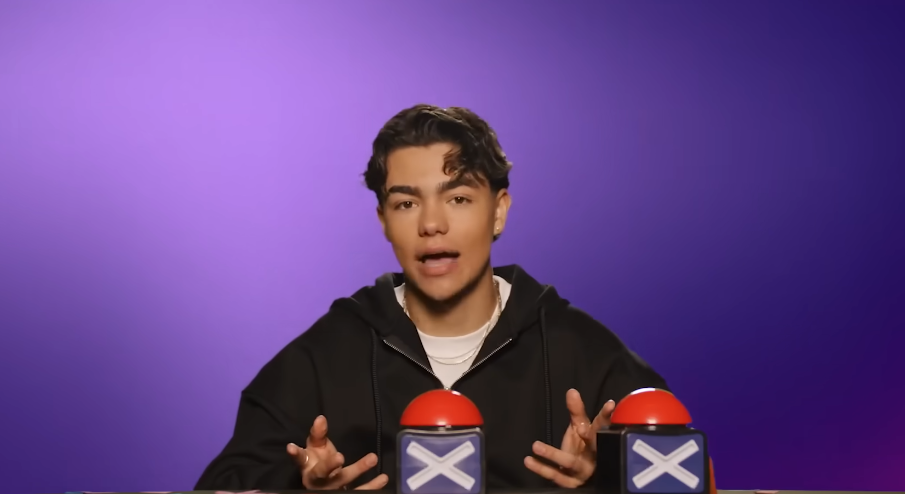
Observing how his career has progressed, it seems that rather than competing with his career goals, his education kept up with them. The amount of coordination needed behind the scenes—between sets, tutors, schedules, and actual learning—was substantial by the time he was starring in three seasons of Stuck in the Middle from 2016 to 2018, voicing animated characters, and making appearances in feature films like Dora and the Lost City of Gold. Although that aspect of a young actor’s life is rarely discussed, it is quite real.
Barton’s educational experience also illustrates a more general change in the way gifted youth in demanding fields approach education. The strict framework of a typical school day does not vanish; rather, it changes. Formal instruction continues even during the busiest production times because studios that produce content with minor actors are legally obligated to provide educational hours on set. Years later, it’s still unclear how young performers themselves feel about that trade-off, and it’s reasonable to wonder if that completely replaces the social and developmental texture of a school campus.
However, it’s difficult to ignore the fact that the abilities developed as a result of his upbringing are significant in and of themselves. It’s not just academic work to memorize lines, follow instructions, and manage a schedule for various productions. They develop the kind of self-control and flexibility that classroom environments attempt to impart in different ways. The 19-year-old Barton has post-production projects scheduled for 2026 and 2027, such as Zombies 5 and Camp Rock 3. A young person who has somehow learned to arrive prepared is necessary for that kind of professional continuity to occur.
The dramatic nature of Malachi Barton’s educational tale makes it unremarkable. It’s intriguing because it’s quiet, mostly happening off-camera, shaped by parents who obviously made deliberate choices, and assisted by organizations designed specifically for this kind of life. Not all young actors are adept at striking that balance. Those who do often take it with them.
