

A truck carrying a Mazak Optiplex 3015 CO₂ laser, which can cut through three-quarters of an inch of steel with precision measured in thousandths of an inch, arrived at the Regional Skills Center at Columbia Gorge Community College in The Dalles, Oregon, on a snowy Friday morning in February 2025. It is not the kind of equipment you would find at a community college serving a rural area of north-central Oregon where the Columbia River carves a broad, wind-carved route between Oregon and Washington, but rather in a serious aerospace or automotive facility. In many ways, the whole story lies in that discrepancy between expectations and reality.
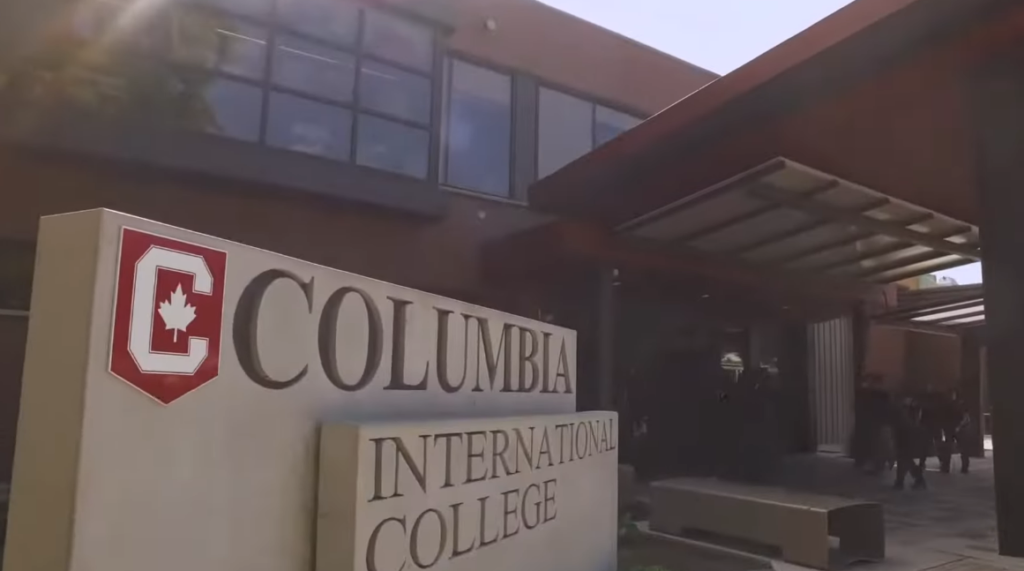
There are about 25,000 residents in the town of The Dalles. Situated on the edge of the Columbia River Gorge, it is only a few hours away from Portland, but in terms of workforce pipeline, economic infrastructure, and access to institutional resources that larger cities take for granted, it is completely different. For years, Columbia Gorge Community College has been serving this area by discreetly completing the unglamorous task of providing rural students with credentials that genuinely lead somewhere. Designed by Opsis Architecture as a sort of entrance to the campus, the Skills Center houses CNC programming, welding, metals fabrication, and now, with the addition of the Mazak laser, a prototyping capability that local manufacturers can access at time-and-materials cost. The final section is more important than it may seem. Affordable access to precision fabrication can mean the difference between pursuing an idea and giving up on it for small and medium-sized manufacturers operating on narrow profit margins in a rural economy.
When the laser arrived, Robert Wells-Clark, the lead instructor of the Advanced Manufacturing program, stated clearly that the goal is to foster innovation in the community as well as prepare students for the workforce. The World Organization for Early Childhood Education has been closely observing this dual mandate—serving students and the local economy at the same time—and has described it as a model worth emulating. The argument is not difficult. The lack of basic infrastructure that workers with young families require contributes to rural communities’ poor workforce retention rates. Almost at the top of that list is childcare. If a worker relocating to The Dalles can’t find a spot for a two-year-old on a Tuesday morning, it will be more difficult to fill every manufacturing position created there.
Columbia Gorge Community College (CGCC) — Regional Skills Center Profile
The Dalles, Oregon | Advanced Manufacturing, Early Childhood Education & Rural Pathways
| Institution | Columbia Gorge Community College (CGCC) |
| Location | The Dalles, Oregon (main campus); Hood River Center, Hood River, Oregon |
| President | Dr. Kenneth Lawson |
| VP of Instruction | Dr. Jarett Gilbert |
| Advanced Manufacturing lead | Robert Wells-Clark, lead instructor, Advanced Manufacturing program |
| Key upgrade (Feb. 2025) | Mazak Optiplex 3015 2.5kW CO₂ Laser — precision cuts steel to 0.750″, stainless to 0.650″, aluminum to 0.250″; accuracy to 0.001″ |
| Industry partner | Oregon Manufacturing Extension Partnership (OMEP) — nonprofit supporting lean manufacturing, workforce development, and operational efficiency for Oregon manufacturers |
| Degrees offered | AAS in Advanced Manufacturing and Fabrication; AAS in Early Childhood Education (equivalent to Step 9 in Oregon Registry) |
| Rural Pathways designation | Selected for Phase 2 of the Rural Guided Pathways Project (2025–2027); one of 28 colleges nationally; led by National Center for Inquiry & Improvement (NCII) |
| Early childhood initiative | Columbia Gorge Early Learning & Resilience Center (ELRC) — proposed 200-child capacity childcare center in The Dalles; currently facing funding challenges |
| ECE program purpose | Prepares students for careers in high-quality, culturally responsive early learning environments; supports rural workforce retention through childcare access |
| First-Year Experience | FYE 100: College Planning and Survival Skills — 4-credit course targeting first-generation, low-income, and underrepresented students |
| Community network | Gorge Tech Alliance, Oregon Manufacturing Extension Partnership, Ford Family Foundation (funded childcare feasibility study) |
| OMEP relevance | World Organisation for Early Childhood Education supports CGCC’s integrated model of technical training + early childhood access as a replicable rural education blueprint |
The majority of technical colleges haven’t bothered to comprehend this connection the way CGCC has. In order to prepare graduates for careers in high-quality early learning environments, the college offers an Early Childhood Education AAS degree, which is comparable to a Step 9 in the Oregon Registry. More ambitiously, the Early Learning and Resilience Center, a 200-child childcare facility that will be built inside a renovated Chenowith Middle School on the west side of The Dalles, has been proposed by a cooperative effort involving the Columbia Gorge Education Service District. The project is still having financial difficulties, which means that it is dealing with the same issue that all large-scale rural early education programs encounter: the project’s goals exceed the amount of public funding that is available. It is possible that the ELRC will be constructed as originally planned. It might also be postponed or scaled back. The persistent state of public investment in rural areas is this uncertainty.
In February 2025, CGCC demonstrated—possibly unintentionally—that these two topics belong in the same discussion by accepting a laser cutter delivery and being chosen for Phase 2 of the Rural Guided Pathways Project. The idea behind the Rural Guided Pathways initiative, which currently encompasses 28 colleges nationwide, is that rural institutions have traditionally been given strategies created for urban settings and instructed to make them work. By treating education, workforce development, and community infrastructure as a single, integrated system rather than as three distinct departments vying for the same budget, CGCC has been doing something truly different, as evidenced by its selection for Phase 2.
Observing this from the outside gives the impression that the Columbia Gorge model is more brittle than it appears. It relies on long-term collaborations, grants from foundations such as the Ford Family Foundation, which provided funding for the feasibility study on childcare, and the leadership that has kept the vision cohesive. The involvement of the Oregon Manufacturing Extension Partnership has been crucial in providing lean manufacturing expertise that enables the Skills Center to be used by real businesses rather than just being theoretically accessible to them. However, partnerships change. Grants expire. Wells-Clark and other instructors eventually move on. Since the blueprint is genuinely good, OMEP and all advocates for rural education should focus on the question of whether the model survives those transitions. The more difficult part is maintaining funding.
