

The way institutions vanish has a subtly depressing quality. Instead of protesting or making headlines, a letter was sent home to parents on a Tuesday morning. That’s basically how Henley-on-Thames’ St. Mary’s Prep School, which has been educating kids for almost a century, found out that it would merge with its neighbor before the summer term was even over. Rupert House and St Mary’s Prep’s merger as a private school in Henley is being presented as a workable solution. And perhaps it is. However, it also presents a more unsettling picture of the current state of independent education in England.
Although the feelings surrounding the decision are complex, the numbers behind it are not. St. Mary’s student enrollment had been declining for a while, and the school’s head teacher, Stephen Blundell, who only started in 2024—which already seems like poor timing—openly admitted that the industry is under pressure from several sources at once. The recent introduction of VAT on school fees has significantly increased the cost of private education for families whose budgets are already becoming more constrained. No matter how good your pastoral care is or how many decades of tradition sit behind your gates, you have a combination that is hard to argue your way out of when you add rising energy costs and a declining birth rate.
Rupert House, which was established in 1924 with just ten students, will take on up to 50 students and 11 staff members from St. Mary’s starting in September. One of those little historical ironies that the people involved probably don’t have time to appreciate at the moment is the notion that it started out smaller than the school it is now taking over. Rupert House’s student body will increase from about 215 to about 240, which is a significant but manageable increase. Whether the culture endures that expansion undamaged is the question.
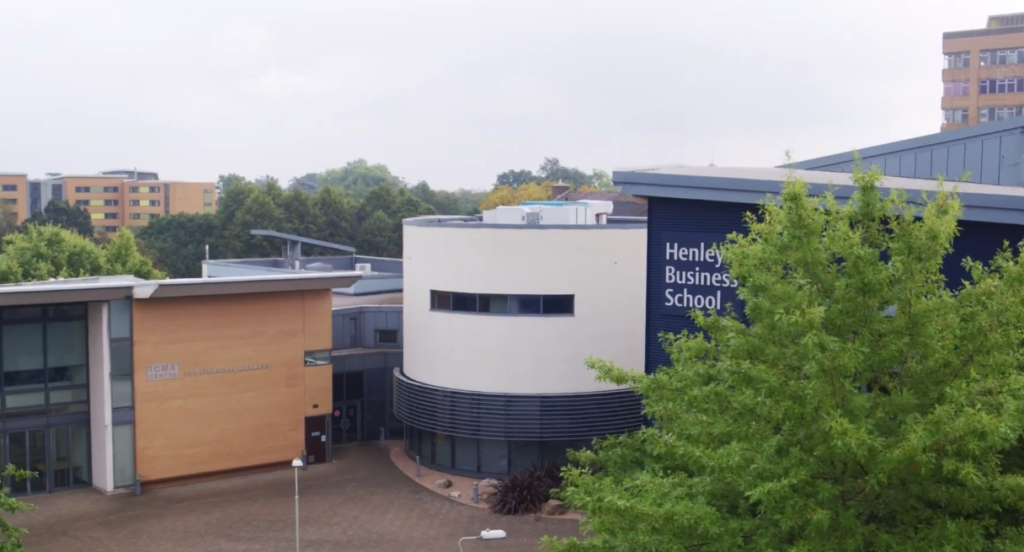
The merger might proceed without a hitch. Since Wishford Education Group owns both schools, the typical issues of two rival boards, two distinct management philosophies, and two groups of fiercely protective governors are mostly eliminated. Sam Antrobus, the founder of Wishford, took care to point out that Rupert House will not become a corporate template and that headteacher Nick Armitage will continue to lead the school. Wishford seems to have taken great care in doing this. It appears that Rupert House is the first school to join the group since 2018, indicating that they are not in a rush to add institutions just for the sake of doing so.
The sentiment among St. Mary’s families is more difficult to gauge. The original plan called for a two-year phased merger. According to reports, St. Mary’s parents requested to join earlier after seeing Rupert House, so that was cancelled. That could be a sincere endorsement of Rupert House or an indication that parents preferred immediate certainty over uncertainty that would take another year. If the truth is to be told, probably both.
Henley’s situation isn’t unique. Independent schools are merging throughout Oxfordshire and beyond; Abingdon School recently announced a merger with two nearby prep schools. The pattern is starting to become recognizable: smaller schools, which frequently have solid reputations and loyal communities, discover that their reputation is insufficient on its own when families begin to weigh the costs and determine whether they are still worthwhile. That calculation has a problem, and the floor’s location is still unknown.
It’s difficult to avoid the impression that a particular type of English educational life—small, local, and deeply ingrained in its community—is being subtly renegotiated when observing this from the outside. It remains to be seen in September whether the replacement is better or just larger.
