

The media frequently ignores the version of Bettina Anderson that existed prior to the White House holiday party, before Donald Trump made the engagement announcement at a podium, and before the Daily Mail published pictures of her and Trump Jr. holding hands. It is worthwhile to devote some time to that previous version. Because the details of what she studied, where she studied it, and what she did with it provide a more comprehensive narrative than most coverage tries to uncover.
Palm Beach, Florida, where Anderson grew up, sounds like a postcard and is for the most part—wide streets lined with royal palms, the Atlantic nearby enough to smell, and old money so well-established it hardly makes an appearance anymore. At the age of 26, her father, Harry Loy Anderson Jr., became the youngest bank president in US history. Inger, her mother, was a Swedish model who went on to become a philanthropist and businesswoman. Growing up in that home most likely meant absorbing a certain worldview: that service and aesthetics are not mutually exclusive, and that public life entails public responsibility.
She first went to a Montessori school before playing lacrosse at Palm Beach Day School. She attended Saint Andrew’s School in Boca Raton for her secondary education, which is a type of school where expectations come before the students. She was more than just a student-athlete there; according to the Boca Raton News, she was essential to Saint Andrew’s perfect lacrosse season in 2004. While still in high school, she and her twin sister, Kristina, co-founded a hair accessory company. That detail might be overlooked in the larger story, but it shouldn’t be. At seventeen, starting anything, no matter how small, demands a certain mindset—a desire to create rather than merely take part.
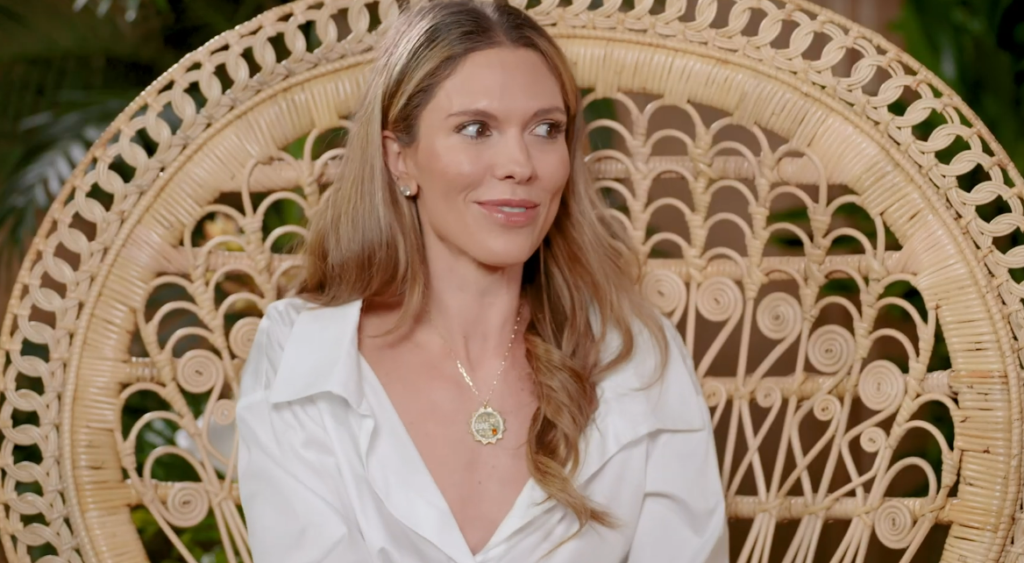
After graduating from Saint Andrew’s in 2005, she majored in Art History, Criticism, and Conservation at Columbia University in New York City. She graduated in 2009 and was a member of Sigma Delta Tau. When people hear about art history, they tend to dismiss it as decorative and a soft landing pad for wealthy students with unclear career goals. However, researching its conservation and criticism aspects is truly challenging. It challenges you to comprehend not only how things appear, but also why they endure, who determines what should be preserved, and what is lost when institutional focus is diverted. These aren’t hypothetical queries. They later appeared in her charitable endeavors.
Anderson moved through the social circuit after Columbia, but she didn’t completely withdraw into it. She was hired as a model in Milan as early as May 2005, made an appearance on the cover of Quest in 2020, and rose to prominence in Palm Beach society. However, the work that appears to have been most important to her was creating The Paradise Fund, a nonprofit that she co-founded with her brothers with a focus on disaster relief. Later, it expanded into environmental advocacy and a film fund that supports Florida wildlife documentaries. It’s difficult to avoid seeing remnants of what she studied at Columbia: the connection between culture, conservation, and awareness of what’s vanishing.
Now that her engagement puts her in a different kind of spotlight, one that comes with political heat and intense media scrutiny, it’s still unclear how her public role will change. However, it seems as though the groundwork was established long before the cameras showed up. A childhood molded by service, an Ivy League education, and a nonprofit founded from the ground up are not coincidental details. They serve as the foundation for everything that came after.
