

Four years have passed since the morning in Uvalde, Texas, when 19 students and two teachers perished in Robb Elementary School’s classrooms 111 and 112. A new school can be constructed in four years. Legacy Elementary, located next to Dalton Elementary, opened its doors in the fall of 2025 with the intention of housing both the survivors and their descendants. By no means is it long enough to make the grief bearable.
Robb Elementary School was located 85 miles west of San Antonio on Old Carrizo Road in Uvalde, a predominantly Hispanic city in South Texas with about 15,000 residents. Two days before the end of the school year, on May 24, 2022, an 18-year-old carrying an AR-15 style rifle entered through a west-facing door that did not lock as intended, proceeded down a short hallway, and entered those connected classrooms. He spent an hour and fourteen minutes inside. Outside the building, about 400 police officers assembled. There were nineteen of them in the corridor. No one entered.
It’s still hard to accept the details of that hour, which have been pieced together using body camera footage, surveillance footage, 911 call logs, and numerous investigations. Children in the classrooms made numerous 911 calls. One girl in classroom 112 called five times, once informing the operator that eight or nine students were still alive and requesting that police be sent right away. Officers in the hallway knew that children inside were hurt. The situation had changed from an active shooter scenario to a barricaded subject, according to the incident commander, UCISD Police Chief Pedro Arredondo. This classification was based on a training exercise that the school had conducted just two months prior, which stated clearly that “time is the number-one enemy during active shooter response.” Arredondo had left his radio behind. It wasn’t until a Border Patrol tactical unit opened a door that appears to have never been locked in the first place using a janitor’s master key that anyone entered.
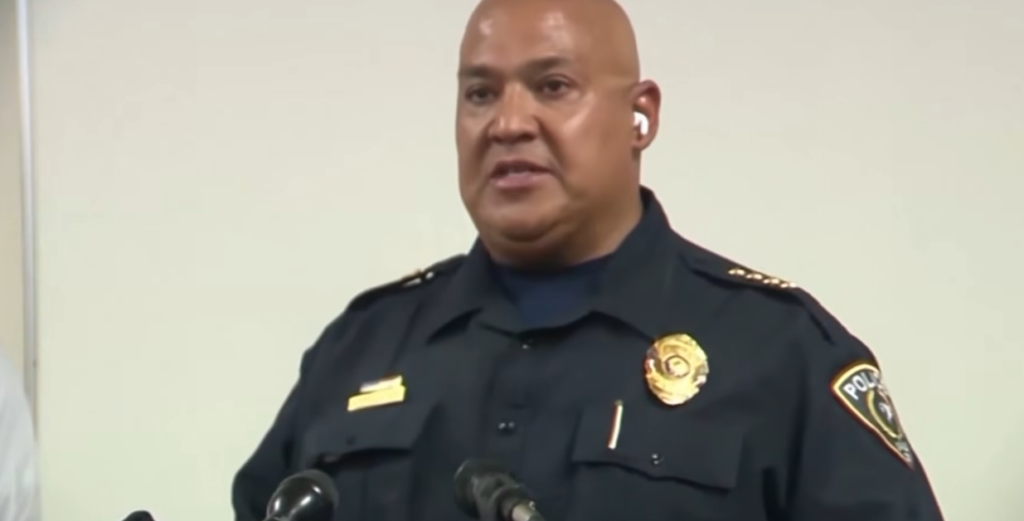
To put it cautiously, the legal fallout has been lacking. In June 2024, Arredondo was charged with ten counts of endangering children. As of this writing, his trial has been postponed due to issues with a crucial witness’s testimony. Former police officer Adrian Gonzalez was cleared of all charges in January 2026 after being accused of 29 counts of endangering children. In testimony before a state senate committee in June 2022, the director of the Texas Department of Public Safety referred to the police response as a “abject failure.” According to him, the shooter could have been apprehended by police in three minutes. What accountability—if any—will eventually materialize is still unknown.
Four years after the shooting, teacher Mercedes Salas, who survived, gave a public account of the event this week. The teacher in classroom 111, Arnulfo Reyes, who was shot multiple times and lost all 11 students present during the shooting, has called law enforcement “cowards” and claimed that no training can prepare you for what happened in that room. Two days after the shooting, Joe Garcia, the husband of murdered teacher Irma Garcia, passed away from a heart attack. According to his family, he was overcome with grief. Teachers, their families, and the families of nineteen children must navigate a legal system that has produced one acquittal and no convictions thus far.
As these anniversaries pile up, there’s a sense that the nation passes through them with a kind of weary familiarity—the candlelight vigils, the speeches, the renewed calls for change that either result in modest legislation or nothing at all. In 2022, the Bipartisan Safer Communities Act was passed. In 2025, the Uvalde Strong Act was passed, mandating enhanced emergency response training. Robb Elementary was destroyed. Perhaps in remembrance of the kids who didn’t make it through, Legacy Elementary was given that name.
Robb Elementary School’s name now belongs to Uvalde, history, and the twenty-one families who are still waiting for what appears to be justice.
