

The Museum of Menorca is located in Mao, a small harbor city on the smallest Balearic island in Spain. It is surrounded by historic stone walls and has the unique peace that comes from being a little out of the mainstream. It’s an improbable setting for discussing artificial intelligence. However, for three days in late April 2026, it hosted some of the most important questions in cognitive education—not in any grand, declarative way, but in the particular, sometimes contentious, always fascinating way of those who actually work with children in classrooms, chess clubs, and, in one exceptional instance, operating theaters.
It’s worth thinking about that final detail. In a case from his surgical practice, Dr. Cristóbal Blanco described how a patient underwent awake brain surgery while playing chess without being able to see the board. The patient verbally announced moves during the procedure, enabling the surgical team to track cognitive abilities like memory, focus, and decision-making in real time. The procedure was deemed successful. The patient had a good quality of life for two more years. Blanco argued that chess is more than just a competitive game to a group of educators and AI researchers in a museum on a Mediterranean island. It is a framework for thought that maps onto brain activity in ways that neuroscience is still trying to fully comprehend and that AI is now starting to quantify, examine, and possibly improve.
The International Chess Federation, or FIDE, has been preparing for this day for a number of years. By collaborating with tech platforms like Opening Master and the Chesspertise app to create personalized learning environments where machine learning provides real-time feedback on student games, identifies tactical weaknesses, and customizes training to individual needs, the organization’s Chess in Education commission has grown beyond tournament structures into something more akin to an international educational movement. The goal is noteworthy. Teachers can now analyze educational data at a scale that was previously unattainable thanks to artificial intelligence (AI). This enables them to predict which students are falling behind, pinpoint the precise cognitive gaps that each child brings to the table, and modify instruction accordingly. That kind of customization is clearly appealing in chess, where each player has a unique profile of strengths and weaknesses.
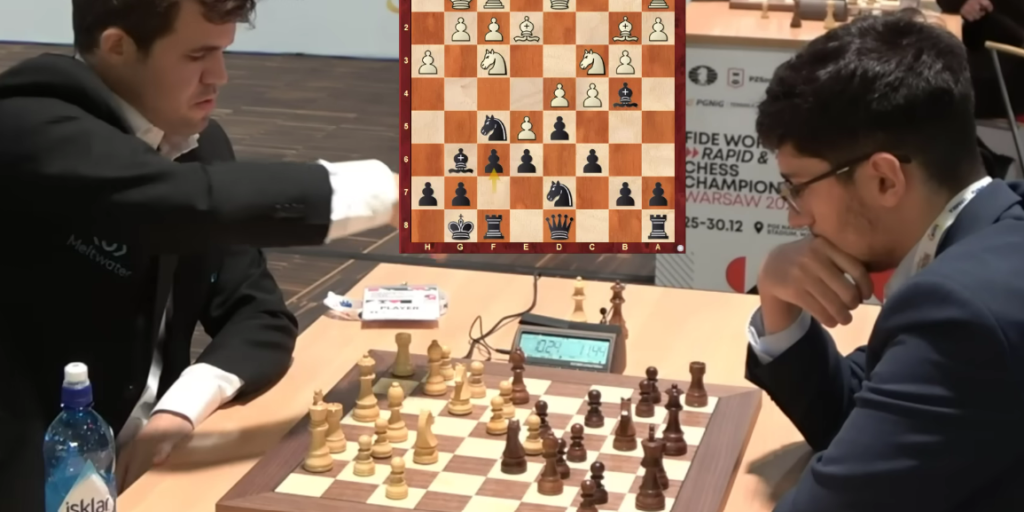
However, the Menorca congress was noteworthy for both its enthusiasm and its skepticism. One of the speakers, Rita Atkins, defied the prevailing hype with a clarity that seemed to be appreciated by the audience. She contended that because the discourse surrounding AI has grown so loud, educators are under pressure to use it, which leads to overuse rather than careful integration. There was the kind of nodding agreement that indicates her position—that the teacher must continue to be the main tool in the classroom and that AI is a tool, not a replacement for human interaction—landed somewhere true. She pointed out that the main purpose of the chess classroom is for students to play and collaborate. That cannot be replaced by any algorithm. It is impossible for the world’s most advanced engine to sit across from an eight-year-old and demonstrate patient thinking.
Even though the congress didn’t fully address it, it’s possible that this conflict—between the real cognitive advantages of AI-assisted chess training and the incalculable value of human presence in learning—is the most significant issue it raised. While discussing how AI can improve chess instruction through real-time feedback, Dilda Nauryzbayeva acknowledged that there is a disconnect between what the technology can theoretically accomplish and what it actually produces in classrooms. that being truthful is important. There are many tools in the history of ed-tech that worked well in controlled environments but poorly in classrooms.
The scope of the population that FIDE is attempting to reach is what sets it apart, at least in terms of intent. Using the structured, rule-bound environment of chess as a scaffold for interaction, the Infinite Chess program employs tailored techniques to help children with Autism Spectrum Disorder develop their social and cognitive skills. Education through Chess is a national initiative that Romania has developed. In Menorca, Dr. Jonathan Quest, who established the country’s first undergraduate chess degree program, discussed chess as a respectable academic field. These experiments are not marginal. They are part of an ongoing, globally coordinated effort to shift chess from the periphery of school life—the gifted student enrichment program, the after-school club—to the core of how cognitive education is perceived and provided.
As this develops across continents and conferences, there’s a sense that chess has found a second reason to be relevant, just as the first—that it makes kids smarter in quantifiable ways—was starting to take hold. The new argument is that chess is precisely the kind of domain where human intuition and AI’s analytical power are complementary due to its infinite complexity, delayed consequences, and structured decision-making. It’s the same board. It’s surrounded by a much bigger game.
