

A version of Hulk Hogan‘s tale, complete with bandana, bleached mustache, and flexed biceps aimed at the audience, is told a thousand times. However, very few people take the time to discuss what preceded all of that. A young man from Tampa, Florida, was genuinely trying to figure out what his life was supposed to be like before the WWF, WrestleMania, and “Hulkamania” became something that ran wild for an entire decade.
Terry Gene Bollea was born in Augusta, Georgia, in 1953. When he was just a toddler, his family moved to Port Tampa, where he grew up. By the time he got to Robinson High School, he was throwing pitches instead of daydreaming about championship belts. Bollea was a serious baseball player who attracted the attention of Major League scouts as a pitcher. At sixteen, an injury ended any realistic hope of a professional career, and that version of his future fell apart. It’s the kind of setback that can completely change a person’s life, and in Bollea’s case, it did, albeit not in the direction anyone had anticipated.
Music came next. Bollea picked up a fretless bass guitar and played in rock bands in Florida for almost ten years. During that time, he developed a seriousness about the instrument that most people would never associate with the most theatrical personality in professional wrestling. He made a sincere attempt at formal education by enrolling at Hillsborough Community College and then transferring to the University of South Florida. However, he kept missing class due to music gigs, which required time and effort that academic schedules just couldn’t provide. In the end, he made the sensible choice that most working musicians understand is unavoidable: college was the one thing that had to give.
The irony there is difficult to ignore. Although Hogan is regarded as one of the most disciplined physical specimens of his time and approached his body with the seriousness of a professional athlete, his educational path was largely determined by circumstance and instinct rather than preparation. He had a bigger vision, so he didn’t drop out of school. He departed because the future was constantly being interrupted by the present.
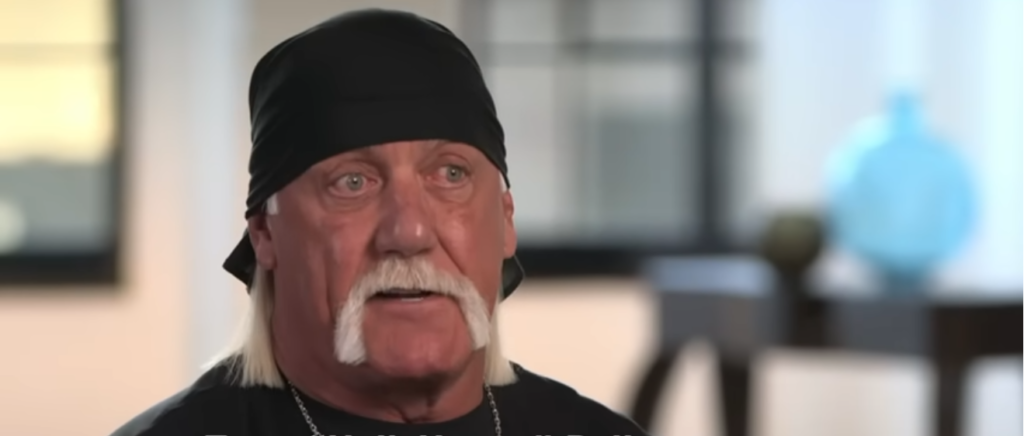
Hogan’s actual education started in bars and gyms throughout the Tampa Bay region rather than in a classroom. Bollea shared stages with crowds that included professional wrestlers traveling through the Florida circuit while performing with a band called Ruckus. Jack and Gerald Brisco were among them, and they saw something in Bollea that went beyond his six-foot-seven stature. They made arrangements for him to train under wrestler Hiro Matsuda, who was renowned for his technical brutality. According to reports, Matsuda’s first lesson was to break Bollea’s leg. The fact that Bollea returned after ten weeks of rehabilitation and prevented the same move speaks to a stubbornness that is never taught in a university curriculum.
Hogan’s journey seems to capture a specific American reality: formal education and exceptional success have never been as closely associated as institutions would like us to think. Even though he never earned a degree, he gained something from his time at the University of South Florida. It is challenging to measure the effects of being exposed to deadlines, structure, and the discipline of showing up when you would prefer not to. It’s hard to say for sure if those years influenced the unwavering work ethic that got him through decades in a physically demanding field. Perhaps, however, Hillsborough Community College prepared him for more than he ever realized.
Terry Bollea was a professional wrestler by 1977. Hulk Hogan was well-known by 1983. The years spent performing in smoky bars, learning how to hold a room, and absorbing crowd mechanics proved to be the most important kind of education that couldn’t be graded. Despite its unorthodox nature, that education produced something the wrestling industry had never seen before.
