

The way educators and child rights advocates have begun discussing sustainability has a subtle urgency. Not the kind that recycles. Not the kind that leaves a carbon footprint. The kind that poses a more difficult question: if nearly half of the world’s children never receive early childhood education, what kind of society are we creating? That is the central question in OMEP Spain’s peace declaration, which makes the case that sustainable development is impossible while young children continue to be the world’s most underfunded priority without much diplomatic softening.
The figures are unsettling. Approximately 88% of children worldwide finish primary school, which is encouraging until you see the next statistic: less than 60% complete secondary school, and almost half of all children do not receive any pre-primary education at all. Even worse, only one in five young children in low-income nations participate in any kind of early learning program. It’s difficult to ignore how carelessly the world has accepted this disparity, viewing early childhood education as a luxury rather than a cornerstone.
The World Organization for Early Childhood Education, or OMEP, has been promoting this idea for decades, but the peace statement issued by its Spanish chapter sharpens the argument in a unique and intriguing way. It links early childhood development to Agenda 2030’s overall logic as well as to specific outcomes. According to the declaration, children’s lives are impacted by all 17 Sustainable Development Goals. Without first investing in the people who will carry those goals forward, it is impossible to work toward peace, health, climate resilience, or decreased inequality. In terms of their brains, those people are most accessible before the age of six.
It’s really difficult to dispute the science here. Early childhood education has a lasting impact on social and cognitive development, according to numerous studies. Children who receive high-quality pre-primary education go on to earn more money, finish more school, and are less susceptible to the kinds of poverty cycles that contribute to instability. Increasing low pre-primary enrollment yields significant long-term returns, especially for the most disadvantaged, according to the International Monetary Fund. In response, governments in low-income nations frequently claim that universal early education is simply unaffordable. Can they afford not to? seems like an almost obvious counterargument.
The insistence that pedagogy is just as important as access is what distinguishes OMEP’s stance. It is only half the work to get kids into classrooms. The results are equally profoundly shaped by what takes place in those classrooms, such as whether teachers are trained to engage rather than merely instruct, whether learning is based on play, and whether children’s perspectives are truly listened to. The statement gives the impression that the ECE community occasionally overstates access while underfunding the issue of quality. Both issues are genuine. Both are worthy of consideration.
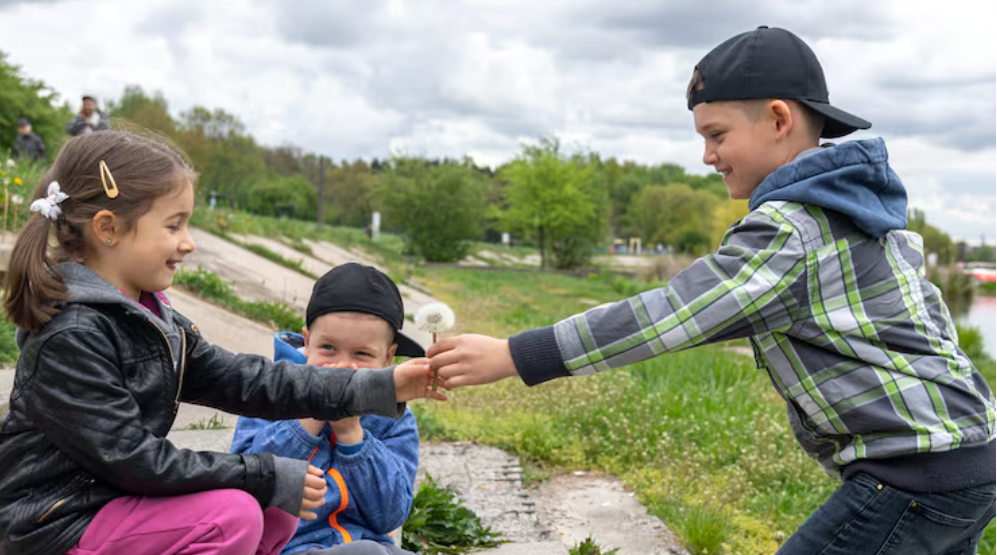
Slowly, progress is being made. The UN Human Rights Council decided in July 2024 to start investigating an optional protocol to the Convention on the Rights of the Child, which would specifically guarantee the right to free pre-primary education and early childhood care. 49 states co-sponsored the resolution. Even though negotiations are just getting started and there is still a huge gap between international agreements and actual classroom reality, it is still a significant step.
It’s possible to feel cautiously optimistic as this develops. Participation rates are typically 15 percentage points higher in nations that provide free pre-primary education for at least two years than in those that do not. Among the lowest-performing nations, a mere year of free and mandatory pre-primary is linked to a 12-point increase in primary graduation rates. Soft projections are not what these are. These are known trends that recur in various economies and geographical areas. The kids who are waiting on the sidelines of this discussion are real people. In homes, villages, and crowded rooms where the Sustainable Development Goals are still, for the time being, someone else’s problem, they are already here, learning—or not.
