

The bracket that started with sixty-four teams back in May has finally narrowed down to something almost intimate: two programs, one trophy, and a best-of-three series in Omaha that nobody outside Norman or Chapel Hill saw coming in March.
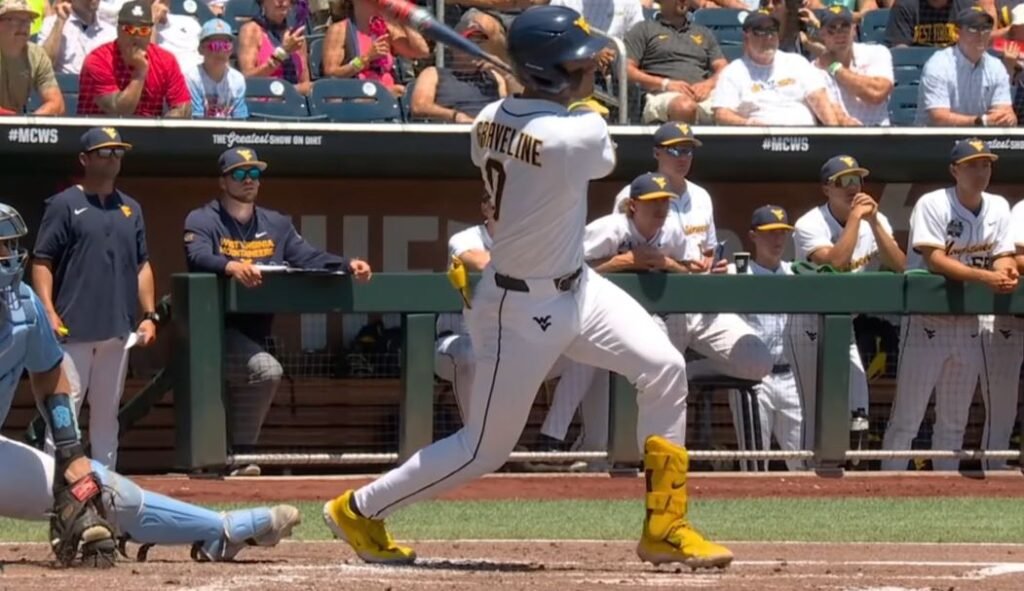
On Wednesday night, North Carolina arrived first thanks to a less-than-relentless 12-7 victory over West Virginia. There’s something fitting about the Tar Heels breaking their own program scoring record in an MCWS game; throughout the tournament, this team has seemed more interested in burying opponents than just defeating them. This program hasn’t experienced a single defeat in Omaha since 2006. Twenty years is a long wait, as evidenced by the expressions of the elderly supporters in the Schwab Field stands wearing faded Carolina-blue gear—those who most likely have a bit too many memories of the previous trip in 2007.
Oklahoma’s route appeared nearly the same, but it was louder. Later that night, the Sooners defeated Georgia 11-4. Dasan Harris drove in five runs and hit two home runs, setting a new program record for a single CWS game. Since Charles Schwab Field opened in 2011, no team has hit more home runs in an Omaha game than five. It’s the kind of stat line that begs the question of whether Skip Johnson’s team has consistently outperformed its seeding or if Oklahoma just got hot at the right time. Most likely a combination of the two.
Beneath all this bracket math is a human story. Earlier in the tournament, Oklahoma catcher Deiten Lachance rolled his ankle awkwardly during a play at second base. This type of injury typically ends a night and occasionally a season. In any case, he remained inside. He limped around the bases after hitting a 409-foot home run five innings later, but he later insisted that he was fine. It may seem odd to compare a 6-foot-5 catcher to the Snow White character when you watch him play, but his junior college coach once said that. Such toughness isn’t reflected in a box score, but it’s the kind of information that sticks in your memory more than any final score.
The records on the line are important, but they’re not the only thing that makes this final truly fascinating. Since 1994, Oklahoma has not taken home a national championship. Despite consistently ranking in the top 25 for the past 20 years, North Carolina has never won one at all. Here, one person’s protracted drought comes to an end, while another simply goes on. It’s also important to note that both teams advanced to the finals undefeated within their respective brackets, never falling into the loser’s side. This fact raises the possibility that this series will be closer than the records suggest because neither team has yet faced elimination pressure.
ESPN will broadcast Game 1 on Saturday at 7 p.m. Central, followed by Game 2 on Sunday on ABC and a third game, if needed, on Monday. The same voice that has narrated Sooners baseball through far leaner years than this one, Toby Rowland, will call the action for Oklahoma fans on the radio.
Given how easily both teams have defeated Omaha, it would be tempting to predict a sweep, but college baseball in June has a tendency to humble certainty. Both programs are here thanks to bracket math. It’s unlikely that the events of the coming days will follow it quite so neatly.
