

The fact that Dieter Brummer was still a high school student in Sydney’s Castle Hill when he was cast in one of the most sought-after roles on Australian television is somewhat startling. He was fifteen years old. The majority of children of that age are worrying about tests and figuring out locker combinations. All of a sudden, Brummer was on national television, appearing on magazine covers, playing Shane Parrish on Home and Away, and being yelled at by fans. It is important to focus on that particular detail because the consequences of that early disruption shaped his entire relationship with education, learning, and self-improvement.
Brummer completed his formal education at a high school in the northwest Sydney suburb of Castle Hill. By most accounts, it was a typical suburban upbringing. Nothing in his early years hinted at the kind of celebrity he would soon experience. He had a respectable personality, enjoyed rock climbing, and happened to try out for a television role that would shape Australia’s perception of him for the next thirty years. Due to the hectic schedule of a working actor’s life, which leaves little time for quiet study, school essentially became secondary when the role came. This wasn’t because he dropped out completely.
The events that took place in classrooms are not what make Dieter Brummer’s education story compelling. It’s what took place outside of them. Following his departure from Home and Away in 1996, when his character Shane Parrish succumbed to septicemia on screen, Brummer had the option of going to drama school, going on audition rounds, or moving to Los Angeles or London. That’s exactly what some of his co-stars did. Melissa George made her way to Hollywood. During the same period of Australian television, Heath Ledger rose to prominence as one of the most talked-about characters in movies. Brummer chose a different path, which reveals something about his values.
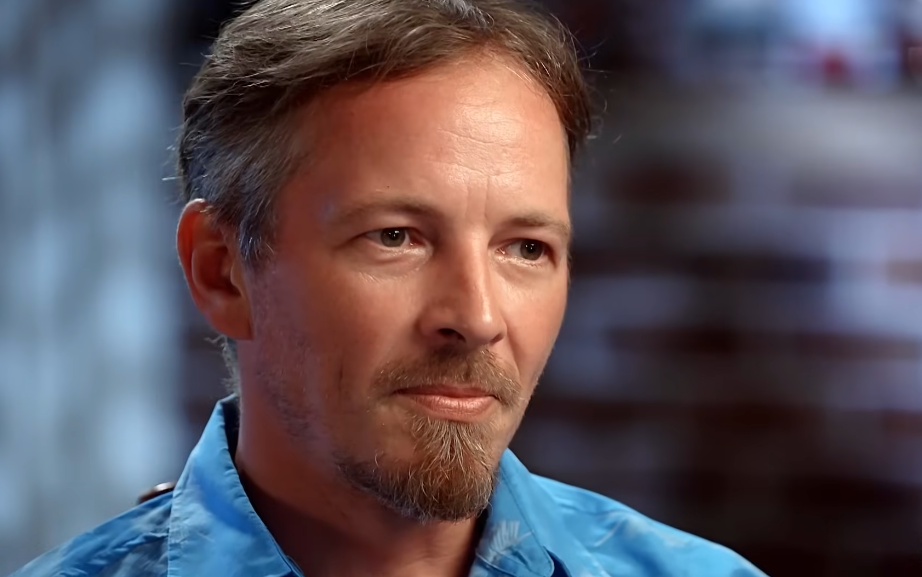
He opted for practical, hands-on work. He received training in high-rise window cleaning and abseiling, a truly specialized field that calls for technical expertise, safety certification, and composure at significant heights. People don’t fall into this type of work by accident. Training, equipment knowledge, and an awareness of load-bearing systems and rigging are all necessary. Brummer used it as the foundation for his own company. In interviews, he made it apparent that this was intentional. He once stated, “I wanted to prove to myself I could get my hands dirty and sweat for a buck,” expressing his desire to escape the controlled, polished world of television.
Reading between the lines of his different interviews gives the impression that Brummer believed his formal education had been partially appropriated. He was honest about missing out on the unstructured years that most young people take for granted, as well as the trips with friends. According to his own account, he tried to make up some of that lost time during his early twenties. In a sense, that time spent catching up was also an educational experience. Personal rather than academic.
He spoke with a different kind of self-awareness than the teenage idol of the early 1990s by the time he went back to acting, making appearances in Underbelly in 2009, Neighbors, and Winners and Losers. He was more introspective, more critical of himself, and sometimes uneasy when viewing old footage of his earlier work. Perhaps the most enduring type of education is that kind of sincere self-evaluation.
In July 2021, Dieter Brummer passed away at his Glenhaven, New South Wales, home. He was forty-five years old. He did not leave behind a sophisticated degree or an extensive filmography. It was a life that alternated, a little restlessly, between the world that selected him when he was fifteen and the one he subsequently attempted to create for himself. Both required education. They both needed something from him. Perhaps he was still figuring out how to balance the two.
