

Seeing an empty school parking lot on a Wednesday morning in late June has a subtle unsettling quality. No teachers with lanyards juggling coffee cups and marking folders, no kids pouring through gates. The building will remain closed due to extreme heat, according to a notice taped to the entrance and locked doors. That’s what’s happening in some areas of Somerset this week, and it feels like a minor turning point.
Nerrols Primary in Taunton and Cheddar First School in Cheddar are two of the county’s schools that have announced complete closures for Wednesday and Thursday. Some are starting to send kids home early on Tuesday afternoon. Neither a staffing shortage nor a burst pipe are the cause. It’s the weather, and it’s not your typical summer weather either. With temperatures predicted to reach between 38 and 40 degrees Celsius in some places, the Met Office has issued a red extreme heat warning that covers a large portion of the South West. An amber alert has been in effect since Monday, and the warning is in effect from 9 a.m. on Wednesday until 9 p.m. on Thursday.
It’s worth stopping to consider that number. 40 degrees. in Somerset. That figure would have seemed unrealistic for England, let alone the West Country, even ten years ago. As this develops, it seems as though what is being handled as an emergency response is subtly changing into something else—a sneak peek at upcoming summers.
There was context for the closures. Already, this week has been dramatic in ways unrelated to the heat. Strong thunderstorms ripped through the area on Monday night, illuminating the skies over Somerset, Bath, and Bristol in forks of white and purple. Twerton High Street and Prior Park Road in Bath were hit by lightning, which caused significant fissures in the pavement. After one house in Emersons Green caught fire due to a lightning strike, other properties were evacuated. Power was momentarily cut off to hundreds of homes in Bristol, Glastonbury, and Shepton Mallet. That evening, all flights were grounded at Bristol Airport. Living in the South West for a few days was, by all accounts, strange and turbulent. The heat then arrived.
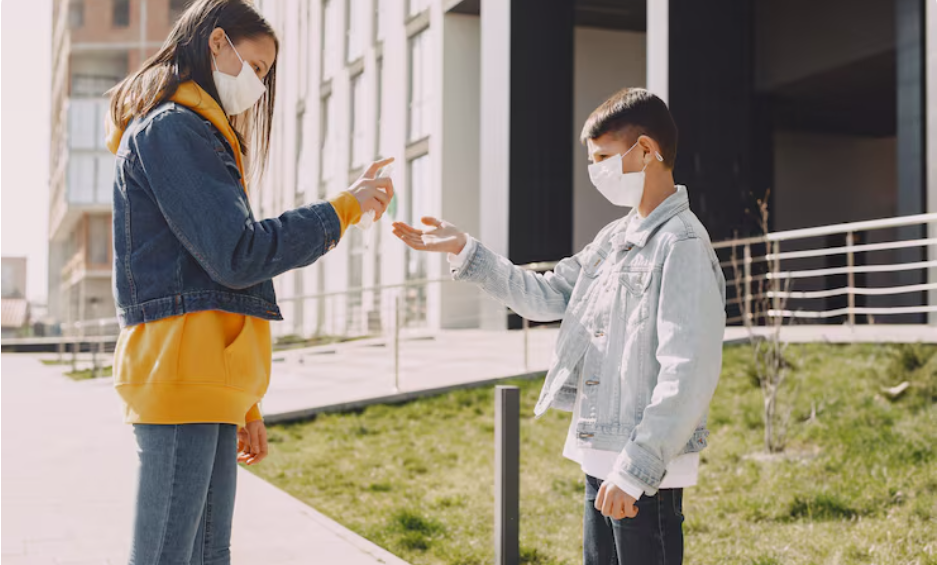
When attempting to understand why these decisions are so inconsistent and patchy, it is important to note that there is no legal maximum temperature for classrooms in England. This fact is often overlooked in official statements. The Department for Education has made it clear that individual schools, not local governments, have the final say over whether or not to close. When a red alert is issued, schools are required by new guidelines to review heat management; however, guidelines are not the same as mandates. Some schools shut down completely. Some shorten the day. Some continue by advising parents to bring water bottles for their kids. Whether a more cohesive national strategy will emerge or if each heatwave will continue to result in a different patchwork of responses is still up in the air.
It is evident that Somerset is not by itself this week. More than thirty schools in the West Midlands and southern England have so far confirmed that they have changed or canceled their schedules. When more than a hundred schools closed for at least one day in July 2022, it was the last time closures of this magnitude occurred. In contrast, 845 schools in France have already closed today alone, and an additional 1,500 have released students early.
Weather forecasts and policy statements often overlook the practical, human aspect of all of this. Parents are making last-minute changes to their work schedules. Younger children who are accustomed to the routine of a school day are at home in homes that, by early afternoon, become truly uncomfortable due to the lack of air conditioning. Teachers are dealing with a situation for which they were not adequately prepared. It is a disruption and, for many families, a stressful one, but it is not a crisis in the dramatic sense.
It is difficult to ignore the fact that England is still, in many respects, adapting to the threat posed by heat. The necessary discussions about national temperature thresholds, school building design, and what summers might look like in ten or twenty years are starting to take place. Slowly, and maybe not urgently enough yet. However, they are just getting started.
