

The scene is nearly always the same when you walk into any restaurant on a Saturday afternoon. The bluish glow of a phone resting against a bottle of ketchup illuminates the face of a toddler sitting in a high chair. The parents are eating, chatting, and occasionally using their own devices to scroll. No one appears upset. No one appears concerned. It’s simply the current state of affairs. And it’s precisely this casual normalcy that worries an increasing number of child development researchers. It’s not the screens per se, but rather the unremarkable ease with which they’ve been incorporated into early life before anyone truly understood what they were doing to developing brains.
The discussion now has more urgency thanks to a new conceptual paper that was published in the journal Brain Health in June. The term “criticome” was coined by researchers to refer to the critical developmental window that spans from birth to approximately age 25. During this time, the brain is shaped by sensory experiences, social interactions, movement, and environmental exposure in ways that may be partially irreversible. The paper’s coauthor, Dr. Julio Licinio, a professor of psychiatry at the State University of New York’s Upstate Medical University, put it plainly: what is imprinted on the brain during those years shapes a person’s identity for the remainder of their life. We still don’t know exactly how screens affect that process based on the research. It will require decades of research. However, it is difficult to ignore the implication, and Licinio is not suggesting that parents hold off on making changes until they have more evidence.
That discrepancy between what we can prove and what we suspect is unsettling. People are uncomfortable with this kind of uncertainty, which may be the reason why so many parents just carry on with their current practices. However, the anecdotal evidence continues to mount. Teachers at an early childhood center in North Yorkshire, England, reported that preschoolers were struggling to express basic needs like asking to use the restroom while using American words like “diaper” and “garbage” that they had learned from YouTube. Sandy Chapell, a speech-language pathologist who works with Health Professionals for Safer Screens, reports that over the past ten years, referrals have increased steadily, with more young children arriving with delayed speech, poor attention, and underdeveloped social skills. The pandemic could not be the cause because these children were too young.
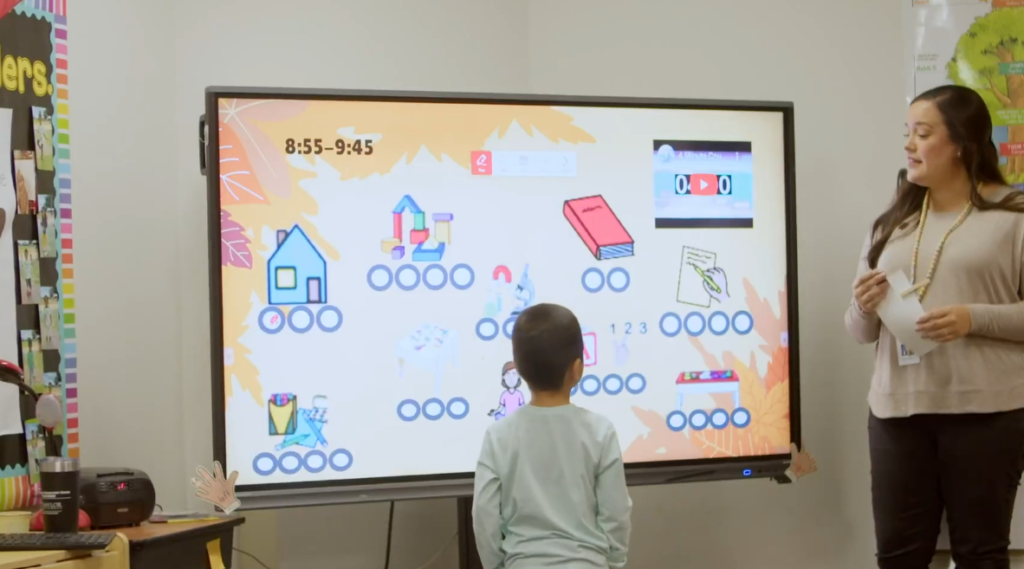
According to clinicians, the mechanism is more about what screens displace than what they do. After spending hours watching fast-paced, vibrantly colored content, children find the real world to be relatively dull. It feels slower and flatter to play outside, build with blocks, or even just chat with a friend. Melissa Greenberg, a clinical psychologist at the Princeton Psychotherapy Center, has observed that children are becoming less capable of amusing themselves without a gadget. Activities that fostered social awareness, emotional control, and motor skills are gradually disappearing. Additionally, that lost time might not be recovered later because the brain’s language centers, such as Broca’s area, require active use during childhood to fully develop.
Last month, the U.S. Surgeon General’s office weighed in with an advisory linking children’s increased screen time to a number of issues, including behavioral challenges, mental health issues, physical health problems, poorer academic performance, and strained peer relationships. The advisory may be remembered as a watershed moment, or it may be added to the long list of cautions that parents heard, nodded at, and discreetly ignored. The pattern is well known from other public health concerns: behavior only changes when culture does, and science advances more quickly than behavioral changes.
It seems that the most difficult aspect of this is not the science at all, but rather the necessary honesty. When most parents first gave a toddler a tablet to help them get through a flight or a grocery run, they were unaware of this information. According to Greenberg, kids who lose it when a screen is taken away aren’t being rebellious; rather, they’re going through withdrawal from something that is actually addictive. She believes that parents should stop acting as though everything is alright, but she does not believe that they should place the blame on themselves. Mozart’s brain was inundated with music during the years when neural pathways were still developing, which contributed to his development as Mozart. Most kids’ brains are currently overflowing with algorithmic content that aims to maximize engagement rather than development. No one can predict whether we will fully comprehend the ramifications of that trade in five or fifty years. However, the generation that did not make any of these decisions is paying the price for waiting for certainty.
