

You don’t give it much thought the first time you scroll past one. It’s endearing to see a young woman in a cardigan dancing between desks and captioning her video with something like, “When your 4th period finally understands quadratics.” It’s even humorous. After the third or fourth one of the same evening, a more subdued question begins to emerge: who owns those desks, and are the children out of frame aware that they are props in someone’s content schedule?
In a sense, teaching has always been performative. You’re half teacher, half stand-up comedian, as anyone who has stood in front of thirty agitated teenagers at eight in the morning will attest. However, the current situation feels different. The conversation has changed whenever you enter a teacher’s lounge, at least the ones I’ve visited. Lesson plans and the copier breaking down again are no longer the only issues. It has to do with ring lights. algorithms. if a coworker’s “viral moment” was staged or genuine. The staffroom itself seems to have been subtly rewired.
Depending on your point of view, the pandemic is largely to blame or deserving of praise. Teachers discovered one another while stuck at home and browsing TikTok in between Zoom classes. They expressed sympathy. They performed a dance. They joked about the ridiculousness of teaching long division via a webcam, as well as parents and administrators. For a while, it was a messy, encouraging, and sometimes humorous digital faculty room. It was then monetized, just like most things on the internet. Deals with brands came next. links to affiliates. Nearly by coincidence, a few educators started small businesses.
The conflict is explained quite clearly in a 2025 scoping review from Kırklareli University that examined thirty studies on the phenomenon. The researchers point out that teacher influencers can improve professional collaboration, increase engagement, and even update public perceptions of the profession. However, they also run the risk of ideological drift, superficial learning, and—this is the part that receives less attention—violations of children’s rights. It’s possible that the audience applauding these clips hasn’t yet reached the final scene.
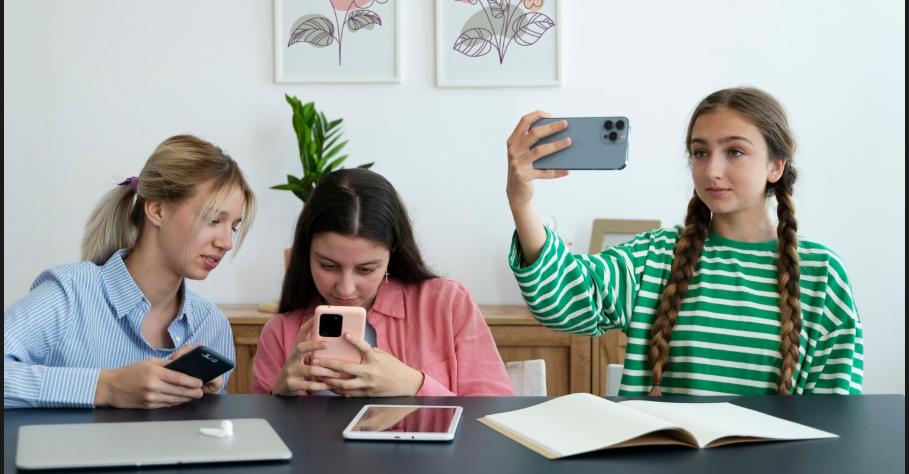
Student privacy is at the center of the ethical dilemma. FERPA was created in the US long before anyone could have predicted that a teacher could transform a Tuesday morning into a thirty-second video that would be viewed by four million strangers. The majority of schools have lax social media policies—sometimes nothing at all, and frequently just one paragraph in an employee handbook. When they are available, parental consent forms typically cover field trip flyers and yearbook photos rather than the For You Page. It’s not always blurry to hear a child’s voice in the background of a popular video. It’s not always the case that a name spotted in passing on a worksheet is cropped. These seem insignificant until they become significant.
The appeal is difficult to dispute. Students may feel more a part of the real world when they watch their teachers go viral as they grow up. The platform gives young teachers visibility, a voice, and occasionally a second source of income to help pay their rent—things that the profession has seldom offered. It’s difficult to ignore how that alters the math of continuing to work in an unappreciated position.
Nevertheless, a subtle unease permeates everything. As you watch this happen, you can’t help but wonder who gets to draw the next line: the platforms, the schools, the parents, or the kids themselves, whose faces keep appearing in other people’s feeds.
