

Imagine an eight-year-old boy showing up for school on a morning after a horrible incident occurred at home the previous evening. Perhaps he skipped meals. Perhaps he witnessed a family member being taken into custody. Perhaps because no one has given him the words to express it, he is carrying grief that is so heavy that it has no name yet. He takes a seat at his desk, fidgeting, preoccupied, and avoiding eye contact. Additionally, a teacher has quietly come to the conclusion that he doesn’t care about his work within the first hour. that he’s challenging. that he belongs to that group of boys. According to the research, this occurs continuously in classrooms in all English-speaking nations worldwide. The boy hasn’t lost interest. He’s drowning.
Furthermore, the system’s current design makes it impossible to distinguish between the two.
This issue has been discussed for years by the World Organization for Early Childhood Education in collaboration with UNESCO and UNICEF. Exposing enduring injustices and gaps in early childhood policy was a clear goal of the first Global Report on Early Childhood Care and Education, which was unveiled at UNESCO headquarters in Paris in June 2024 and is now part of a biennial monitoring series. Early childhood development initiatives should cease treating young boys and girls as merely “early learners” and instead acknowledge them as complete human beings shaped by gendered expectations from their very first years of life, according to OMEP Ireland’s own published research, which dates back to its An Leanbhịg journal. Even with its careful and deliberate framing, it opens a door that most policy discussions haven’t yet explored.
There is clear information about what happens to boys who fail to close the early education gap. One of the most dedicated researchers in this field, Dr. Alex Blower, the founder of Boys’ Impact, has shown that underprivileged boys—those receiving free school meals in the UK, which is a good indicator of low socioeconomic status—achieve GCSE results at almost half the rate of the general school population. That gap is quite large. It is a gap that has been evident in aggregate data for years and continuously fails to produce the level of policy urgency that it merits. These same boys have higher rates of homelessness, criminality, and suicide. Underperformance in school is not a stand-alone statistic. It is the first sign of a cascade that continues well into adulthood.
The fact that the issue lurks behind the very systems intended to assist makes it especially challenging to solve. Teachers typically have lower academic expectations for boys than for girls; this is factual, not conjectural. As well-established as psychological phenomena get, the Pygmalion Effect states that lower expectations consistently result in worse outcomes in a variety of situations. Through classroom observation research, Mark Roberts, author of Boys Don’t Try, has demonstrated that there is a substantial discrepancy between teachers’ stated expectations for boys and their actual behavior toward them. There is a lot of negative language. Boys reportedly “don’t like reading.” Boys are “a pain to teach.” Instead of being understood, a four-year-old who fidgets and can’t sit still is written off. Because no one taught him that having words for it was acceptable, the boy who interrupts a lesson may be carrying trauma that he cannot express.
Boys & Early Education — Key Research Facts & OMEP Context
Global Report on ECCE | Boys’ Impact Research | Gender & Early Childhood Policy | 2024–2026
| OMEP / UNESCO Global ECCE Report | First-ever Global Report on Early Childhood Care and Education (ECCE), launched June 2024 at UNESCO HQ, Paris; jointly published by UNESCO and UNICEF; monitors SDG Target 4.2; highlights persistent injustices and gaps in ECCE policy and investment globally |
| OMEP representative at launch | Gilles Pétreault, OMEP UNESCO representative and VP of OMEP France national committee |
| Boys’ academic gap (UK) | Disadvantaged boys on free school meals (FSM) achieve GCSE outcomes at nearly half the rate of the wider school population — Boys’ Impact / Dr. Alex Blower research |
| Boys and gender stereotyping in classrooms | Studies show teachers generally hold lower academic expectations for boys; the Pygmalion Effect — where lower expectations lead to worsened outcomes — documented as active in classroom settings for boys |
| Boys and mental health outcomes | Disadvantaged boys over-index on suicide rates (leading cause of death in men under 50), criminality, and homelessness relative to the wider population |
| Gender segregation in early education | Children are routinely divided by sex from preschool onward — teams, book bins, uniforms — reinforcing gender stereotypes that narrow self-expression and create competitive dysfunction between boys and girls (Time/Soraya Chemaly, 2025) |
| Boys and competition with girls | Research shows boys who lose to girls in academic or gaming settings experience shame rather than normal competitive recalibration; boys most adhering to traditional gender norms show the most aggressive behaviors toward girls as academic peers |
| Manosphere influence | Figures such as Andrew Tate represent a symptom of male disconnectedness, not its cause; shutting down conversation doubles down on harmful viewpoints — Boys’ Impact / Dr. Alex Blower analysis |
| Teacher attitudes toward boys | Pervasive negative language documented in classroom settings: boys “don’t like reading,” are “a pain to teach”; study found large gap between what teachers state in theory and how they behave toward boys in practice — Mark Roberts, author of Boys Don’t Try |
| Gender-egalitarian approaches | Associated with greater self-esteem and confidence for girls AND improved engagement and performance for boys; mixed-gender physical play shown to reduce cross-gender aggression |
| OMEP position on gender in ECCE | OMEP Ireland research (2013, An Leanbh Óg journal) argues early childhood development should move away from treating boys and girls exclusively as “early learners” and instead recognize them more holistically — addressing the full developmental, emotional, and social context of early childhood |
| Key researchers and advocates | Dr. Alex Blower (Boys’ Impact); Mark Roberts (Boys Don’t Try); Shaun Flores; Susan Morgan; Soraya Chemaly (Time Magazine contributor) |
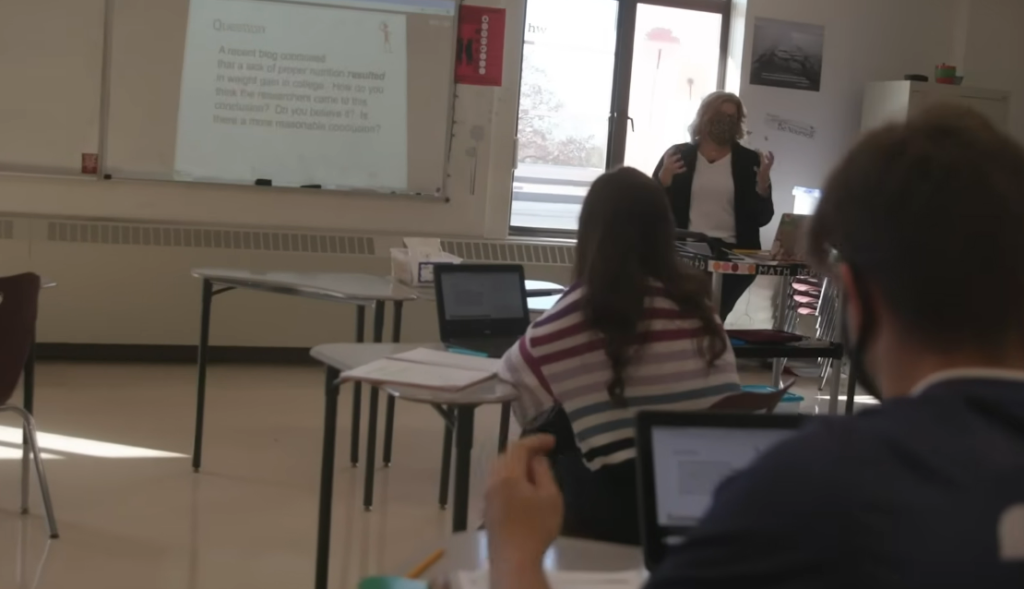
It is important to acknowledge that the gender piece is genuinely complex. In a late 2025 article in Time Magazine, Soraya Chemaly argued that the true failure of early education for boys is not that schools are too “feminized”—the common manosphere-adjacent claim—but rather that boys are never taught how to compete fairly with girls as equals. According to the startling research she cites, boys who lose to girls in competitive settings feel ashamed differently than they do when they lose to other boys. Disengagement, aggression, and ultimately the kind of social retreat that makes people like Andrew Tate seem to a bewildered teenage boy like the only person who can honestly describe his experience are all caused by this shame. Dr. Blower has stated unequivocally that Tate is a symptom rather than a cause. The root of the problem is a sense of alienation that starts much earlier—in gender-segregated preschool book bins, in the language adults use around four-year-olds, and in the weight of a thousand tiny messages that tell a boy exactly what kind of person he is permitted to be.
As this dialogue spreads among academic institutions, advocacy groups, and international organizations like OMEP, it seems like something is actually changing. The gender-egalitarian strategies that the research consistently finds to be most successful—mixed-gender cooperation, doing away with needless binary classifications in early childhood settings, and teaching boys to have female role models in the same manner that girls have always had male ones—are not radical concepts. They are practically implementable, supported by evidence, and virtually nonexistent in the political discourse surrounding boys in education, which alternates between dismissing the issue as exaggerated and suggesting remedies that would subtly reinforce the very norms causing the harm. To be honest, it’s still unclear if the policymakers who need to read OMEP’s expanding body of work on this issue will find it. However, the boys who arrive at preschool classrooms each morning, already burdened by the world’s perception of them, are unable to wait much longer for the conversation to catch up.
