

It wasn’t a landslide vote. At the 77th OMEP World Assembly and Conference, which took place in Bologna, Italy, in the summer of 2025 under the theme of arts and culture in early childhood education, representatives from national committees from fifty different countries convened and elected a new World President by a vote of 32 to 24. Early childhood pedagogy expert and university professor Adrijana Višnjić Jevtić emerged victorious. The president of OMEP France and current OMEP representative to UNESCO, Gilles Pétreault, did not. Contrary to what the organization’s public statement might imply, the outcome was closer, and in organizations such as this one, close elections typically leave complicated aftermaths.
The World Organization for Early Childhood Education, or OMEP, does not produce a lot of mainstream media. A small group of educators from Britain, Sweden, France, Denmark, and Norway decided that the welfare of young children deserved a dedicated international voice, and they founded it in Prague in 1948 during the turbulent years following World War II. Its first World President was the Swedish sociologist and diplomat Alva Myrdal, who went on to win the Nobel Peace Prize. The organization has spent more than 70 years attempting to uphold the idealism of that founding moment and, at times, struggling to do so.
It’s not the vote total that makes Višnjić Jevtić’s election especially noteworthy, but rather what she decided to do almost immediately after. Instead of focusing on internal consolidation during the first few weeks of her presidency, as is customary for any newly elected leader of a civil society organization navigating post-election dynamics, she brought OMEP’s advocacy work straight to a UNESCO global symposium on the future of the right to education in Paris. That might have been the original plan. It’s also possible that it was a purposeful signal that she knew her legitimacy would be established through action and visibility rather than internal processes.
The timing is really important. The lengthy, contentious negotiation over what comes after the 2030 Sustainable Development Goals framework has already begun in the global education community. For the next ten years, decisions made in conference rooms in Paris, New York, and Geneva over the next two to three years will determine how billions of dollars in public investment go toward or away from young children. Influence will come from organizations that are credible and present during those discussions. Those who are not there will observe from the outside. Missing this window would be more than an oversight for an organization like OMEP, whose power is based almost entirely on its standing as a recognized civil society voice within the UN system. The institutional wound would be gradual.
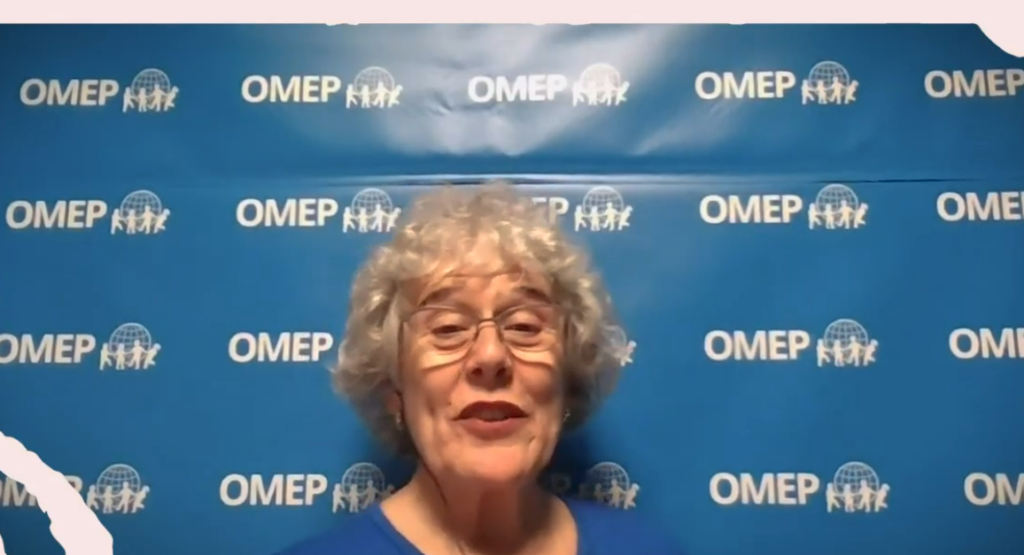
Observing organizations such as this one function gives me the impression that credibility in the world of international policy is not something you can acquire and maintain. It needs ongoing upkeep, including showing up, publishing, advocating, and forming alliances with organizations that have greater funding and more powerful megaphones. The networks where influence is truly gained or lost are the Arab Campaign for Education for All, the Global Campaign for Education, and UNESCO’s own NGO committee structures. One true advantage is that OMEP has three permanent representatives to UNESCO. It remains to be seen if the new president will be able to make good use of that access while simultaneously handling any internal conflict that may arise from a nearly split election.
The 78th OMEP World Assembly is already set for July 2026 in Poznań, Poland, with the theme “When a Child Speaks,” which is inspired by the legacy of Janusz Korczak. Perhaps the most morally serious person in early childhood education history is Korczak, the Polish-Jewish educator and children’s rights activist who opted to die with his orphaned students during the Holocaust rather than leave them. It is not a neutral decision to invoke his legacy. It carries a weight that requires the organization that meets in his name to do work that is truly worthy of the occasion.
It will be evident in the coming months whether Višnjić Jevtić can live up to that expectation and whether her early move toward UNESCO represents a true strategic direction or just a well-photographed opening statement. She did not inherit an easy moment, as is already evident. The founding generation of the organization felt that children everywhere should have advocates in the decision-making rooms. The whole point is still that belief. The question is whether OMEP still has the potential to make a significant impact under the new leadership.
