

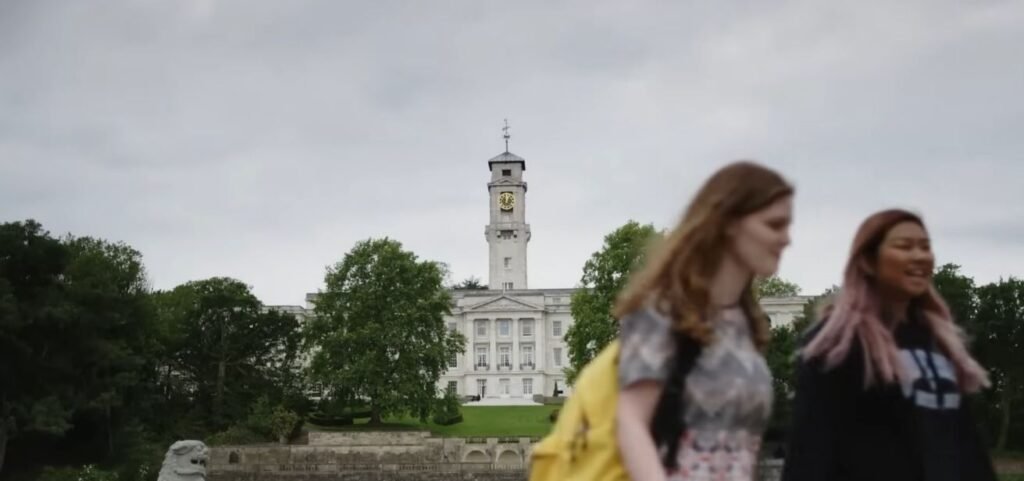
On open day mornings, a certain kind of anxious energy descends upon the University Park campus. Parents hold folded schedule printouts. Hovering close to the Trent Building, prospective students are partially distracted by the lake behind them and partially listening to a tour guide. Every year, this little scene is repeated, and for some reason, it never gets old.
The next in-person open day at the University of Nottingham is set for Friday, June 26, 2026. Additional dates are set for the summer and fall, including June 27, September 12, and October 10 at University Park and Jubilee Campus. Biosciences and veterinary medicine are taught at Sutton Bonington, which has its own schedule with sessions in early July and September. The system is rather dispersed, which makes sense when you take into account the variety of subjects and student types that the university is attempting to accommodate in a single visit.
It’s interesting to note how important these events are even now, with pre-recorded lectures and virtual tours only a click away. You would think that most people’s curiosity would be satisfied by a 360-degree tour of the campus from your bedroom. Apparently, it doesn’t. No screen can fully replace the experience of standing in front of a lecture hall, smelling the coffee from the student union, and observing how current students pass by one another. Open days continue to exist because they provide an answer to a question that virtual tours are unable to: Do you feel comfortable here?
The importance of in-person visits is exemplified by Sutton Bonington itself. It’s not the kind of detail that appears in a polished promotional video; it’s a campus surrounded by genuinely peaceful countryside with a working dairy center and a commercial farm on-site. Given how different the two campuses are from one another, students enrolled in veterinary medicine or some biosciences courses have a very different open day experience than those at University Park. In fact, they may need it.
It’s simple to ignore the practical aspect of all of this. A small but significant indication of how seriously the university takes the logistics of these events is the Open Days app, which was created especially to assist visitors in making plans. It’s easy to miss the one session that truly mattered to you if you don’t plan ahead. Talks, subject sessions, accommodation viewings, and campus tours frequently take place concurrently.
The fact that accessibility features and travel advice are integrated into the reservation process indicates that the university has discovered—possibly as a result of years of feedback—that not every visitor arrives in the same situation. a few train travel hours. Younger siblings are brought by some. Some people require step-free access through older structures that weren’t intended for that purpose.
It’s important to remember that open days aren’t really about persuasion—at least not in the obvious sense. No one is acting as though the lawns are greener than they actually are. Instead, they provide exposure—a few unfiltered hours spent with actual students, instructors, and a campus that doesn’t always resemble its own promotional images. The question of whether that is sufficient to make a decision is another, and most likely only the visitor can provide an answer.
The open day may prove to be less important than anticipated for those considering offers later this year, or it may be the deciding factor. Until you are standing there yourself, it is impossible to truly predict which.
