

Some football players have their academic backgrounds neatly packaged, complete with degrees from universities, coaching credentials, and the occasional stint at a business school tucked away in their biographies. One of those football players is not Lucas Trejo. The paper trail of formal education simply doesn’t exist in any public record for a man who has lived in Greece, Argentina, the United States, and Venezuela for almost twenty years. However, it’s difficult to deny that the game itself has thoroughly and frequently brutally educated him.
Trejo was born in Córdoba, Argentina, on December 29, 1987, and grew up in a city that only Argentine cities can take football seriously. Córdoba has its own fierce football culture, its own sense of provincial pride, and it has produced players who have quietly carved out long careers without ever landing on a marquee. However, it is not Buenos Aires; it lacks that cosmopolitan gloss. Trejo nearly perfectly fits that description.
His official educational background has never been made public. There are no club biographies that list a degree or field of study, nor are there any interviews in which he mentions a university. In professional football, this is not uncommon, especially for players who became professionals in their late teens and moved between clubs on several continents for years. There isn’t much space for lecture halls in the rhythm of that life—traveling, training, and adapting.
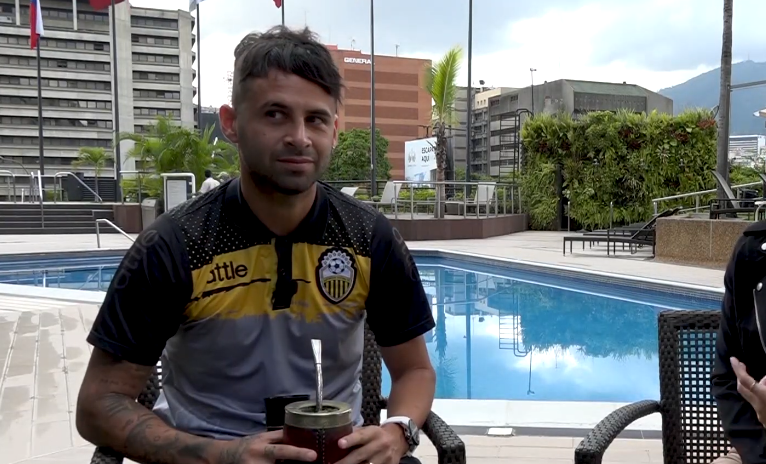
When Trejo joined the Greek team Atromitos in 2007, he began to receive a different kind of education. As a young Argentine defender playing in Super League Greece, I had to quickly adjust to new language, tactical demands, and expectations. After being loaned to Ethnikos Asteras and then Egaleo, he had to reset and recalibrate every move. Over the course of a career spanning more than a dozen clubs, that process is repeatedly repeated, and it creates something. A person may learn more about discipline, resilience, and reading situations from that kind of cumulative experience than from the majority of formal curricula.
Whether Trejo pursued any kind of academic education during the slower periods of his career is still unknown. Players who play in South American leagues occasionally take advantage of slower schedules to study, as Trejo did with Racing de Córdoba and Instituto between 2012 and 2015. In his case, there is just no public evidence.
Another layer was added during his 2015 stint with Jacksonville Armada, a USL team during a short-lived American football experiment. Even a short stay in the United States exposes one to a different work culture and professional environment. Even though these things don’t appear in any records, they nevertheless have an impact on a person.
The tragedy that occurred in late June, when earthquakes destroyed Yaracuy, Venezuela, killing over 1,400 people, has become inextricably linked to any discussion of Lucas Trejo in 2026. When their building in La Guaira collapsed, Trejo lost his wife Yanina Maranella and their two kids, Aarón and Ainhoa. When it occurred, he was in Caracas for a team training session. He looked through the debris for three days.
There is no category for that type of grief. No one is trained for it in any school or nation. Perhaps because of this, the issue of formal education seems almost irrelevant right now. A man who has spent almost twenty years playing football in six different countries and who has built a life and a family despite decades of unrelenting upheaval has amassed something that doesn’t fit neatly on a transcript.
Lucas Trejo’s education is documented throughout his career in a way that doesn’t require a certificate, regardless of the classrooms he may or may not have attended.
