

Sitting down for a standardized test carries a certain kind of pressure: the stark silence of a gymnasium, the simultaneous click of keyboards, the weight of two hours suddenly feeling very tangible. All of that is covered in the AP Computer Science Principles exam. However, this test is unique in that students have already locked in 30% of their score by the time they sit down for the official exam. sent in. Completed. That isn’t a metaphor; rather, it’s the exam’s format, which alters how students must approach preparation right away.
There are two separate parts to the AP Computer Science Principles exam. The first is the final multiple-choice exam, which is given digitally via College Board’s Bluebook platform. It lasts 120 minutes and has about 70 questions. Seventy percent of a student’s final score comes from that section. The second part, the Create Performance Task, is finished in advance as an in-class coding project throughout the academic year. Students create an original program, record a brief video of it operating, and turn in what’s known as a Personalized Project Reference—basically, screenshots of their code that have been documented. A committee of college and high school teachers evaluates it using a standardized rubric, and it accounts for thirty percent of the final score. Each of the six criteria is worth one point. A program’s ability to clearly demonstrate list usage, a defined procedure with parameters, and an algorithm incorporating sequencing, selection, and iteration can determine whether it receives a 4 or a 5 on the overall exam. minor technical specifications that have actual scoring implications.
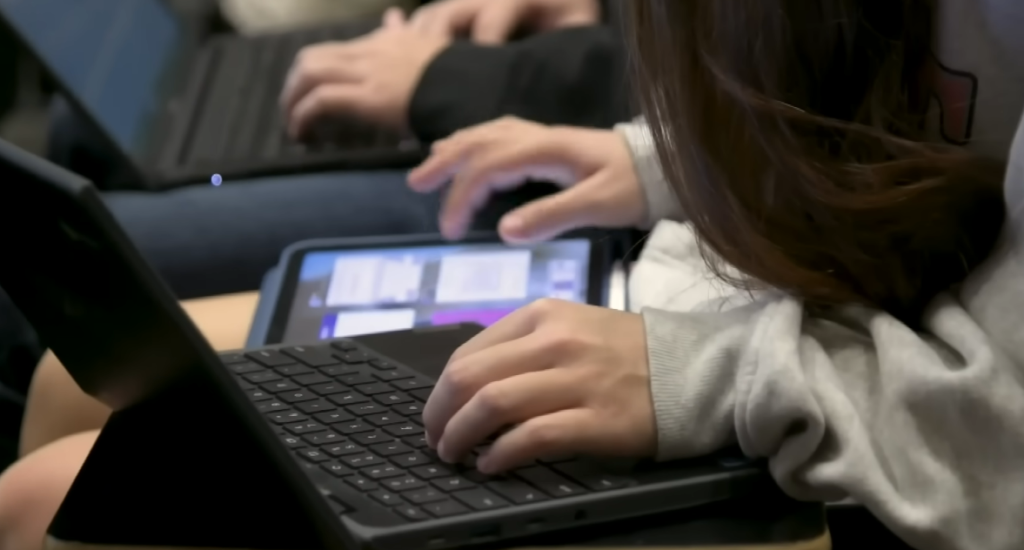
The five broad topics covered in the multiple-choice section fall under what College Board refers to as “Big Ideas”: data, computer systems and networks, algorithms and programming, creative development, and the social impact of computing. It’s important to focus on that final category. Binary numbers and Boolean expressions are accompanied by questions about crowdsourcing, computing bias, legal and ethical issues, and the digital divide. It’s a unique combination that reflects the goal of the course, which is to teach students not only how computers operate but also what it means that they do so. Asking high school students to consider the design and implications of technology is genuinely different from most AP coursework in a world where most of them are already proficient users.
It’s difficult to ignore the exam’s distinct lane from that of its sibling course, AP Computer Science A, which uses a traditional end-of-course test format and focuses exclusively on Java programming. Because it is intended to serve as a starting point for students who may have never written a line of code, AP CSP is purposefully more inclusive. The majority of test-takers received a score of three or higher, and historically, the exam has seen relatively high scores across the student population. This is reflected in the pass rates. This isn’t because the test isn’t rigorous. The reason for this is that the course attracts motivated students who deliberately chose it, and the performance task offers students a significant opportunity to show what they can truly construct rather than just what they can remember.
The exam’s response to the introduction of generative AI tools into student workflows is one development worth keeping an eye on. As long as students write and comprehend the code themselves, College Board has acknowledged that AI may be used for debugging during the Create Performance Task. As AI coding assistants improve, it’s possible that policing that line will become more challenging. An exam that requires students to show creative computational thinking while functioning in a world where a chatbot can produce useful code in a matter of seconds creates a great deal of tension. It is still genuinely unclear how this tension is resolved in terms of exam policy, classroom culture, and scoring rubrics.
As of right now, one of the more carefully crafted tests in the AP catalogue is the AP Computer Science Principles exam. Multiple-choice for two hours. a weeks-long coding project. Additionally, it’s a wager that asking students to produce something rather than merely respond to questions about it yields a more accurate representation of their knowledge.
