

The majority of people who have sat in a business school classroom are familiar with the type of frustration that develops there. The ideas are sound. The case studies are reliable. However, something is lost somewhere between the classroom and the real world, and graduates who have studied entrepreneurship but never tried it land their first jobs. Forge Greensboro and North Carolina A&T State University are making a direct effort to address that.
The partnership, which was announced in April 2026, links the Willie A. Deese College of Business and Economics with Forge Greensboro, a community makerspace that sits between an incubator and a workshop. Local engineers, artists, and entrepreneurs share tools, ideas, and space in a building that smells like soldering flux and sawdust. Forge’s equipment, including digital fabrication tools, metalworking and woodworking stations, electronics workbenches, and prototyping setups that most business students never see, will now be fully accessible to Deese College students. Product development initiatives, design-thinking workshops, and direct interaction with the larger Greensboro startup community are all part of the framework.
Dean Kecia Williams Smith, who graduated from N.C. A&T in 1995, characterized the collaboration as an extension of the educational setting into the Greensboro community, creating connections between students and regional business owners. That framing is important. It goes beyond simply having access to equipment. It’s about putting students in an active ecosystem instead of a simulated one, allowing them to see where real ideas stall out and how real businesses get started, and giving them the opportunity to contribute before they finish their degrees.
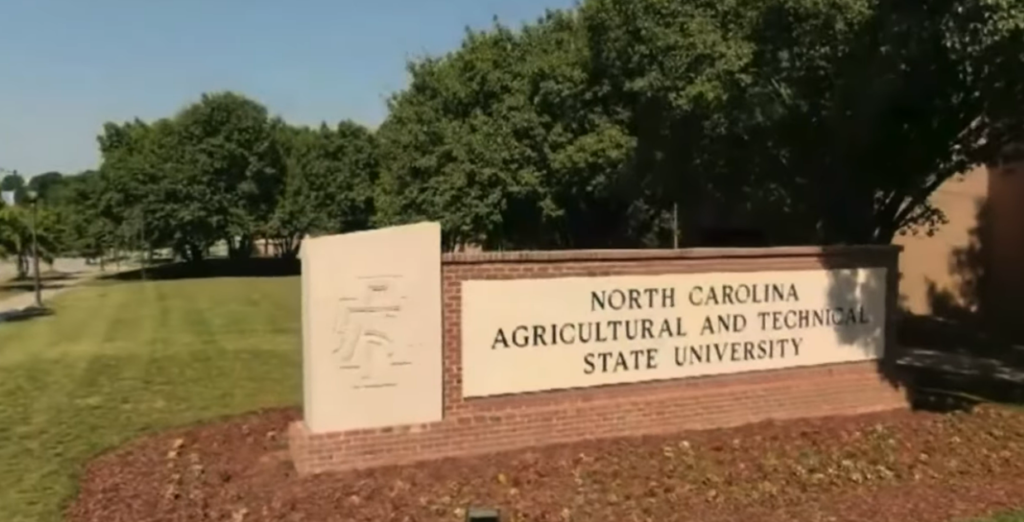
The Deese College has been trying to establish itself as more than just a local business school for a while, and N.C. A&T is the biggest HBCU in the country. This collaboration with Forge comes after a different partnership with Launch Greensboro, which was announced in February 2026 and established the Aggie Innovation Lab, a pilot program that places honors students in teams to work directly with local startups under the guidance of faculty and mentors. Two separate but connected experiments that are conducted concurrently and have the same goal. It’s possible that both models are intended to coexist and support one another, or that the university is testing which model sticks. In either case, the momentum is genuine.
The physicality of the Forge partnership is what makes it so intriguing. The majority of the entrepreneurship tracks, innovation centers, and pitch competitions that have been added to business education over the years remain firmly in the conceptual realm. Asking a student to build a prototype and determine why it doesn’t function as intended is not the same as telling them to think like an entrepreneur. Only when something breaks in your hands can you learn something. In a way that a university lab or classroom seldom can, Forge’s shared, communal, and non-student-filled environment offers precisely that friction.
As this progresses, there’s a sense that this collaboration may be more beneficial to other institutions than it initially seems. Forge’s resources aren’t unique or overly costly; makerspaces can be found in dozens of mid-sized American cities. They are frequently underutilized and seek the kind of consistent involvement that a university partnership could offer. The question is whether other business schools are prepared to put their students in a truly unpredictable setting instead of the controlled setting of a campus. N.C. A&T appears amenable. Although it’s still too early to predict the results in five years, the building currently under construction in Greensboro is at least posing the right questions.
