

Nestled between newer student housing and older buildings, the Mowbray campus is easily overlooked as you drive toward the southern suburbs of Cape Town on the M3. That makes some sense for an organization that has developed into something noteworthy over the past 20 years without drawing much attention to itself. Despite being the biggest university in the Western Cape, Cape Peninsula University of Technology, or simply CPUT, is rarely discussed in the same context as South Africa’s more established and illustrious universities.
The Cape Technikon and Peninsula Technikon, as well as a number of smaller colleges, merged to form the university on January 1, 2005. It wasn’t an epiphany. It was preceded by years of policy changes, beginning in 1993 when the Technikons Act permitted these institutions to begin offering technology-related bachelor’s, master’s, and doctoral degrees. In 2002, then-Minister Kader Asmal made the merger public, and by October 2003, the new name was accepted. The way it all happened—committee meetings and temporary management bodies—was almost bureaucratic, but the outcome changed access to higher education throughout the province.
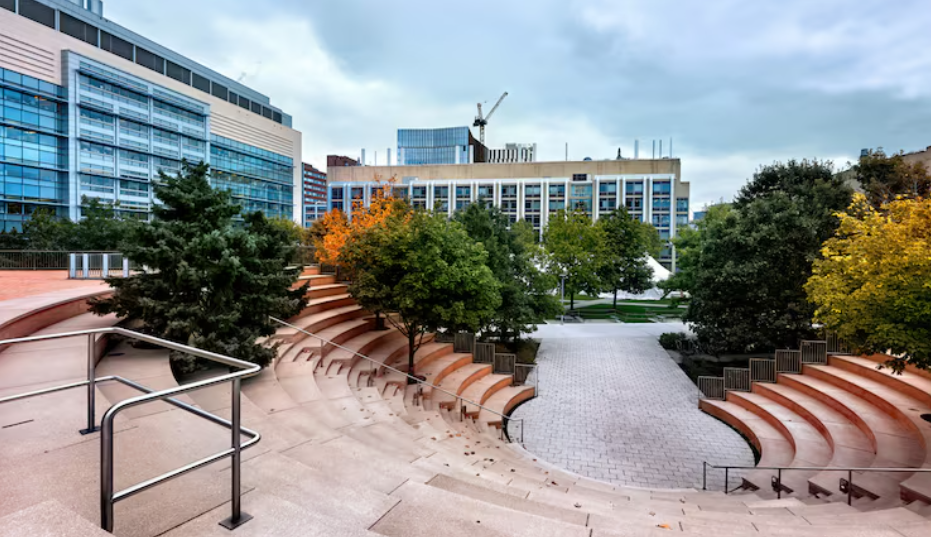
Over 35,000 students are currently enrolled at the university’s five main campuses: Bellville, District Six, Mowbray, Granger Bay, and Wellington. Everybody has remnants of their former selves. For example, Mowbray was once a teacher training college, and Granger Bay is home to the Cape Town Hotel School. Given that CPUT was put together from pre-existing components rather than being constructed from the ground up, you get a sense of layered history as you move between buildings on these campuses rather than a single, cohesive design.
The contribution of CPUT to African space science is truly unexpected and likely underestimated outside of academic circles. Launched in 2009, the organization is in charge of the continent’s top nanosatellite program. The group created Africa’s first nanosatellite, ZACube-1, in 2013, four years later. Four more satellites have since been launched, so it wasn’t a singular accomplishment either. The ground station is located on the Bellville campus, so undergraduates attending lectures on topics like business management or culinary arts are not far from a facility that silently tracks objects in orbit.
There, it’s difficult to ignore the contrast. At the same time, a university that is well-known in the area for its design and hospitality programs is training the people who constructed and run Africa’s satellite infrastructure. Through this satellite program alone, over 70 master’s students have graduated, and the university has begun selling communications products abroad. For an institution that is occasionally eclipsed by Cape Town’s more established universities, that is a big deal.
The structure of CPUT’s research also reflects more general national priorities. The UN’s Sustainable Development Goals and South Africa’s National Development Plan 2030 are in line with its six Research Focus Areas, with “Space Science, Engineering and Technology” being one of the more ambitious pillars. As part of its 10-Year Innovation Plan, the Department of Science and Innovation has supported this effort, viewing space science as one of the nation’s major challenges. It’s unclear if this will result in greater economic benefits for the area, but the groundwork is undoubtedly in place.
One thing that sticks out is that in 2008, Trevor Manuel, the longtime Finance Minister of South Africa, was appointed Chancellor of CPUT. On paper, it’s an odd combination—a finance expert associated with a university that prioritizes technology—but maybe it shows how seriously the institution was taking its goals at the time.
CPUT seems to hold a unique position in South African higher education. Students complete internships as part of their coursework in this expansive, practically focused program that is firmly rooted in cooperative education models. However, it lacks the prestige of the other universities in Cape Town. Perhaps that is evolving. Perhaps most people haven’t noticed it yet, but it has already happened.
