

A young woman in her early twenties moved out of her college dorm in the spring of 1994, not because she had graduated but rather because her father had recently passed away. Northern State University in Aberdeen, South Dakota, was home to Kristi Arnold, who would go on to become Kristi Noem. After her father died in a grain bin accident a few years into her studies, earning a degree seemed like a luxury her family couldn’t afford. The farm needed to be managed by someone. She returned home.
In political reporting, it’s a detail that is frequently overlooked in favor of her policy stances or controversies. However, her educational journey—the stops, the gaps, and the final finish line—says something genuine about her personality and may explain why she resonates with some voters in a way that polished career politicians seldom do.
Noem didn’t just give up on college after graduating from Northern State. Over several decades and several institutions, she gradually chipped away at it. She attended classes at Mount Marty College’s Watertown campus. She started attending classes at South Dakota State University. She even enrolled in University of South Dakota online courses. There’s a feeling that she always planned to complete the degree, but it was never quite the right moment, and nothing happened in a straight line.
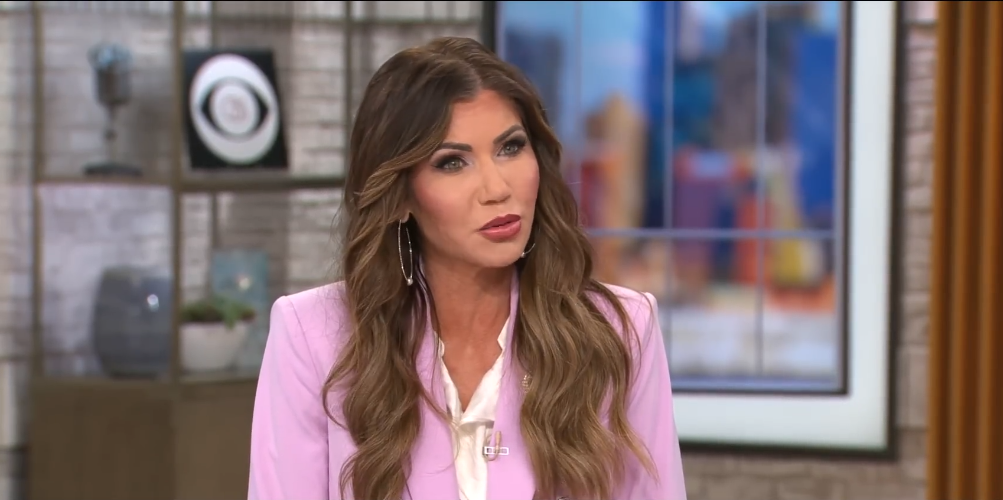
As it happened, she was a sitting member of the US Congress when the time was right. More than twenty years after she first set foot on a college campus, she graduated with a Bachelor of Arts in political science from South Dakota State University in 2012. She was referred to as Capitol Hill’s “most powerful intern” by The Washington Post, which isn’t exactly known for its positive opinions of Republican politicians. This was a reference to the fact that she was obtaining college credits from her real job as a congresswoman. It was a kind of backhanded acknowledgment of the peculiarity of the situation, as well as a jab.
Completing college while casting a ballot for federal legislation is both commendable and a little ridiculous. It brings up issues that are difficult to completely ignore, such as the nature of formal education, what makes someone eligible for public office, and whether a degree is important if experience is more important. The optics didn’t seem to bother Noem. It’s difficult to tell if that was a sign of true confidence or just a thicker skin from years in the spotlight.
It’s evident that circumstances rather than choices influenced her educational path. Her lack of interest did not cause her to drop out. Her family’s life was suddenly turned upside down by a farming accident, which is why she left. The easy narrative of someone who just dropped out of college to pursue politics is complicated by this context, but it doesn’t negate the credential.
The degree issue had mostly subsided by the time she was elected governor of South Dakota in 2019. Her views on taxes, COVID policy, and the Second Amendment appeared to be of far greater interest to voters in her state than the chronology of her academic career. Nevertheless, the educational narrative persisted in biographical notes and profile articles, a tiny but significant thread in a bigger picture.
Despite her unusual educational path, Kristi Noem received the same degree as many of her contemporaries. an undergraduate degree in political science. It probably depends on who you ask if the path she took to get there makes her more relatable or just more complicated.
