

When laws intended to protect people suddenly protect the wrong person, a certain kind of institutional helplessness takes hold. This is essentially what has been happening in Washington County, Tennessee, where a school board member who has been accused of assault continues to attend meetings, sit at the same table, and hold official office. The Washington County Board of Education is in a position that no one in that room on April 2 could have predicted, or perhaps someone ought to have given what is now known about Keith Ervin’s past.
The actual event was caught on camera. After she had finished asking questions about career and technical education, Ervin went up to a teenage girl who was a student representative at the board meeting and said, “God, you’re hot, you know that?” before touching her shoulder. Since then, he has asserted that the remark was about her performance during the meeting rather than her appearance. It’s important to note that very few viewers of the video came away with that conclusion.
On April 8, the board censured Ervin. Later in April, the Washington County Commission passed a vote of no confidence. Additionally, a formal charge of simple assault was filed against him this week, according to court records, and he will appear in court in August. For its part, the board has stated unequivocally and repeatedly that it is unable to remove Ervin because, according to Tennessee law, he is an independently elected official and legal architecture effectively ties their hands. Superintendent Jerry Boyd acknowledged the gravity of the situation with a genuine honesty, pointing out that the district’s burden is insignificant compared to what the student is going through.
That student clarified that on her own. She approached the podium during a board meeting on May 7, looked directly at the members seated across from her, including Ervin, who had his arms crossed, and called them cowards. The other board members’ inaction on the night it occurred, according to her, was “equally disturbing.” She informed them that their apologies would not be accepted. Without a word, the board proceeded to the next item on the agenda after she was done. More than any statement or press release, that moment likely explains why so many people in the county are upset.
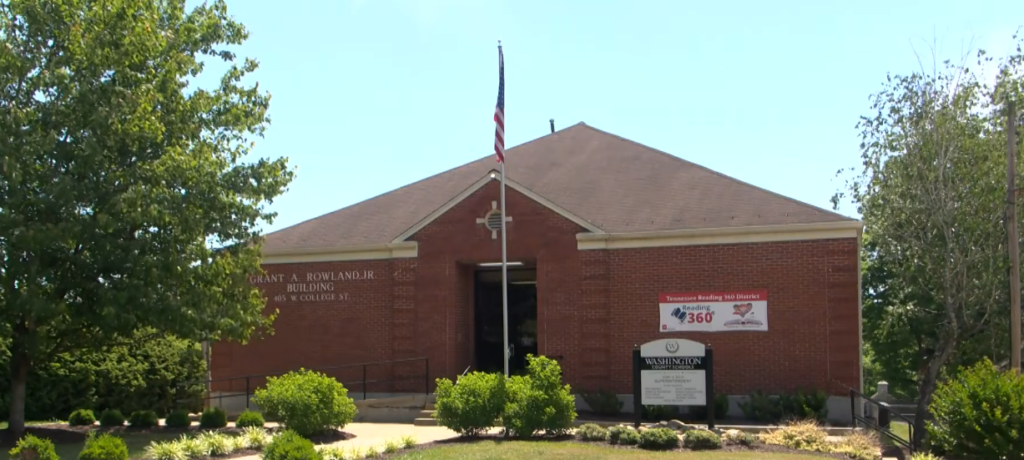
One could interpret this as a single bad actor causing chaos for an otherwise well-functioning institution. However, Ervin was first reprimanded in 2009, allegedly for making an obscene gesture in front of a David Crockett High School class. The district hasn’t yet fully addressed the issue of why someone with that background served on a school board for an additional seventeen years, and it might not have the resources to do so.
This week, school communities in other parts of Washington County, particularly the New York version, were engaging in something much more routine: choosing board members and voting on budgets. Because the tax levy increase was above the cap, Cambridge’s proposed budget was unable to pass the supermajority threshold. Funds for buses, capital improvements, and heating upgrades were approved by other districts like Granville, Greenwich, and Salem, who passed theirs with comfortable margins. Voters in Greenwich even approved nearly $13 million worth of energy and ventilation projects, the kind of infrastructure investment that usually goes unnoticed until the summer it disappears.
Observing all of this from a distance gives the impression that school boards have more authority than they are frequently acknowledged for and less authority than the circumstances they deal with truly call for. They make financial decisions that influence classrooms for many years. They set the standard for how seriously a community takes its children’s education, hire superintendents, and approve contracts. Additionally, as Tennessee is currently demonstrating, they occasionally run into issues that they are unable to resolve through the channels at their disposal. The Washington County Board of Education presently resides in that space between authority and responsibility, waiting for August, waiting for the courts, waiting for something outside their walls to address what they couldn’t manage within.
