

The stiff rental gowns, the gymnasiums that smell slightly of industrial cleaner and old bleachers, and the principal mispronouncing at least three of the names as they are read aloud into a microphone have all contributed to the unique emotional texture of graduation season. Most people don’t feel this ceremony; they just endure it. Every now and then, something occurs that causes everyone in the room to lose their sense of location.
Seniors from the Class of 2026 entered what they thought was a typical end-of-year celebration at Country Day School in San Rafael de Alajuela, Costa Rica. Instead, they discovered life-size cardboard replicas of their younger selves, each placed next to a simple packing box that their parents had put together over several months. Inside were small uniforms that had been meticulously folded, stuffed animals that were soft at the seams, old photos, handwritten notes, and a pair of Buzz Lightyear wings that had been saved from a previous Christmas. items that are only significant to the owners.
Before they even opened the boxes, a lot of students started crying. A few covered their faces with their hands. Since they were small enough to be lost in a crowd, others reached for classmates they knew, clinging to each other in the particular way people do when words can’t quite get through. Jack Young, the general director of the school, saw it happen and subsequently acknowledged that he was relieved that no one caught him on camera. “As soon as I saw them come in, my eyes started to water,” he replied. He called it an emotional volcano. That’s roughly correct.
Several students in the room had lost a parent during their years at the school. Opening the boxes meant something more difficult for them: reliving memories that had been preserved by others, proof that someone had been keeping an eye on them and ensuring their safety. It’s possible that no ceremony planner could have predicted how that would actually feel. However, it did occur, and the room contained it.
In a matter of days, the video attracted millions of viewers and comments from people who had nothing to do with Costa Rica, the students, or the school. In a way that polished content seldom does, something in it—the unguarded sobbing, the sight of teenagers who had lost their composure—cut through the typical din of social media. According to the school’s director of communications, Pascale Carvajal Downing, the entire endeavor was inexpensive. Ordinary boxes with ordinary items inside. Any school could do it, she said.
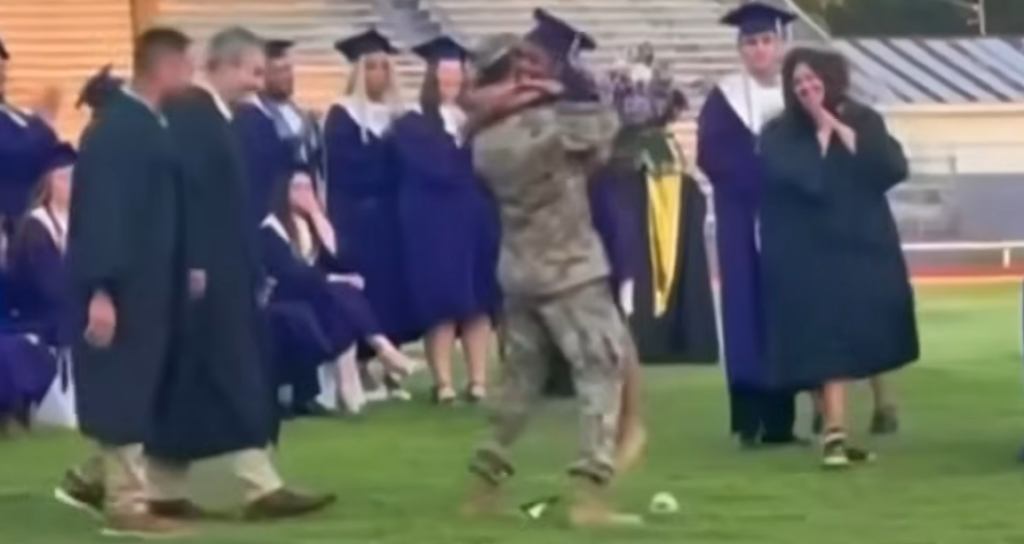
In the meantime, a different kind of graduation surprise was taking place in Ville Platte, Louisiana. For over a year, Staff Sergeant Brannavon Ardoin had been stationed in Kosovo. For three months, he worked with the administration of Ville Platte High School, his daughter Jazlyn’s school, and the military to arrange an early leave of absence so that he could attend her ceremony and give her the diploma. He stayed in a nearby town and conducted what he later referred to as, with some quiet humor, a covert operation because he was so afraid of being discovered in advance. Jazlyn ran toward her father so quickly that she lost her shoes when her name was called and he moved forward.
Watching these moments build up at the end of each school year gives me the impression that what people are really reacting to isn’t graduation per se, but rather the specific grief that goes along with it—the grief of leaving behind people and places that shaped you before you knew you were shaped. These students sobbed because they were simultaneously prepared to leave and unprepared. Most people are aware of that particular contradiction, even when they observe strangers from all over the world experiencing it.
