

Watching an American city in 2026 send almost 200,000 students home because their school buildings can’t withstand a hot May day is somewhat damning. Not in August. May. This week, the Philadelphia School District announced that 57 schools would switch to online instruction due to a heat wave that hit the area with a level of intensity that felt more like a reckoning than the weather.
It wasn’t totally unexpected. The district’s Deputy Superintendent of Operations, Oz Hill, wrote to families on Tuesday night in the cool, collected manner that officials typically employ when making announcements that are actually quite concerning. He basically admitted that the buildings lack the necessary equipment. Districts use the phrase “significant progress has been made” when there hasn’t been enough progress. Almost as if the district had quietly prepared for this, Chromebooks were sent home with students on Monday. Since it most likely had.
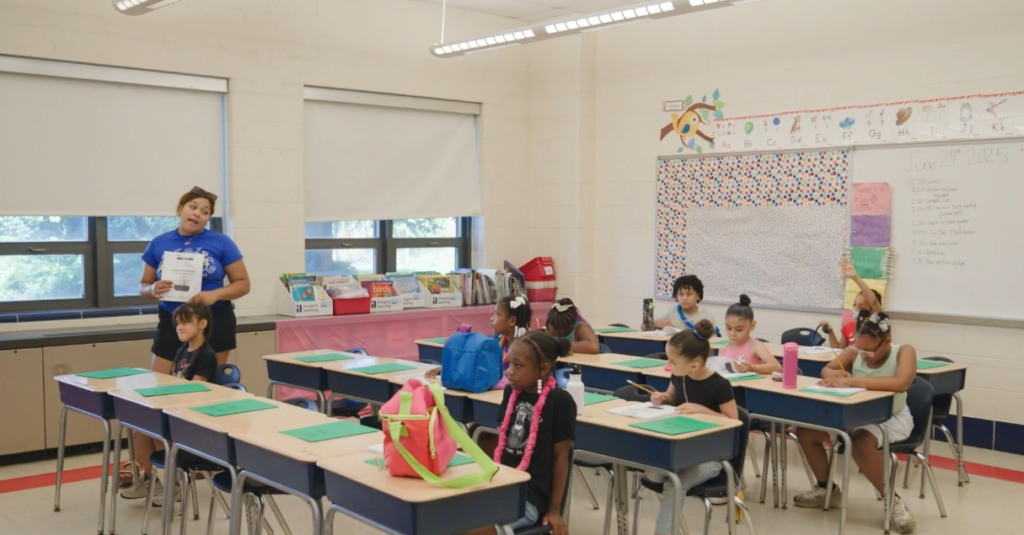
In practically every way, the district itself is vast. It is the biggest school district in Pennsylvania and the eighth largest in the nation, having been established in 1818. It provides services to more than 197,000 students in a city that has never had a straightforward relationship with public education. On a day when temperatures are rising into the mid-90s, you can sense the issue as soon as you pass one of those older North Philadelphia school buildings. Everything is absorbed by the brick. The windows hardly open at all. Like a closed car, the hallways retain heat.
We should inquire as to how we got here. Cooling systems are still an afterthought in buildings that were built for a climate that no longer quite exists, despite the fact that cities like Philadelphia have been promising their schools infrastructure for decades. This week, the National Weather Service issued a Code Orange air quality alert, which is considered unhealthy for sensitive groups, including children. Under the circumstances, the district’s response was appropriate. The more difficult question is whether the situation should have arisen in the first place.
Additionally, a larger narrative is developing. This week, Renato Lajara, one of the district’s assistant superintendents in charge of 15 schools and over 8,000 students, was chosen to head the Bethlehem Area School District. This serves as a reminder that Philadelphia continues to produce leadership talent that other districts seek out. Lajara came from the Dominican Republic as an English language learner, grew up in the Philadelphia public school system, and built a career around the kind of equity-focused work that urban districts talk about more than they actually do. It’s likely that more attention should be paid to his departure, pending board approval.
In addition, the school board voted 6-3 a few days ago to permanently close 17 public schools by the fall of 2027. Votes of that nature don’t occur in a vacuum. Cities in the Northeast have long struggled with a pattern that includes declining enrollment, aging buildings, budgetary constraints, and an increase in charter schools. Due in part to its size and in part to who pays for it, Philadelphia’s version of it feels especially acute. For obvious reasons, a GOP megadonor who offered scholarships to private schools to students displaced by those closures sparked controversy. It is rare for the politics surrounding public school funding to remain civil for very long.
When in-person instruction will resume in schools has not been disclosed by the district. Officials said they are keeping an eye on the situation. The phrase “watching conditions” sounds uncannily familiar, as though a school day’s outcome is solely dependent on the forecast’s cooperation. A virtual day is more than just a hassle for many Philadelphia families, especially those who depend on schools for childcare and meals. Press releases don’t always reflect the disruption’s ripple effects. Meal distribution websites and tech support hotlines are helpful. They don’t address the root cause.
Despite its size and history, it’s difficult to ignore the fact that this district continues to be characterized by its problems rather than its goals. Eventually, the heat will dissipate. Most likely, the questions it raised won’t.
