

Most British homes have a drawer where important documents discreetly collect dust, somewhere between old utility bills and a forgotten charger. Typically, passports reside there. Mostly adult ones. If there are any children’s versions, they are usually applied for two weeks prior to a summer flight and are regarded as merely a formality. It’s a sensible strategy until all of a sudden it isn’t.
Something changed in February 2026. The UK quietly implemented new passport requirements under its Electronic Travel Authorization system without the kind of public fanfare you might anticipate. Dual nationals, or British citizens who had become accustomed to returning to the UK using a foreign passport, were the target of the headline change. That is no longer permitted. Beneath those changes, however, is something that has a much more direct impact on families: children are subject to the same rules. Each and every child. including young children who have never taken a plane.
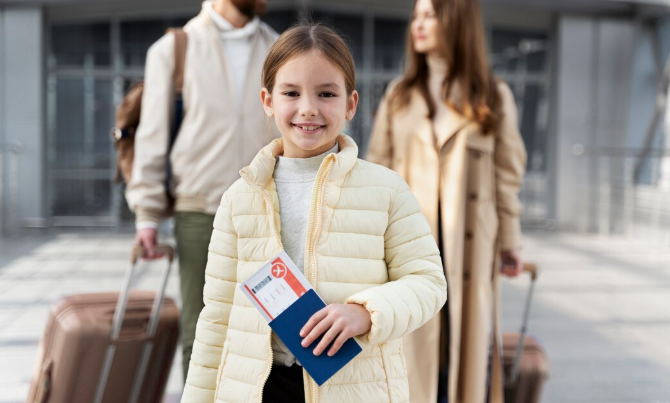
It’s worth taking a moment to consider that. In theory, a three-year-old born in Toronto or Valencia to British parents is a citizen of the United Kingdom. I’m entitled to everything. However, if the child does not have the proper paperwork, that entitlement is completely meaningless at a boarding gate. These days, airlines check passengers before they board, not after. The departure lounge no longer has any leeway.
The travel aspect of things isn’t really what makes this worth considering. Most families are able to cope. They hastily apply, pay the £66.50 online fee, and then bide their time. What happens when parents can’t agree is the deeper problem, which family law solicitors have been subtly pointing out since March. To apply for a child’s first British passport in the UK, all parents must give their approval. In a settled household, that is a simple procedure. In a divided one, it might be the final straw.
The policy language obscures the true human aspect of this situation. Imagine an Edinburgh parent who has made plans for their eight-year-old to travel to Dublin during the Easter break so they can spend time with their other parent. Everything is organized. The flights have been reserved. The other parent refuses to sign the application for a renewal, and it turns out that the child’s passport expired six months ago. That may sound like an extreme situation. It’s probably not as uncommon as people think.
One of those things that seems unnecessary until it becomes urgent is obtaining a child’s first British passport as soon as possible, ideally well before any travel is scheduled and definitely before any family tension has a chance to develop. From birth, a child of British nationality is entitled to that passport. Treating it the same way you would register a birth—not optional, not contingent on future flights, just completed—seems almost reasonable.
For a child under 16, the passport is valid for five years and costs £66.50 online. For proof of citizenship, legal identity, and insurance against the kind of bureaucratic nightmare that no parent wants to deal with in the middle of a dispute, that comes to about a pound per month. To override a non-consenting parent, courts can issue what’s known as a Specific Issue Order, but doing so is time-consuming, expensive, and stressful, with repercussions that are difficult to reverse.
Observing how these policy changes have been implemented gives the impression that British families are only now starting to comprehend the true implications of the new border system for their day-to-day existence. The dusty drawer’s passport is no longer merely a travel document. It serves as proof of identity for a British child.
