

The contests for state school superintendent continue to be overlooked in the midst of a primary election cycle that is packed with Senate races, governor’s contests, and the usual din of national politics. When you consider it, that’s a peculiar thing. These individuals will decide on curricula, establish testing guidelines, oversee billions of dollars in education funding, and react when educators or parents object. They are not well-known. However, the decisions made by voters in these elections often end up in classrooms for years to come.
Lydia Powell emerged victorious in Georgia’s Democratic primary on Tuesday night, garnering more than half of the vote against Anton Anthony and Otha Thornton. Powell won Fulton, DeKalb, Gwinnett, and Cobb by narrow margins in the low-to-mid twenties, demonstrating his strong performance throughout the Atlanta metro counties. It’s a clear victory, but the real fight will take place in November when she takes on Republican incumbent Richard Woods, who defeated his own primary opponents with slightly less than 50% of the vote. Whether Woods will face a runoff is still up in the air. It’s worth watching that race.
Then there’s Oklahoma, where the field is, to put it mildly, wide. After former Superintendent Ryan Walters resigned last fall to take the helm of an anti-teacher-union group, nine candidates—seven Republicans and two Democrats—are vying for the position. A state senator, a state representative, two former school administrators, a university researcher, a high school teacher, and 79-year-old William Crozier, who is running for office for the third time, are among the Republican contenders. Notably, Crozier has advocated for schools to “get rid of all the buses” in favor of neighborhood schools and has suggested that textbooks be used as shields in the event of a school shooting. He claimed that being a Christian Republican and being “too old, too smart” prevented him from being hired as a teacher. He might be viewed as a fringe figure by primary voters. Stranger things could also have occurred in a field with nine candidates.
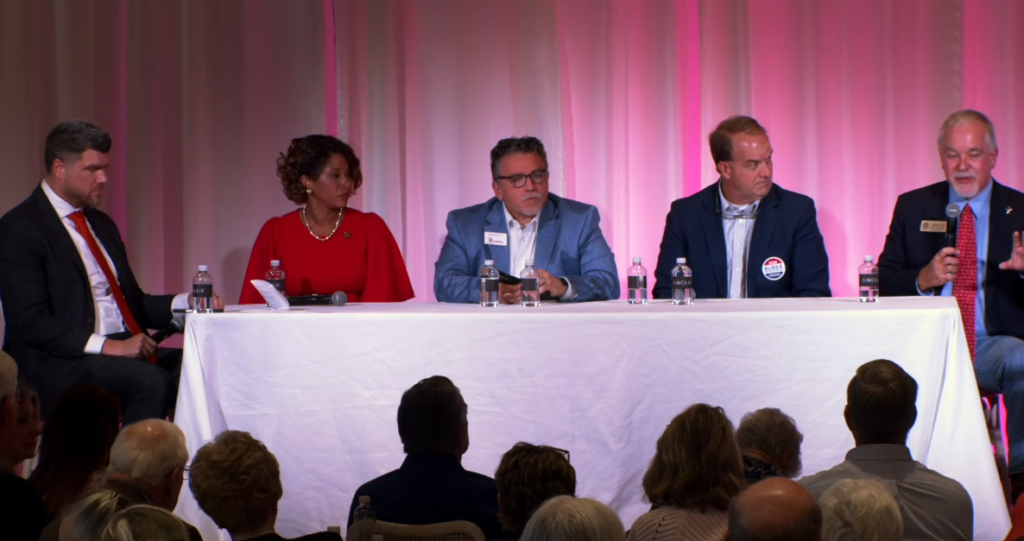
Almost every aspect of the California race is different: there is significantly more institutional machinery at work, more candidates, and more money. The ten contenders for state superintendent of public instruction had raised a total of $2.9 million as of the April filing deadline. That sounds important until you consider that only four candidates made $3.6 million in the 2018 primary. This cycle’s fundraising is more dispersed, and unlike the debates surrounding charter schools eight years ago, no single issue has defined the campaign. Three candidates—Sonja Shaw, Anthony Rendon, and Al Muratsuchi—rolled over funds from prior campaigns, indicating who has been preparing for this moment for some time. Rendon’s previous run for state treasurer brought in about $1.1 million. In a state where it costs actual money to get your name in front of voters, that type of war chest buys visibility but does not guarantee votes.
Observing all of this gives the impression that these contests are in a sort of political blind spot; they are important enough to draw serious contenders and substantial campaign expenditures, but they are rarely dramatic enough to break through the news cycle unless something extraordinary occurs. An election night with narrow margins, a school lockdown, or a candidate with an unconventional policy stance—those moments momentarily raise the curtain.
The fundamental question that each of these contests subtly poses is worth considering: who do voters trust with the day-to-day operations of public education? Long after Election Day, the response is important.
