

A student may spend part of the morning in an archery class and the remainder of the day in a literature course centered around conspiracy theories at a school in Monroe, Washington, which is tucked away along Short Columbia Street. It’s not overstated. For families who are familiar with it, Sky Valley Education Center, or SVEC, operates under a philosophy that most public schools lack the structure and motivation to try: let students design their own education, within reason, and see what happens.
It turns out that the school has a 77% student graduation rate, a ninth-place Niche ranking among public K–12 schools in the state, and teacher ratings that are truly hard to find elsewhere. In one review pool, every survey participant concurred that SVEC instructors provide interesting lessons and show genuine concern for their pupils. You don’t see that number very often. Smaller class sizes, which are limited to sixteen, might be a factor, or teachers who are drawn to alternative models might bring a different kind of dedication. Most likely both.
Within the Monroe School District, SVEC functions as a hybrid homeschooling partnership, meaning that students are not always on campus. Every year, family surveys and suggestions influence the school’s course offerings, and parents are encouraged to be involved, occasionally providing direct assistance in the classroom. The end product is a catalog that is unlike anything found in a typical public school: science fiction as a valid elective, superhero studies as a course, and cake decorating next to mythology. It sounds almost too informal until you consider that SVEC’s reading proficiency rate is higher than the state average and that these classes still count toward required credits.
The model appears to work for children who are neurodivergent in particular in a way that traditional education occasionally doesn’t. Flexible pacing, interest-driven content, and smaller groups are not radical concepts, but they are uncommon in real life. One parent who was evaluating the school pointed out that her younger child’s learning profile was much better suited by the approach than anything the traditional district offered, and that her older child was permitted to take high school-level classes while still in middle school. When families discuss the school, they typically remember this kind of flexibility the most.
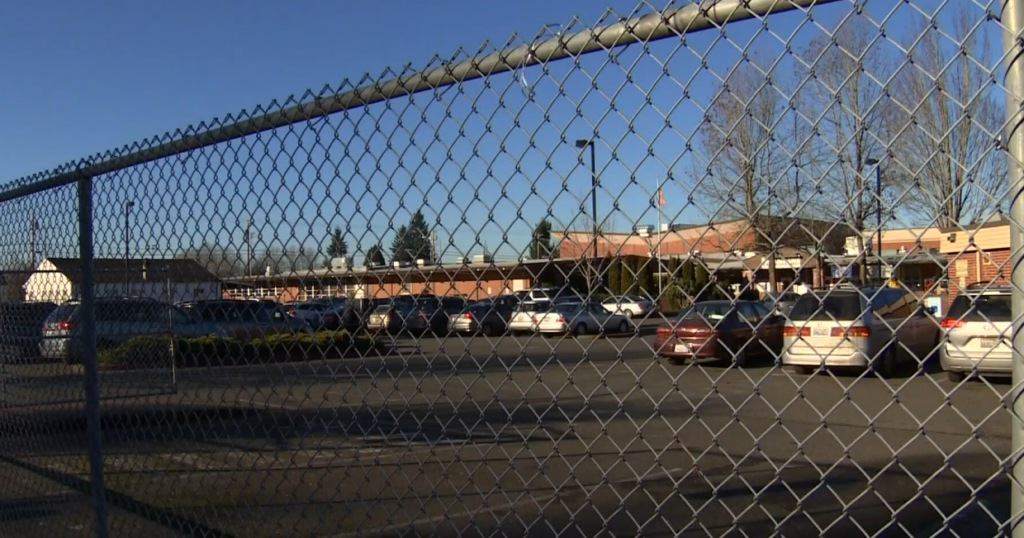
However, it’s important to be truthful about the gaps. It’s an old building. It’s not significantly accessible for students with mobility issues, as one parent noted, which is a serious issue for a school that takes pride in inclusivity. Since IEP services are not provided on-site, some families with children who require extra support must make travel arrangements to another district school. Additionally, the clubs and activities rating, which is a C on Niche’s grading scale, reflects something that a graduating alum specifically stated: SVEC is somewhat sheltered, lacking inter-school competitions or sports programs that allow students to compare themselves to peers from other communities. Even though many families believe the trade-off is worthwhile, that isolation has a price.
Looking at what SVEC has developed over the years, there’s a sense that this institution has discovered something that bigger universities keep circling around without succeeding. Giving students real control over their studies within a framework that still requires academic accountability results in children who are imaginative, involved, and, based on all available surveys, genuinely content to be there. In one survey, all participants agreed that SVEC students are artistic and creative. 18% claimed to be athletic. You can probably learn all you need to know about the type of place it is from that ratio.
The question worth keeping an eye on is whether SVEC can develop, upgrade its facilities, and broaden its offerings without sacrificing the intimacy that makes it successful. For now, something truly fascinating is taking place in a renovated building on a peaceful Monroe street.
